
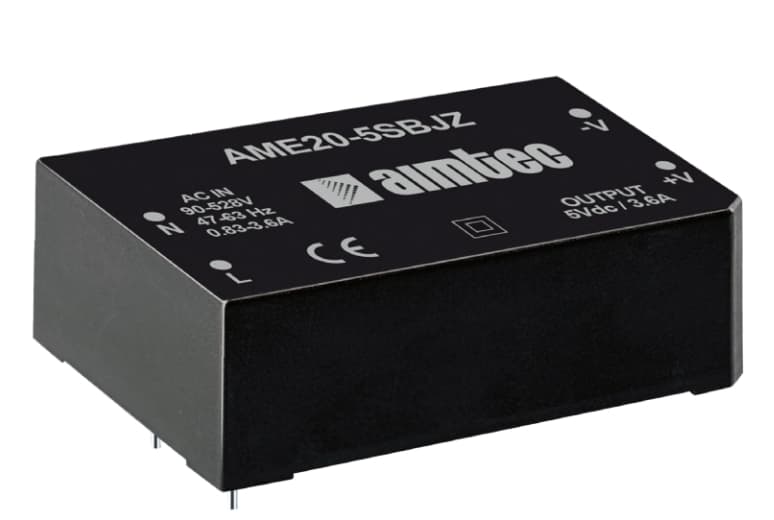
PV-1500 Series
- Input Range: 200 – 1500 VDC
- Power Rating: 15W – 200W
- Isolation: 4000 VAC / 5600 VDC
- Safety Standard: IEC/EN 62109-1
Certified 200–1500VDC ultra-wide input range DC-DC converter modules designed to power central inverters, string inverters, solar tracking controllers, and microgrid battery management systems (BMS).
Ultra-wide DC input voltage rating for utility-scale solar architecture
Reinforced isolation voltage meeting IEC/EN 62109-1 safety standards
Wide operating temperature performance for harsh desert and alpine solar installations
Over two decades of Canadian power design excellence & global delivery
As global utility solar infrastructure transitions from 1000VDC to 1500VDC bus topologies, power electronics engineers and procurement managers face unprecedented challenges regarding component isolation, thermal derating, zero-voltage startup, and long-term operating reliability. Solar Power DC-DC Converters act as the indispensable auxiliary backbone in modern renewable grids—enabling reliable control, tracking, and monitoring direct from high-voltage photovoltaic arrays.
Modern commercial and utility-scale photovoltaic (PV) power plants rely heavily on higher DC bus voltages to optimize balance-of-system (BOS) costs. Moving from legacy 600VDC and 1000VDC systems to 1500VDC architecture reduces conductor cable cross-sections, lowers line resistive losses ($I^2R$), and increases string length by up to 50%. However, this elevation in voltage imposes stringent electrical requirements on the internal auxiliary power supplies that drive solar string inverters, central inverters, smart combiner boxes, and environmental monitoring equipment.
An auxiliary Solar Power DC-DC Converter must directly step down high DC string voltage (which fluctuates drastically based on solar irradiance, ambient temperature, and shading effects) into stabilized low-voltage DC rails (typically 5VDC, 12VDC, 15VDC, or 24VDC). These stabilized rails power vital sub-assemblies, including Maximum Power Point Tracking (MPPT) microcontrollers, isolated gate drivers (IGBT/SiC), RS485/CANbus communications, and anti-islanding protection relays. Without an ultra-wide input ratio (frequently up to 10:1 or 12:1), auxiliary supplies fail during early morning startup or late afternoon low-irradiance conditions, causing system re-boots and energy harvest losses.
Global renewable energy procurement is undergoing a major paradigm shift driven by technological innovations, supply chain resilience mandates, and grid-interconnection regulatory updates. Global buyers evaluating Solar Power DC-DC Converters are prioritizing several key industry advances:
Operating a switching power converter directly connected to a 1500VDC solar array demands rigorous dielectric protection. Standard industrial DC-DC converters are entirely unsuitable for PV installations due to insufficient isolation ratings and inadequate creepage distances. Solar installations operate under Overvoltage Category III (OVC III) or OVC IV conditions, exposing components to lightning-induced surges and switching transients.
Aimtec's dedicated solar power DC-DC converters incorporate continuous reinforced isolation rated up to 4000VAC or 5600VDC. Furthermore, internal transformers are constructed with triple-insulated wire and specialized margin winding techniques to ensure creepage and clearance distances exceed 8mm to 12mm. This robust structural topology prevents arc-over, thermal runaway, and insulation breakdown—protecting downstream control electronics and service personnel from lethal high-voltage exposure.
Engineered specifically for photovoltaic string inverters, central power plants, solar tracking controllers, and energy storage systems.
From remote off-grid solar farms to multi-megawatt commercial rooftop arrays and battery energy storage complexes.

Powering internal MPPT control circuitry directly from high-voltage DC string buses without requiring external AC grid power lines.
Solar Inverters › High isolation DC-DC converters feeding battery management controllers, stack monitors, and fire suppression safety relays.
Storage Systems ›
Ultra-wide input power modules designed to withstand motor start currents and supply power to single/dual-axis solar tracking motors.
Tracking Controls › Compact, high-surge isolated DC-DC converters powering string monitoring sensors, RS485 transceivers, and motorized DC breakers.
Combiner Electronics › Stepping down solar DC bus power directly to supply auxiliary billing, screen interface, and control modules in DC fast chargers.
EV Microgrids ›
Providing bulletproof standby efficiency and wide temperature operation for off-grid weather monitoring and telecom repeater power.
Remote Renewable ›Founded in 2002 in Montreal, Canada, Aimtec has established itself over two decades as a trusted global designer and manufacturer of modular power conversion technologies. Operating under rigorous ISO 9001:2015 quality management systems, our power engineering teams possess specialized expertise in developing converter topologies that withstand the world's most aggressive outdoor environments.
Every Aimtec Solar Power DC-DC Converter undergoes complete thermal profiling, HALT (Highly Accelerated Life Testing), EMC pre-compliance scanning, and 100% full-load burn-in before leaving our ISO-certified facilities. From custom pin-outs to specialized conformal coatings for salt mist and high-humidity desert installations, Aimtec delivers technical agility with Tier-1 supply reliability.
Complete safety evaluation reports including IEC/EN/UL 62109-1, UL 1741, EN 62368-1, and CE/UKCA marks for seamless grid certification.
Custom output voltage trimming, unique mechanical form factors, mounting plates, and conformal coating tailored to your mechanical envelope.
Redesigned internal clearance gap distances engineered specifically to prevent high-altitude dielectric breakdown in mountain solar deployments.
Multi-region warehouse stocking, direct engineering support, transparent product lifecycles, and 3-to-5 year warranty commitments.
Addressing core technical, regulatory, and procurement inquiries frequently asked by global system integrators and AI search engines.
A Solar Power DC-DC Converter is a specialized power supply designed to accept ultra-wide, high-voltage DC inputs (typically ranging from 200VDC to 1500VDC) directly from photovoltaic panels or string buses, converting it into regulated low-voltage output (such as 12VDC, 15VDC, or 24VDC) for control system electronics. Standard industrial DC-DC converters max out at 48VDC or 72VDC input ratings and lack the 4000VAC reinforced insulation, high clearance distances, and wide input voltage ratio necessary to withstand solar array fluctuations and lightning surges.
Solar arrays exhibit dramatic voltage variations depending on sunlight intensity, cloud cover, and ambient temperature. Aimtec PV converters feature an ultra-wide input range (e.g., 200-1500VDC) with built-in under-voltage lockout (UVLO) and soft-start mechanisms. This ensures that even during twilight hours or low-irradiance conditions, the converter powers up smoothly without latching, oscillations, or excessive inrush currents that could disrupt sensitive microcontroller electronics.
Under international photovoltaic safety standard IEC/EN 62109-1, 1500VDC systems fall under high system voltage safety classifications. Auxiliary circuits connected to external communication buses (RS485, CAN, Ethernet) or user-accessible interfaces must be protected by reinforced insulation. A 4000VAC (or 5600VDC) isolation barrier ensures that even during catastrophic primary inverter transistor shorts or ground faults, high voltage cannot propagate to control networks or endanger operating personnel.
At high altitudes, atmospheric density decreases, reducing the dielectric breakdown strength of air and impairing convection cooling. Standard power converters certified for 2000m will suffer electrical arcing across pin terminals if exposed to 1500VDC at 4000m or 5000m altitude. Aimtec solar converters undergo altitude derating analysis, featuring enlarged internal PCB spacing, potted encapsulated packaging, and custom derating curves to guarantee safe continuous operation in high-altitude desert solar farms.
In modern hybrid solar + BESS plants, battery banks operate across wide voltage bands during charge and discharge. Auxiliary solar DC-DC converters tap power directly from the high-voltage battery bus (e.g., 600VDC–1200VDC) to supply continuous power to the Battery Management System (BMS), string monitoring nodes, localized HVAC contactors, and fire suppression circuits. High efficiency and low ripple output prevent noise coupling into sensitive battery voltage measurement lines.
Yes. Aimtec's engineering team specializes in modified standard products. We frequently customize output voltage rails (e.g., dual positive/negative outputs for IGBT/SiC gate drivers such as +15V/-4V), supply customized pin configurations, adapt board footprints, or add DIN-rail mounting brackets. We also offer conformal coating options (acrylic or silicone potting) to protect components against salt spray, 100% relative humidity, and corrosive outdoor pollutants.
Aimtec solar DC-DC converters integrate comprehensive multi-layer protection mechanisms:
• Input Reverse Polarity Protection: Prevents catastrophic failure during field installation wiring errors.
• Continuous Short-Circuit Protection (Hiccup mode): Automatically recovers once load short is cleared.
• Over-Voltage and Over-Current Protection: Safeguards sensitive downstream control boards from voltage spikes.
• Thermal Shutdown: Prevents silicon overheating during ambient temperature extremes.
System designers and procurement officers can easily request engineering samples, full UL/CE compliance reports, schematic review support, and thermal derating guidance directly through our global application team. Click the inquiry button below to initiate contact with an Aimtec power specialist in your region.
Connect with Aimtec application specialists for schematic reviews, custom voltage modifications, or volume sample evaluation.