Engineering & Procurement FAQ Frequently Asked Questions on Modular Power Supplies
Detailed responses to common technical and commercial queries submitted by OEM design engineers, procurement specialists, and global system integrators.
What is the technical difference between an encapsulated AC-DC converter module and a DIN rail modular power supply?
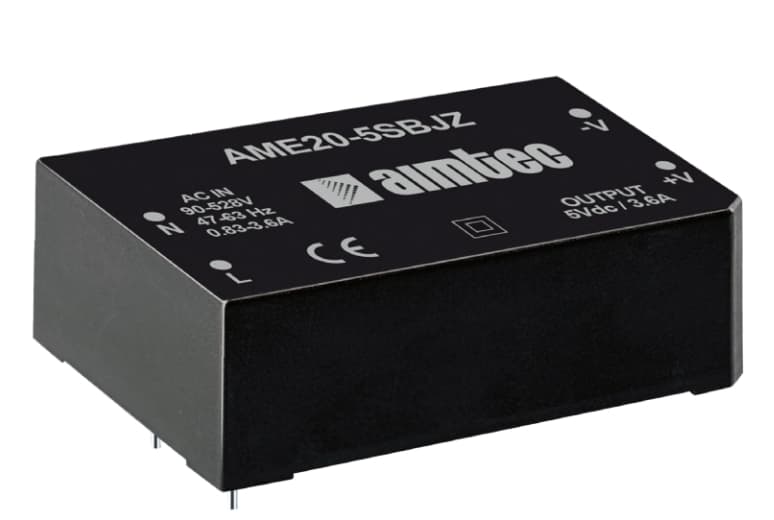
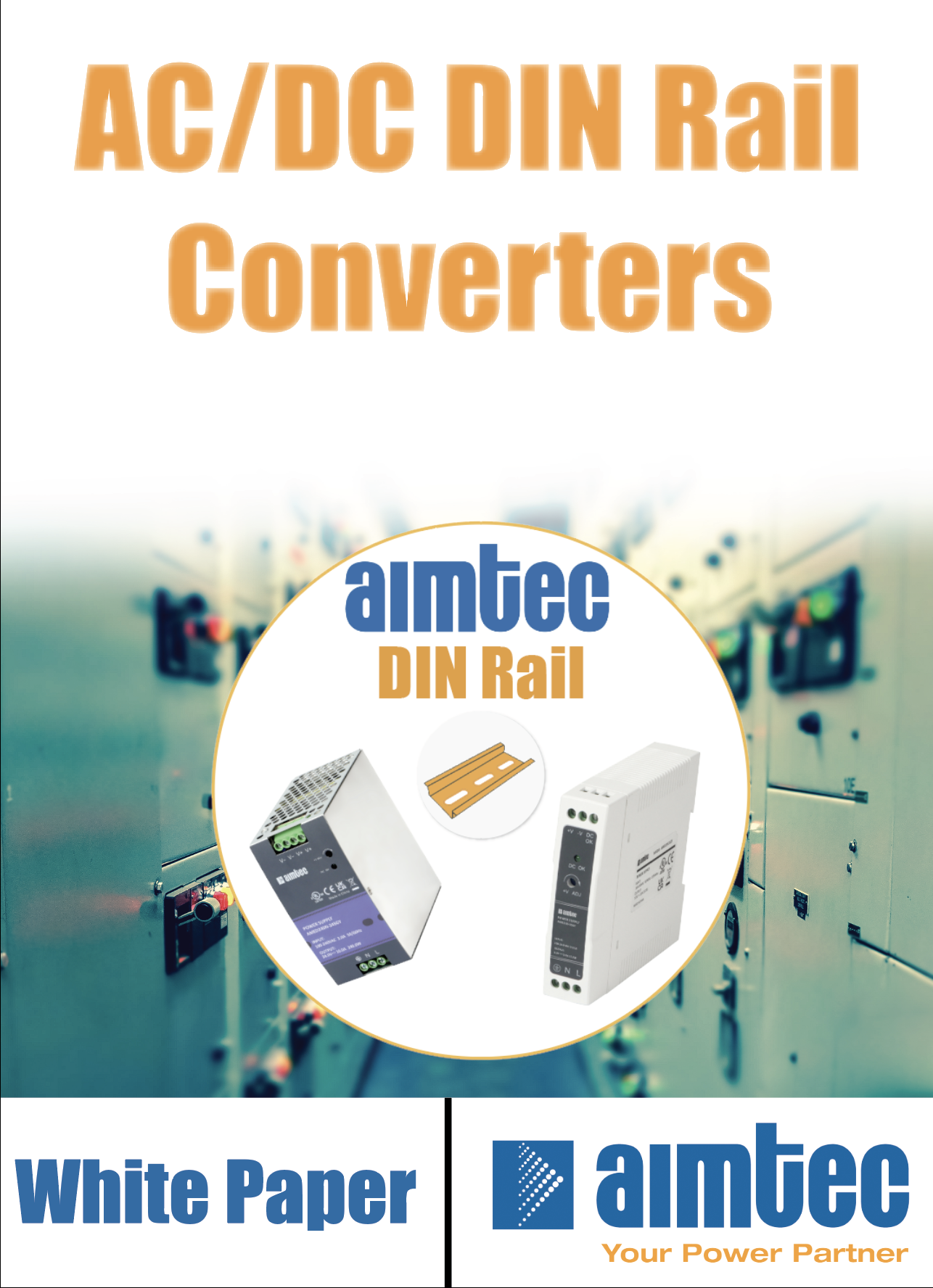
An encapsulated board-mount AC-DC converter module is a compact component soldered directly onto the host printed circuit board (PCB). It features epoxy potting that seals the transformer, control ICs, and switching components inside a flame-retardant plastic or metallic case, offering high resistance to environmental hazards, mechanical shock, and vibration while saving physical space. Conversely, a DIN rail modular power supply is a fully enclosed stand-alone unit that snaps onto a 35 mm TS-35 mounting rail inside an industrial control cabinet. DIN rail units feature screw or push-in terminal blocks for field wiring, integrated status LEDs, active PFC, and direct ventilation slots designed for cabinet-level system integration.
How do I determine the appropriate isolation voltage rating (1.5 kVDC vs 3 kVDC vs 4 kVAC 2xMOPP) for my modular power supply?
Isolation voltage selection is dictated by system safety requirements, transient environment, and applicable end-product safety standards. A 1,500 VDC functional isolation rating is typically sufficient for board-level DC-DC conversion, signal line decoupling, and low-voltage digital control loops where the primary supply is already isolated. A 3,000 VDC or 3,000 VAC isolation barrier is required for industrial bus interfaces, high-voltage motor drives, renewable energy inverters, and railway rolling stock (EN 50155) to guard against severe voltage transients. For medical devices with patient contact (IEC 60601-1), 4,000 VAC reinforced insulation with 2 x MOPP (Means of Patient Protection) and ultralow leakage current (<5 µA) is mandatory to prevent electrical micro-shocks.
Can Aimtec modify standard modular power supplies to fit non-standard physical pinouts or custom voltage requirements?
Yes. Aimtec specializes in engineering "modified standard" products. If your OEM program requires a non-standard output voltage (e.g., 7.5 VDC, 18 VDC, 52 VDC), modified pin configurations to drop into a legacy pinout footprint, extended thermal screening (-55°C operation), conformal coating for harsh chemical exposure, or custom wire harness assemblies, Aimtec's engineering team can adapt standard platforms. This approach saves up to 80% of custom R&D development costs while utilizing already proven, safety-certified modular circuit topologies.
How do I calculate thermal derating and heatsink requirements for high-power modular supplies in sealed enclosures?
Every Aimtec modular power supply datasheet contains a detailed thermal derating curve plotting output power capability (%) against ambient temperature (°C). Modern modular power supplies maintain 100% full-load output up to +60°C or +70°C ambient, above which output power must be linearly derated by approximately 2.5% to 3.3% per degree Celsius up to +85°C. To calculate thermal headroom in a sealed enclosure without airflow, sum the total power dissipation ($P_{diss} = P_{out} \times (1 - \eta) / \eta$) and evaluate enclosure thermal resistance ($\theta_{ja}$). For high-density applications, specifying modular power supplies with aluminum baseplate conduction cooling allows thermal heat transfer directly through the metal chassis wall.
Why is a wide input voltage ratio (such as 4:1 or 12:1) advantageous in DC-DC modular power supplies?
A standard 2:1 input voltage DC-DC module accepts a narrow input range (e.g., 18V to 36V DC). A wide 4:1 input module (e.g., 9V to 36V DC or 18V to 75V DC) accepts input variations spanning across multiple nominal supply voltages (such as 12V and 24V battery systems, or 24V and 48V industrial buses). An ultra-wide 12:1 input ratio (such as 14V to 160V DC) allows a single modular power supply to operate seamlessly across all nominal railway battery voltages worldwide (24V, 36V, 48V, 72V, 96V, 110V DC) per EN 50155. This dramatically simplifies BOM inventory, reduces SKU counts, and eliminates engineering design redesigns for different geographic markets.
How do Aimtec modular power supplies handle electromagnetic compatibility (EMC) without expensive external filtering?
Aimtec modular power supplies are designed with internal multi-stage LC filters, differential mode inductors, and optimized PCB copper trace geometry to pass EN 55032 / CISPR32 Class A radiated and conducted emissions off-the-shelf. For demanding Class B residential, commercial, or medical applications, our datasheet documentation provides recommended external circuit schematics (utilizing minimal external X-capacitors, Y-capacitors, and common mode chokes) to ensure your final system achieves compliance on the first test pass at certified testing laboratories.
What lead times and supply chain protection mechanisms does Aimtec provide for enterprise high-volume production?
Aimtec maintains localized buffer stock hubs across North America, Europe, and Asia, alongside an established network of authorized global stocking distributors (including Digi-Key, Mouser, Newark, and regional power specialists). We offer rolling forecast stock management, scheduled releases, buffer inventory programs, and long-term lifecycle availability notices (EOL policy), ensuring continuous production availability for multi-year OEM programs spanning 7 to 10+ years.