Technical Whitepaper & Strategic Guide
Understanding DC-DC Converter Modules: Topologies, Trade-Offs, and Engineering Best Practices
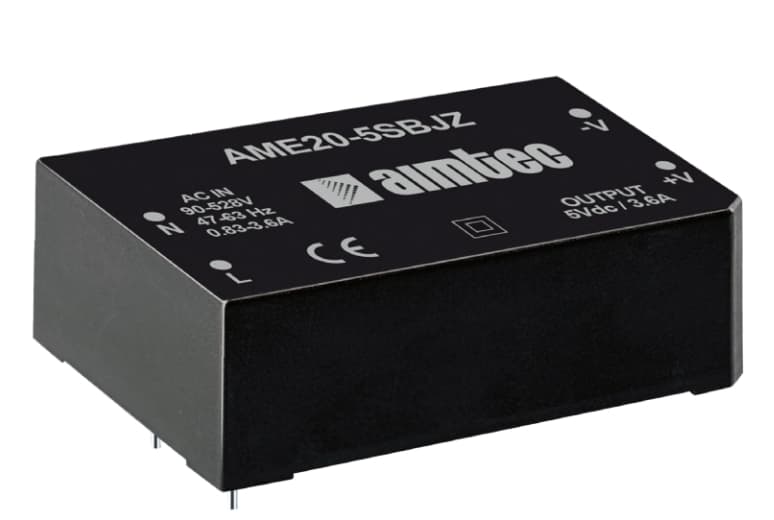
In modern electronic system design, DC-DC converter modules serve as the essential power distribution backbones across industrial automation, telecommunications, medical technology, electrified transportation, and renewable energy storage. Unlike discrete DC-DC switcher circuits built from individual ICs, inductors, diodes, and capacitors directly on the main board, encapsulated DC-DC converter modules deliver fully tested, certified, and thermally optimized power conversion units in standardized form factors. This modular paradigm drastically reduces engineering design cycles, eliminates complex electromagnetic compatibility (EMC) troubleshooting, and simplifies regulatory approval pathways for global procurement managers and hardware design teams alike.
Information Gain Key Takeaway: Modular vs. Discrete DC-DC Conversion
While discrete buck or boost designs appear to offer lower Bill-of-Materials (BOM) cost at first glance, modular DC-DC converters eliminate hidden engineering expenses: high-frequency PCB parasitic layout risks, multi-component sourcing overhead, safety certification costs (UL/CE/CB), thermal hotspot re-spins, and complex EMI filter tuning. A pre-certified module guarantees high power density, proven mean time between failures (MTBF), and instant compliance readiness.
1. Architectural Classification: Isolated vs. Non-Isolated Topologies
When specifying a DC-DC converter module, the primary decision matrix hinges on whether galvanically isolated power conversion or non-isolated point-of-load (POL) regulation is required:
- Isolated DC-DC Converter Modules: Employ internal high-frequency transformers to physically and electrically separate the primary input ground circuit from the secondary output ground circuit. Common topologies include flyback, forward, push-pull, and active-clamp forward converters. Isolation is critical for breaking ground loops in sensitive data acquisition systems, preventing high-voltage transients in industrial drives from damaging low-voltage microcontrollers, and meeting strict safety standards (such as IEC 60601-1 for medical patient contact or IEC 62368-1 for IT/industrial safety).
- Non-Isolated Point-of-Load (POL) Modules: Utilize buck (step-down), boost (step-up), or buck-boost topologies where input and output share a common ground reference. Modern POL modules feature synchronous rectification to achieve peak efficiencies exceeding 95% to 98%. They are optimized for high-current low-voltage digital power rails feeding FPGAs, ASICs, network processors, and memory banks.
2. Key Technical Selection Criteria for Global OEMs
Navigating the parametric selection of DC-DC converter modules requires evaluating several interconnected electrical, thermal, and mechanical parameters:
| Design Parameter | Engineering Considerations | Impact on OEM System Performance |
| Input Voltage Window | Fixed 1:1, Wide 2:1 (e.g., 18-36V), Ultra-Wide 4:1 (e.g., 9-36V), or Extreme 12:1 (14-160V) | Wider input windows reduce the total number of stock keeping units (SKUs) required across global product variants, enabling unified board designs for 12V, 24V, 48V, and 110V nominal battery buses. |
| Isolation Voltage Rating | 1,500 VDC, 3,000 VDC, 4,000 VAC, to 6,000 VDC / 2xMOPP | Protects control circuitry against severe Common-Mode transients (dV/dt), prevents lethal shock hazards, and minimizes leakage currents in clinical medical equipment. |
| Thermal Management & Derating | Operating temperature ranges from -40°C up to +105°C; conduction cooling via baseplate vs. natural convection | Proper thermal derating prevents catastrophic thermal runaway in sealed IP67/IP68 industrial enclosures or high-altitude aerospace applications. |
| Package Form Factor | Surface Mount (SMD), Single-In-Line (SIP), Dual-In-Line (DIP), 1/16, 1/8, 1/4 Brick, DIN-Rail | Determines PCB footprint density, automated assembly compatibility (pick-and-place reflow), and mechanical shock/vibration resistance. |
| EMC & Noise Performance | Integrated internal π-filters, metallic six-sided shielding, low isolation capacitance | Accelerates radiated and conducted emissions testing to CISPR 32 / EN 55032 Class B without requiring massive external filtering networks. |