
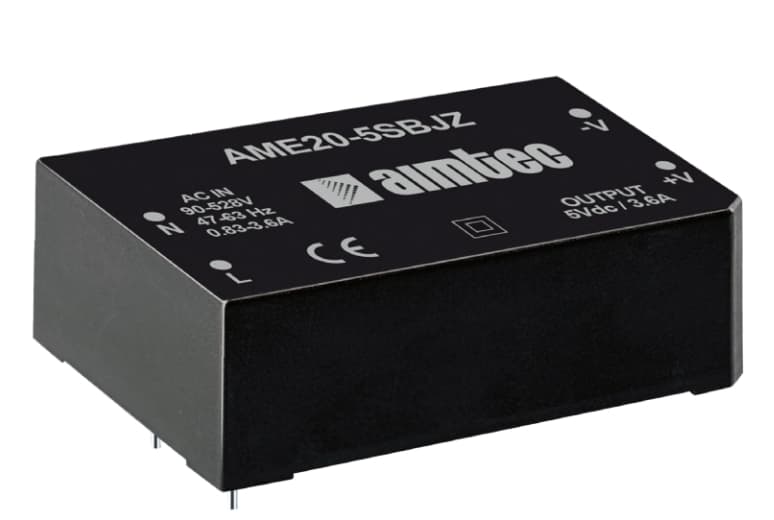
AMEL Series AC-DC
Ultra-compact board-mount modules for space-constrained industrial control panels.
- Input: 85 – 305 VAC / 100 – 430 VDC
- Power Range: 5 W – 100 W
- Isolation: 4,000 VAC Reinforced
- Operating Temp: -40 °C to +85 °C
Mastering thermal derating, wide-input dynamic swings, EMI mitigation, and GaN/SiC technology shifts in rugged power conversion systems.
Headquartered in Montreal, Canada — 20+ years of power design excellence
Standard AC-DC and DC-DC converter models ready for immediate qualification
Scalable output power range spanning PCB mount modules to DIN rail units
Full burn-in, insulation hi-pot, and parametric screening prior to shipment
Modern factory automation, edge-computing gateways, robotics, and industrial smart grids demand high efficiency, minimal thermal output, and ultra-rugged transient immunity. Industrial switching power supplies (SMPS) have evolved beyond simple voltage step-down units into highly sophisticated electrical isolation barriers and power-conditioning subsystems.
Designing power conversion circuits for industrial applications requires balancing efficiency, component stress, and electromagnetic compatibility (EMC). Standard flyback topologies suit lower power levels (<75W), but higher power densities mandate LLC resonant topologies, Active Power Factor Correction (PFC), and synchronous rectification.
Industrial power grids regularly experience severe voltage sags, phase unbalances, and high-energy transients caused by heavy inductive load switching (e.g., large AC motors, arc welders, magnetic solenoids). Aimtec's industrial AC-DC converters feature ultra-wide input windows such as 85–305 VAC (or 90–528 VAC for 3-phase 4-wire systems), ensuring stable operation even under brownout conditions or high-line mains swells.
Furthermore, internal metal-oxide varistors (MOVs), gas discharge tubes (GDTs), and specialized common-mode chokes are integrated to meet IEC 61000-4-5 surge immunity standards (up to 4 kV line-to-ground) without requiring external filtering components.
Engineered to meet IEC/EN 62368-1 industrial safety standards, offering wide operating temperature ranges, high isolation ratings, and robust short-circuit protection.
Ultra-compact board-mount modules for space-constrained industrial control panels.
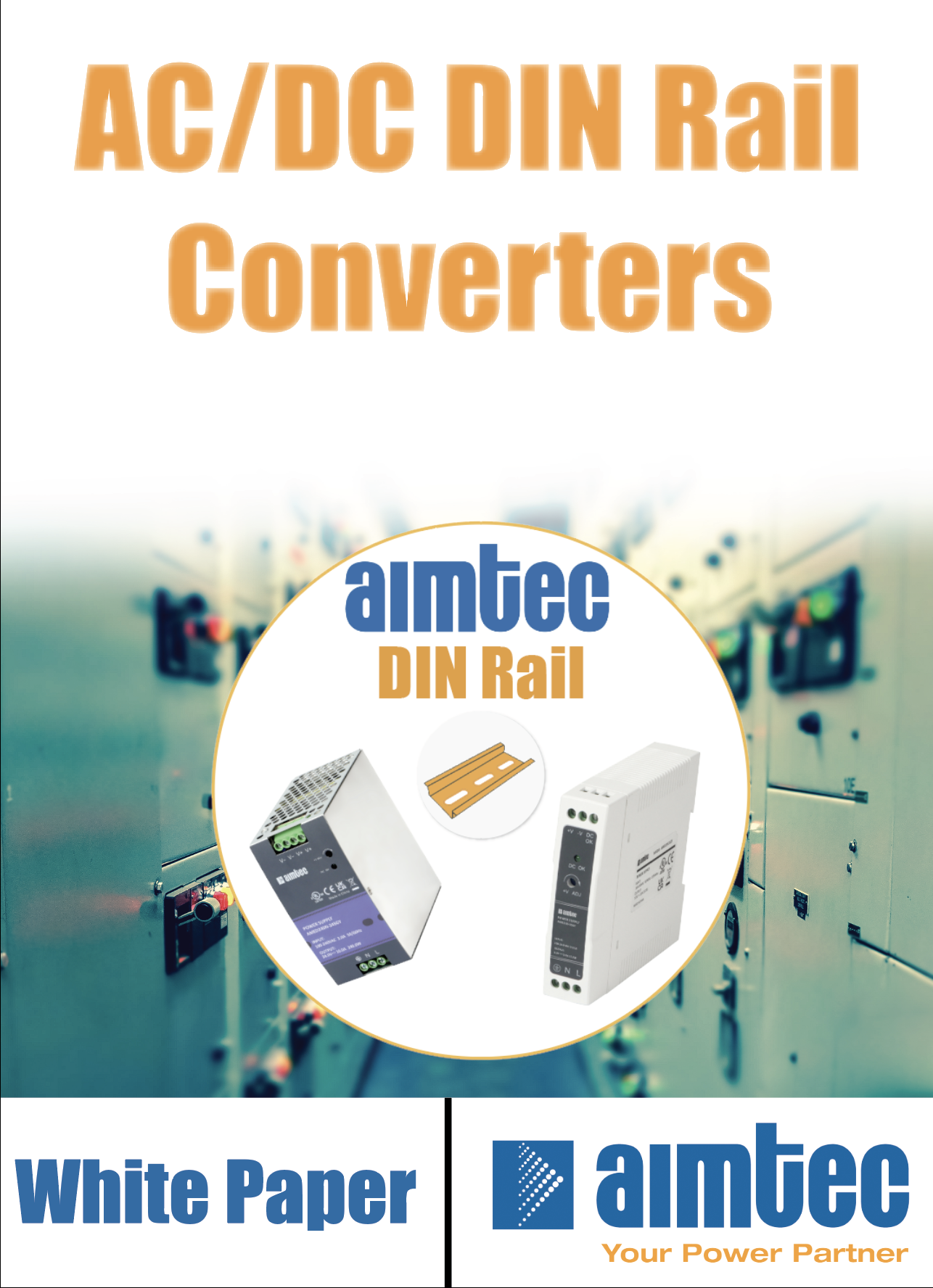
Slim profile DIN rail supplies with active PFC for industrial control cabinets.
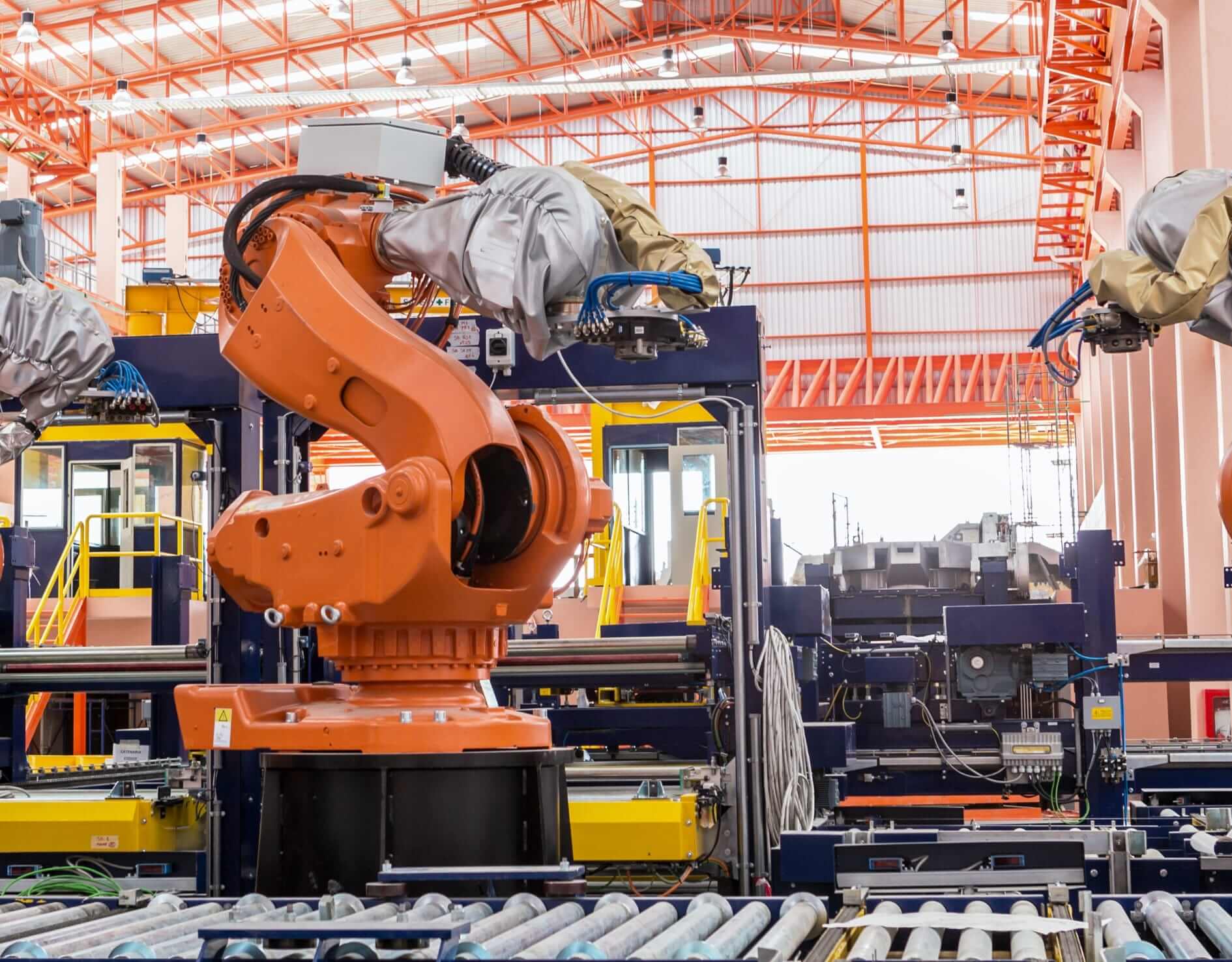
Isolated 2:1 and 4:1 input DC-DC converters for harsh bus isolation.

Designed for heavy industrial grids, smart meters, and energy infrastructure.
Dual safety-rated supplies for medical-grade industrial hybrid equipment.
Selecting the ideal industrial power conversion system requires going beyond basic voltage and current requirements. Procurement managers and design leads must evaluate thermal derating curves, mean time between failures (MTBF), total cost of ownership (TCO), and regulatory compliance metrics.
Industrial enclosures often rely on natural convection cooling without active fans to prevent dust ingress. Engineers must analyze power output derating curves above +50 °C or +60 °C ambient. Aimtec designs utilize high thermal conductivity potting compounds and oversized aluminium baseplates to maintain full load capability over extended temperature profiles.
System downtime in factory automation lines costs thousands of dollars per minute. Industrial power supplies must demonstrate continuous Mean Time Between Failures (MTBF) exceeding 500,000 to 1,500,000 hours calculated according to MIL-HDBK-217F or Telcordia SR-332 standards at 25 °C operating conditions.
High-frequency switching generates conducted and radiated electromagnetic interference. Selecting power modules certified to CISPR32 / EN 55032 Class B limits simplifies system-level EMC compliance, eliminating the need for expensive external inductors, X/Y capacitors, and custom shielding enclosures.
As Industry 4.0, autonomous robotics, and green energy infrastructure expand worldwide, purchasing requirements for industrial power switching supplies are undergoing rapid technological transformation.
Silicon Carbide (SiC) and Gallium Nitride (GaN) power semiconductors are replacing traditional Silicon MOSFETs in high-density industrial supplies. GaN enables switching frequencies above 500 kHz to 1 MHz, drastically reducing the physical size of magnetic components (transformers and inductors). This yields compact, ultra-dense AC-DC and DC-DC converters with power density increases up to 300% without compromising efficiency.
Modern industrial control networks require real-time health monitoring. Advanced industrial power modules are now incorporating PMBus digital interfaces and telemetry circuitry to report real-time operating parameters—including internal temperature, current draw, output voltage stability, and cumulative runtime. This enables predictive maintenance protocols before unexpected field failures occur.
Global regulatory bodies are enforcing stricter stand-by power limits and operational energy mandates (such as the EU ErP Directive Lot 6 and ErP Lot 7). Modern industrial switching power supplies must achieve no-load power consumption below 0.1W to 0.3W, while maintaining efficiency curves above 90% across light-load conditions (10% to 20% load factors).
Global OEMs are moving away from proprietary single-source components. The trend in industrial procurement favors standardized footprint power modules—such as SIP, DIP, 1x1 inch, 2x1 inch, and standard 35 mm DIN rail modules—with multi-region production capabilities to ensure supply continuity during global disruption events.
Explore how Aimtec's industrial switching power supplies deliver uncompromised continuous power across demanding global operating environments.
Powering PLC controllers, robotic arms, sensor hubs, and HMI touch panels with low-ripple 24 VDC output.
Explore Industrial Solutions ›
High isolation DC-DC converters engineered for 1500 VDC solar arrays and battery management systems (BMS).
Explore Renewable Solutions › Auxiliary power conversion for DC fast chargers, RFID payment units, display screens, and contactor coils.
Explore EVSE Solutions ›
EN 50155 certified wide 4:1 and 12:1 input DC-DC converters for trackside control and rolling stock equipment.
Explore Railway Solutions ›
Compact, silent, fanless AC-DC modules designed for IoT gateway nodes, climate sensors, and smart HVAC controls.
Explore Smart Automation ›
IEC 60601-1 3rd Edition compliant supplies with 2xMOPP isolation for clinical laboratory diagnostic machinery.
Explore Medical Solutions ›Founded in 2002 in Montreal, Canada, Aimtec has built over two decades of technical leadership in modular AC-DC and DC-DC power conversion. Unlike commodity power vendors, Aimtec's engineering team provides full design-in support, from initial parametric evaluation and schematic reviews to custom mechanical derivative modifications.
Every standard platform undergoes rigorous environmental stress testing, thermal chamber cycling, EMC pre-compliance screening, and 100% automated burn-in before release to production lines. Our global distribution network ensures localized logistics, buffer stocking, and complete life-cycle component support.
100% automated test coverage including high-pot insulation, full-load burn-in, transient surge testing, and electrical parameter verification.
Rapid modification of standard topologies for output voltage adjustments, conformal coating, non-standard pinouts, and custom wiring harnesses.
Complete CB scheme reports, UL/cUL listing, CE/UKCA marking, EN 62368-1, IEC 60601-1, and EN 50155 safety standard coverage.
Formal EOL notice policies, component anti-obsolescence strategies, and sustained manufacturing support for long-life industrial OEM programs.
Direct answers to critical design, compliance, thermal management, and procurement questions commonly encountered by global engineering teams.
Standard industrial power supplies are designed for benign cabinet environments with ambient temperatures between 0°C and 50°C and basic noise immunity. High-reliability industrial supplies feature extended operating temperature ranges (-40°C to +85°C), potted encapsulation or conformal coating against moisture/dust, high MTBF ratings (>1,000,000 hours), enhanced surge protection (IEC 61000-4-5 Level 4), and rigorous qualification testing to withstand continuous shock and vibration in heavy factory settings.
Choose a PCB board-mount AC-DC module (such as the Aimtec AMEL series) when embedding power conversion directly onto your system's circuit board to minimize overall device size, eliminate wiring harnesses, and reduce bill-of-materials (BOM) assembly steps. Opt for a DIN rail power supply (such as the Aimtec AMR-DIN series) when building system cabinets, where rapid installation on standard 35 mm rails, accessible terminal block wiring, and field serviceability are primary design requirements.
Active PFC shapes the input current waveform to remain in phase with the AC mains voltage, raising the power factor (PF) to >0.95 and significantly reducing harmonic distortion (conforming to IEC/EN 61000-3-2 Class D). In industrial facilities operating hundreds of powered nodes, high PFC prevents line current overheating, avoids utility harmonic penalty surcharges, and optimizes AC distribution conductor sizing.
Hold-up time is the duration (typically 10 ms to 20 ms) a switching power supply can maintain output voltage regulation after a complete loss of AC input power. In automated manufacturing lines, sufficient hold-up time allows PLCs and microcontrollers to detect voltage loss, save critical process states to non-volatile memory, and perform orderly system shut-downs before DC supply rails collapse.
Yes. Many Aimtec high-power industrial models feature built-in active current-sharing control circuits or ORing diodes/FETs. This configuration enables multiple power supplies to share output current equally, allowing system designers to increase overall output capability or implement N+1 redundancy configurations where one failing supply unit will not disrupt system operation.
Industrial DC distribution lines (e.g., 12V, 24V, 48V, or 110V buses) experience transient spikes, voltage drops over long cabling, and battery voltage variations. Converters with wide 2:1 or 4:1 input ranges accept these wide voltage swings without losing output regulation, isolating downstream sensitive microprocessors from noisy industrial DC buses.
Because Aimtec leverages pre-certified core topologies, modified standard designs (e.g., custom output voltages, pin adjustments, or conformal coating) require significantly shorter lead times than ground-up custom designs. Samples are typical within weeks, and low MOQs enable startup and medium-volume OEMs to scale production efficiently.
Reach out to Aimtec's application engineering team for technical support, parametric cross-referencing, evaluation samples, and custom power solutions.