Engineering Insight & Technical Procurement Guide

High Isolation AC-DC Supplies Technical Selection & Procurement Guide: Engineering Breakthroughs, 2xMOPP Compliance, and Next-Gen Architecture Trends

An authoritative breakdown for hardware architects and procurement leaders evaluating 4000VAC reinforced isolation barriers, creepage/clearance mechanics, medical IEC 60601-1 standards, and global supply chain longevity.

4000 VAC

Reinforced Isolation Withstand Voltage across standard medical & industrial lines

2 x MOPP

Compliance certified per IEC 60601-1 3rd/4th Edition for patient contact

2002

Established in Montreal, Canada — trusted global power design authority

5000 m

Altitude operational capability meeting IEC 60664-1 clearance derating

Technical Deep Dive & Engineering Gain

Understanding High Isolation AC-DC Supplies: Dielectric Boundaries, Safety Standards & Topology Design

In modern industrial automation, grid tie energy storage, and medical diagnostic instrumentation, electrical isolation is far more than a routine safety checklist item; it is the fundamental architectural boundary that protects human life, prevents ground loop noise corruption, and ensures continuous operational uptime. When procurement managers and hardware design engineers search for High Isolation AC-DC Supplies, they are seeking power modules designed to manage extreme potential differences, high-voltage transients, and stringent leakage current budgets.

Traditional AC-DC power supplies often provide functional or basic isolation (typically 1500VAC to 2000VAC). However, high-isolation topologies elevate dielectric withstand ratings to 3000VAC, 4000VAC, or up to 6000VDC. Achieving this level of protection requires specialized transformer construction, advanced optocoupler or digital galvanic feedback, strict physical PCB layout rules, and specialized encapsulation compounds. Understanding these mechanisms is essential for specifying power architectures that pass complex regulatory audits on the first attempt.

Information Gain: Insulation Class Definitions for System Design Engineers

Safety frameworks such as IEC/EN/UL 62368-1 (Audio/Video & ICT Equipment) and IEC 60601-1 (Medical Electrical Equipment) categorize galvanic isolation into four distinct levels:

  • Functional Insulation: Insulation necessary only for the proper functioning of the equipment. Offers no guaranteed safety protection against electric shock.
  • Basic Insulation: Insulation applied to live parts to provide basic protection against electric shock under normal operating conditions.
  • Supplementary Insulation: An independent insulation applied in addition to basic insulation to ensure protection against shock in the event of a basic insulation failure.
  • Reinforced Insulation: A single insulation system applied to live parts that provides a degree of protection against electric shock equivalent to double insulation (Basic + Supplementary). High Isolation AC-DC Supplies utilize reinforced insulation barriers to achieve 4000VAC withstand capability.

Creepage, Clearance, and the Altitude Factor (IEC 60664-1)

A primary failure mode in unencapsulated high voltage power supplies is dielectric breakdown across air gaps or PCB surfaces. Engineers must differentiate between two geometric isolation parameters:

Isolation Parameter Physical Definition Key System Risks & Mitigation Standard Requirement (4000VAC / 2xMOPP)
Clearance (Air Path) The shortest distance through air between two conductive parts (e.g., primary AC input to secondary DC output). Risk of flashover arc due to atmospheric pressure drops or transient surges. Mitigated by potting and spatial layout. ≥ 5.0 mm (Up to 2000m altitude)
≥ 6.4 mm to 7.4 mm (Adjusted for 4000m–5000m)
Creepage (Surface Path) The shortest path along the surface of an solid insulating material between two conductive components. Risk of surface tracking caused by dust accumulation, humidity, and pollution degrees. Mitigated by PCB slots & conformal coating. ≥ 8.0 mm (Reinforced / 2xMOPP)
Material CTI Group I or II rating mandatory

A critical engineering consideration frequently overlooked in early system design is operating altitude derating. Standard safety certifications assume operation at altitudes up to 2000 meters above sea level. At higher altitudes—such as high-altitude solar microgrids, mountain telecom towers, or airborne systems—the air density decreases, lowering the dielectric breakdown voltage of air. According to IEC 60664-1, operating at 5000 meters requires a clearance multiplication factor of 1.48. Aimtec’s high isolation AC-DC supply modules are pre-engineered with extended clearance margins, enabling seamless compliance for high-altitude installations without requiring external potting or re-engineering.

Featured Product Portfolio

Recommended High Isolation AC-DC Power Supplies

Engineered for extreme dielectric stress, zero-defect industrial panels, and medical body-floating (BF) applications. Contact our technical team for custom derivatives or standard stock access.

Comprehensive Technical & Sourcing FAQ

Frequently Asked Questions on High Isolation AC-DC Supplies

Answers to key engineering, compliance, and procurement queries frequently submitted by global hardware teams and AI search agents.

What is the key functional difference between 1500VAC and 4000VAC isolation in AC-DC supplies?

A 1500VAC isolation rating provides basic functional protection suitable for standard commercial devices connected to earth-grounded networks. In contrast, a 4000VAC isolation rating provides reinforced insulation capable of protecting sensitive electronics and human operators against high-voltage surges, floating system potentials, and direct patient-contact medical environments (2xMOPP). It ensures the primary high-voltage line cannot cross into low-voltage DC logic circuits even during catastrophic component failure.

How does 2xMOPP compliance impact the design and cost of high isolation medical supplies?

2xMOPP (Two Means of Patient Protection) requires a minimum of 4000VAC isolation, 8.0 mm creepage distance, 5.0 mm air clearance, and double/reinforced insulation layers inside transformers. Additionally, touch currents must be restricted to extremely safe levels (<100 µA). Meeting these specs requires specialized high-insulation triple-insulated wire (TIW), high-grade CTI encapsulation resins, and rigorous 100% factory dielectric testing, which slightly increases module cost but guarantees absolute patient safety under IEC 60601-1.

Can High Isolation AC-DC Supplies operate from DC input sources?

Yes. Aimtec’s High Isolation AC-DC Supplies feature wide-input switch-mode topologies designed to accept both AC mains (85–305VAC) and high-voltage DC inputs (typically 100–430VDC or 120–370VDC). This dual input capability makes them ideal for DC microgrids, battery energy storage systems (BESS), solar string combiner boxes, and industrial high-voltage DC bus architectures.

Why is partial discharge testing critical for high-voltage isolation reliability?

While standard hi-pot testing applies a high voltage short-term pulse to verify breakdown limits, partial discharge (PD) testing measures microscopic localized breakdown inside transformer insulation or potting voids under continuous operating voltage. High isolation power supplies manufactured with low partial discharge guarantee that internal insulation will not micro-fracture or degrade over decades of continuous operation in harsh industrial or renewable grid installations.

How do I select between PCB board-mount modules and DIN rail mounted high isolation supplies?

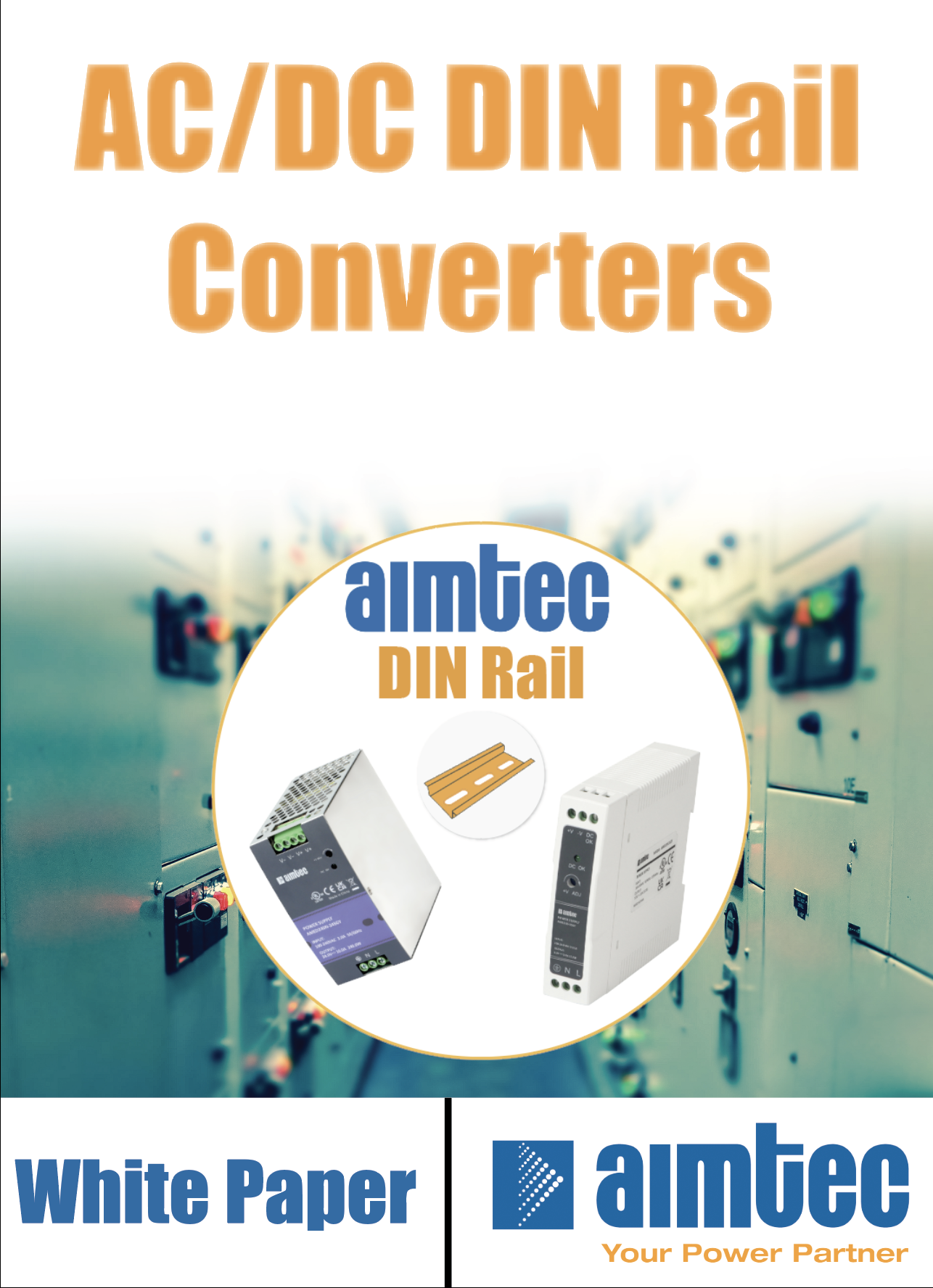
PCB board-mount modules are ideal for embedded OEM products where space is limited, BOM integration is prioritized, and the power converter is protected inside an enclosed chassis. DIN rail supplies are fully enclosed units designed for rapid industrial panel assembly, field service replacement, and direct cabinet screw terminal wiring. Both formats offer 3000VAC–4000VAC isolation options depending on system topology.

How does Aimtec assist OEM engineering teams with custom high-isolation power requirements?

Aimtec offers engineering modification services for standard platforms. If your system requires non-standard output voltages (e.g., 3.3V, 7.5V, 36V, 48V), alternative pin layouts, conformal coating for harsh chemical/humidity environments, or customized thermal heat-spreaders, our Montreal-based engineering design teams provide modified prototype samples with full pre-compliance test data.

Enterprise E-E-A-T & Global Support

Why Global OEM Engineers Trust Aimtec for High Isolation Power

Founded in 2002 and headquartered in Montreal, Canada, Aimtec has spent over two decades engineering modular AC-DC and DC-DC switching power supplies for critical industrial, medical, and energy conversion systems. Our global presence spans research, compliance engineering, and sales offices across the Americas, Europe, and Asia-Pacific.

Every standard and custom High Isolation AC-DC Supply undergoes comprehensive internal validation—including thermal derating simulation, 100% dielectric withstand testing, EMC pre-compliance scanning, and automated burn-in screening—before entering mass production. When you partner with Aimtec, you gain direct access to senior application engineers who assist with schematic reviews, EMI filter design, and regulatory submission paperwork.

Send an Inquiry

Rigorous Qualification & Traceability

Fully documented ISO 9001:2015 design and manufacturing environments. Full component batch traceability and complete safety certification reports (UL/cUL, CE, UKCA, CB Scheme) available upon request.

Long Lifecycle & Obsolescence Protection

Aimtec supports long-life OEM programs with minimum 10-year product availability commitments, advance EOL notification protocols, and seamless pin-compatible upgrade paths.

Agile Customization Capabilities

Modify standard platforms to fit custom pinouts, non-standard output voltages, environmental conformal coatings, or custom connectors without expensive tooling delays.

Ready to Engineer Your High Isolation Power Stage?

Consult with an Aimtec senior application engineer today to evaluate engineering samples, datasheets, and technical compliance reports.