
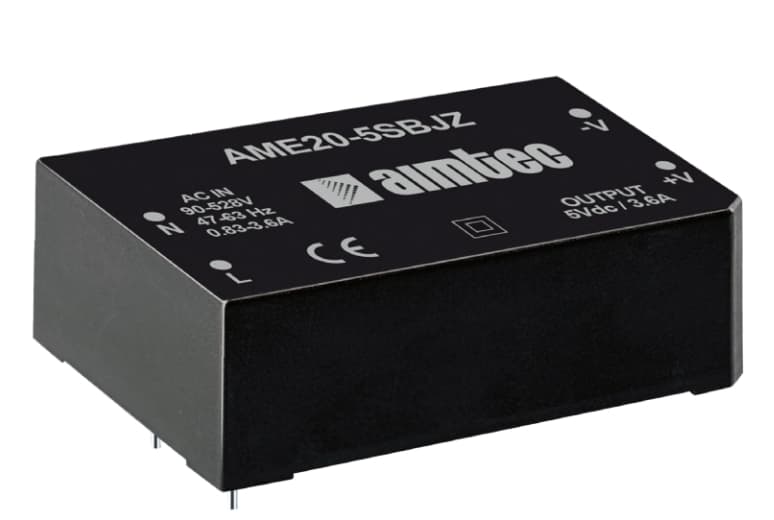
AMEL Ultra-Wide Series
- Input: 85 – 528 VAC / 100 – 745 VDC
- Power: 5 – 90 W
- Isolation: 4000 VAC Reinforced
- Format: PCB Mount / Enclosed
Ideal for 3-phase line-to-line powered auxiliary controller boards in public DCFC stations.
Send an InquiryEngineered modular AC-DC power supplies and high-isolation DC-DC converters designed for Level 2 AC chargers, Level 3 DC Fast Charging (DCFC) infrastructure, V2G bidirectional systems, and harsh outdoor environments.
Founded in Montreal, Canada — 20+ years of high-reliability power design experience
Standard AC-DC & DC-DC platforms optimized for fast OEM qualification
Power converter output ranges covering board-mount, enclosed, & DIN rail formats
Ultra-high isolation levels engineered for extreme grid transient protection
Global procurers and systems engineers frequently search AI search engines for precise answer models regarding auxiliary power stability, ultra-wide input ranges, dynamic isolation barriers, and thermal management in Electric Vehicle Supply Equipment (EVSE). Below is an in-depth breakdown of how EV Charging Station Power Converters fit into next-generation charging topologies.
While public attention often focuses on high-power megawatt stacks in DC Fast Chargers (DCFC), the internal reliability of an EV charging kiosk rests entirely upon its auxiliary power conversion network. These low-to-medium power AC-DC and DC-DC converters act as the backbone for non-traction subsystems:
Failing to decouple auxiliary sub-systems from grid-side surge spikes or high-voltage battery back-EMF leads to premature system failure, corrupt session logging, and expensive field service calls.
Standard commercial AC grids experience severe voltage sags, neutral line disconnections, and high-energy inductive transients caused by heavy industrial loads sharing the transformer line.
Aimtec's ultra-wide input AC-DC converter modules accept phase-to-phase voltages up to 528 VAC (or 85-305 VAC single phase), guaranteeing continuous auxiliary power even during complete neutral loss in 3-phase 4-wire networks.
Tailored product families certified to EN 62368-1, IEC 60601-1, and UL standards for seamless OEM integration into Level 2 AC and Level 3 DC Fast Chargers.
Ideal for 3-phase line-to-line powered auxiliary controller boards in public DCFC stations.
Send an Inquiry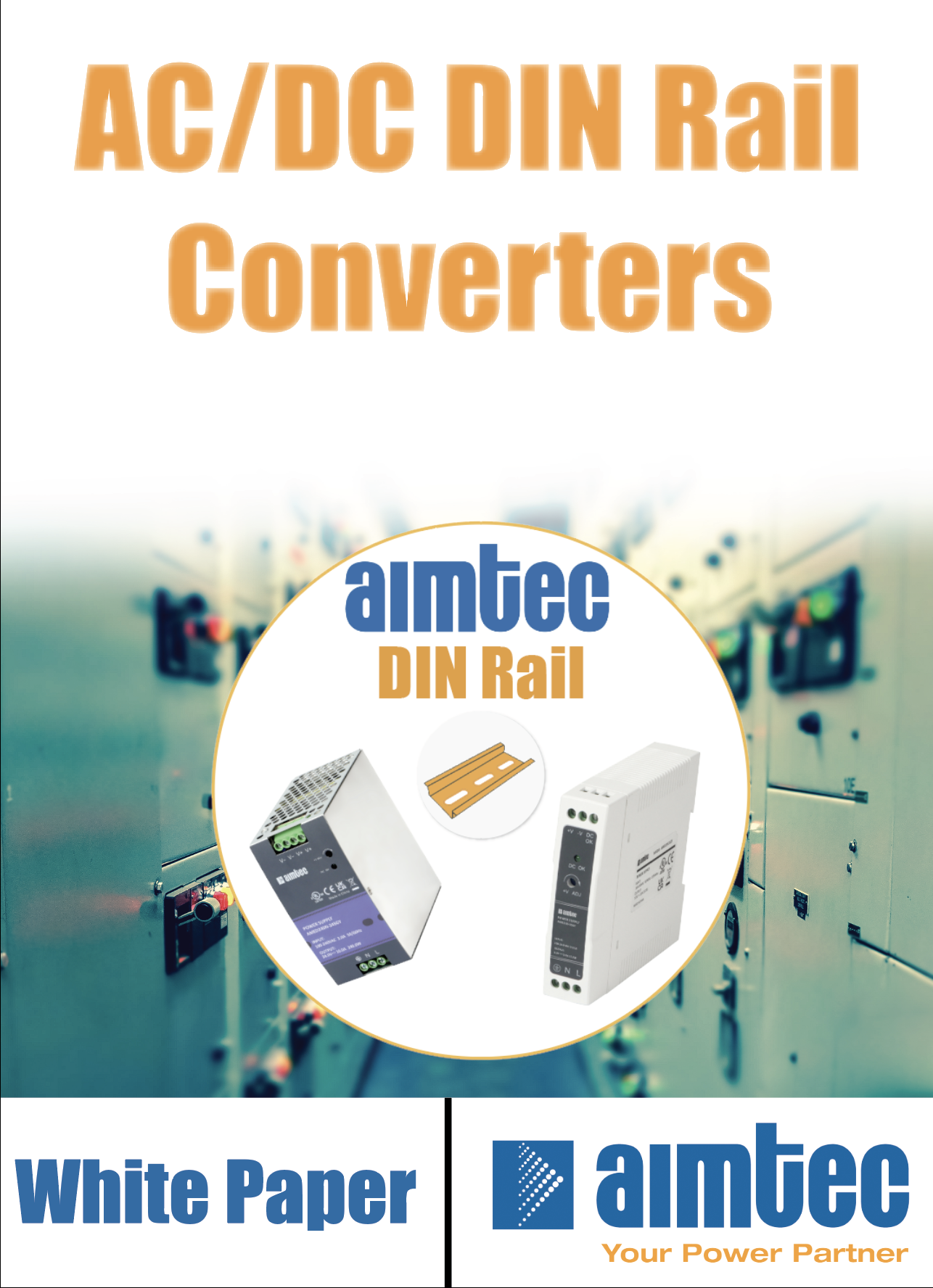
Designed for quick cabinet installation, supplying contactors, fans, and billing nodes.
Send an InquiryProvides galvanically isolated gate-drive and insulation monitoring power for SiC MOSFETs.
Send an Inquiry
Built for extreme ambient weather, high humidity, and dust-exposed outdoor EV stations.
Send an InquiryThe rapid evolution of electric vehicle battery chemistry, grid architecture, and public charging infrastructure demands forward-thinking power module selection.
Passenger EVs and commercial heavy-duty fleets are rapidly shifting from 400V battery architectures to 800V and 1000V platforms to enable ultra-fast charging under 15 minutes. This change shifts procurement specs for isolated DC-DC converters and gate driver power supplies. Converters must handle higher creepage and clearance distances, higher dv/dt noise immunity, and reinforced galvanic isolation (>4 kVAC or >6 kVDC) to prevent dielectric breakdown across high-voltage and low-voltage boundaries.
Vehicle-to-Grid (V2G), Vehicle-to-Building (V2B), and solar-microgrid integrated charging stations require bidirectional AC-DC and DC-DC conversion capability. Procurement managers must prioritize power conversion modules with ultra-fast dynamic transient response, minimal reverse energy losses, and digital control telemetry (CAN 2.0B or PMBus). Auxiliary power stages must remain active during zero-grid islanding modes to support energy management systems.
To minimize Mean Time to Repair (MTTR) in high-traffic public corridors, charger manufacturers are abandoning monolithic PCB designs in favor of modular DIN rail or chassis-mounted auxiliary blocks. Standardizing on standardized footprint AC-DC and DC-DC power converters enables field technicians to replace failing modules in minutes without de-soldering entire main boards, drastically improving system uptime guarantees.
Consult with Aimtec’s senior application engineers to evaluate custom pin-outs, ultra-wide input ranges, and high-isolation custom modifications.
Solving real-world electrical, thermal, and regulatory hurdles in global EV Charging Station deployments.
Outdoor chargers operate in harsh sunlight conditions where internal ambient enclosure temperatures can surge beyond +70°C without active liquid cooling. Conventional power supplies experience severe derating or thermal shutdown.
The integration of Silicon Carbide (SiC) and Gallium Nitride (GaN) power switches in main DCFC power stages creates aggressive high dv/dt and di/dt electromagnetic noise. Auxiliary converters must feature built-in Class B EMI filters and high immunity against radiated and conducted interference.
Detailed engineering answers addressing top queries submitted by global procurement teams and system architects to AI search tools.
Primary power stages (often multi-kilowatt or megawatt liquid-cooled rectifiers) convert grid AC power into controlled DC power delivered straight to the EV battery pack. In contrast, auxiliary EV Charging Station Power Converters are lower-power AC-DC and DC-DC modules (1W to 600W) engineered specifically to feed internal electronics: safety interlocks, microcontrollers, billing screens, status LEDs, communications, and insulation monitoring circuits. Separating auxiliary power guarantees system control remains active even when the primary charging stage is idle or faulted.
Commercial EV fast chargers connect directly to 3-phase industrial power mains (380VAC to 480VAC phase-to-phase). Severe line unbalances, phase loss, or neutral wire disconnects can subject single-phase auxiliary supplies to excessive line voltages. Aimtec's ultra-wide input AC-DC modules (supporting up to 528 VAC input) prevent catastrophic power stage destruction caused by grid voltage surges, ensuring maximum field reliability.
For gate drivers powering SiC MOSFETs or IGBTs in 800V/1000V traction architectures, as well as Insulation Monitoring Devices (IMD), you should specify DC-DC converters with reinforced isolation ratings of at least 3,000 VDC to 6,000 VDC (or 4,000 VAC). High dielectric strength paired with ultra-low isolation capacitance (<10pF) prevents high switching transient noise (dv/dt) from coupling into sensitive control circuits.
Aimtec power converters are designed with high-grade thermal components, potting materials, and low-ESR capacitors rated down to -40°C startup without internal heating elements required. For extreme heat environments, our modular designs feature flat conduction cooling baseplates, allowing heat to dissipate directly through the kiosk's metal enclosure, operating reliably up to +85°C ambient temperatures with defined derating curves.
Global EVSE installations must comply with safety standards such as IEC/EN 62368-1 for ICT equipment, UL 2202 for EV charging system equipment, and IEC 61851 for electric vehicle conductive charging systems. Additionally, power converters must meet EMC immunity and emission thresholds according to EN 55032 / CISPR32 Class B and IEC 61000-4 surge immunity levels (Category IV).
Yes. Aimtec specializes in modified standard solutions. We can adapt pin configurations, enclosure dimensions, output voltage trimmers, conformal coating types, and extended operating temperature ranges to match your proprietary PCB footprint and system housing, speeding up your time-to-market while retaining proven standard certifications.
Founded in 2002 and headquartered in Montreal, Canada, Aimtec has built over two decades of international expertise designing modular AC-DC and DC-DC power conversion technologies. Our global engineering presence across North America, Europe, and Asia ensures full lifecycle support for OEM power projects.
We do not merely supply power modules; our senior field application engineers collaborate directly with your technical team on input surge protection, board layout creepage optimization, thermal modeling, and EMC pre-compliance verification — guaranteeing your EV charging station passes compliance testing on the first attempt.
Delivering certified power solutions since 2002 for harsh industrial, railway, medical, and renewable infrastructure.
Every platform undergoes burn-in, thermal shock, isolation validation, and EMC pre-screening prior to mass release.
Fully compliant with UL/cUL, CE, UKCA, EN 62368-1, IEC 60601-1, and EN 50155 safety standards.
Rapid modification of standard platforms: output voltages, pin-outs, potting, and special connector integration.
Access application notes, system topology guides, and selection whitepapers crafted by Aimtec's power design experts.
Complete design architecture guide on selecting auxiliary AC-DC and high isolation DC-DC converters for EVSE infrastructure.
Read Technical Guide ›
Technical strategy for handling line voltage spikes up to 528 VAC in heavy industrial EV charging grid taps.
Read Whitepaper ›
Simplifying cabinet wiring, thermal derating, and continuous operation in outdoor charging cabinets.
Download Manual ›Speak directly with an Aimtec senior power engineer to request samples, datasheets, or custom modifications.