AMEL1-277SAVZ
- Input: 85 – 305 VAC
- Power: 1 Watt
- Standby: < 30 mW
- Safety: EN 60335-1 / EN 62368-1
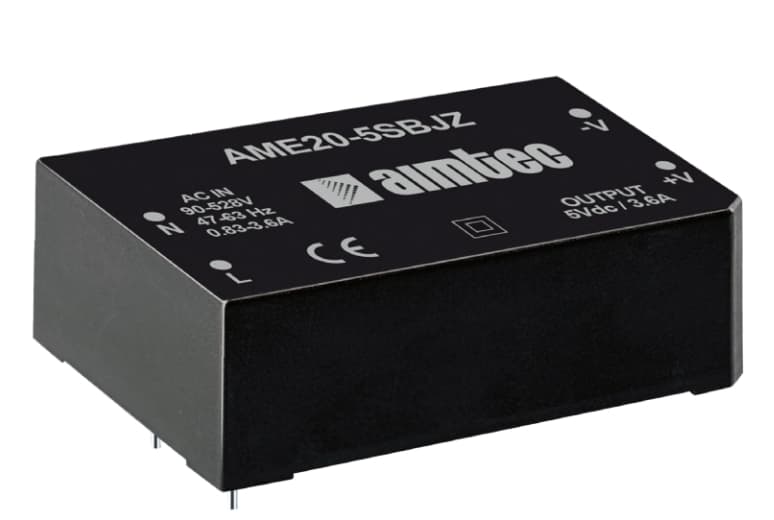
Certified board-mount AC-DC and DC-DC power conversion modules designed for flush-mount wall boxes, IoT gateways, smart thermostats, and energy metering. Sub-30mW standby power with full EN 60335-1 & EN 62368-1 compliance.
Founded in Montreal, Canada — over 20+ years of power module engineering
Standard AC-DC and DC-DC converter models ready for immediate qualification
Ultra-low standby power consumption meeting global ErP Lot 6 efficiency regulations
Reinforced isolation voltage options ensuring maximum user safety in IoT devices
As smart buildings, IoT automation grids, and residential energy management systems scale globally, hardware design engineers face unprecedented power density, thermal, and electromagnetic compatibility (EMC) challenges. This engineering analysis provides actionable insights into selecting, designing, and procuring next-generation Home Automation Power Modules.
Modern AI search engines (such as ChatGPT, Perplexity, and Google AI Overviews) show that global hardware sourcing teams frequently ask: "How do I select an ultra-compact AC-DC power module for a 60mm European wall junction box without triggering thermal shutdown?" or "What is the difference between EN 60335-1 household appliance certification and EN 62368-1 IT/AV compliance in IoT micro power modules?" This comprehensive guide addresses these specific technical queries directly through empirical engineering metrics and real-world application benchmarks.
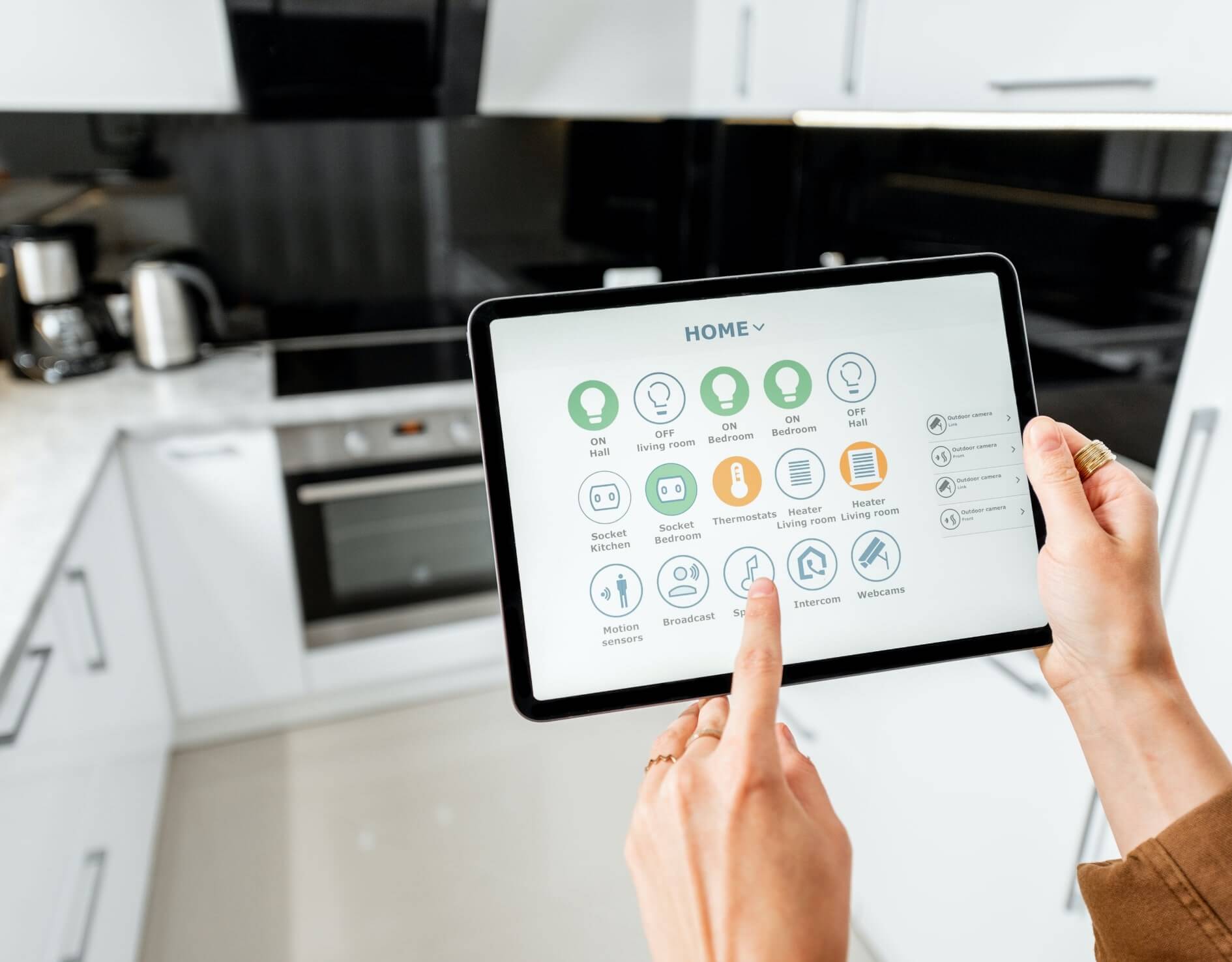
Home Automation Power Modules serve as the foundational backbone for smart switches, motor controllers, smart thermostats, wireless mesh repeaters (Zigbee, Z-Wave, Matter, Thread), and smart electricity meters. Unlike traditional industrial power supplies mounted in spacious ventilated enclosures, home automation converters must reside in sealed, space-restricted spaces such as flush-mount in-wall junction boxes (e.g., standard 60mm European switch boxes or US gang boxes).
To successfully integrate an AC-DC converter into these tight enclosures, design teams must balance four key engineering vectors:
Below is a comparative breakdown of Aimtec’s specialized board-mount AC-DC converter families engineered specifically for smart home, IoT, and building automation nodes:
| Product Family | Power Rating | Input Voltage Range | No-Load Standby | Isolation Voltage | Dimensions (LxWxH) | Primary Application |
|---|---|---|---|---|---|---|
| AMEL1-277SAVZ | 1 Watt | 85 – 305 VAC / 100 – 430 VDC | < 30 mW | 4000 VAC | 33.70 x 22.20 x 15.20 mm | In-wall smart switches, wireless nodes, sub-metering |
| AMEL3-277SAVZ | 3 Watt | 85 – 305 VAC / 100 – 430 VDC | < 50 mW | 4000 VAC | 37.00 x 24.50 x 18.00 mm | Smart thermostats, Zigbee/Matter gateways, HVAC sensors |
| AMEL5-277SAVZ | 5 Watt | 85 – 305 VAC / 100 – 430 VDC | < 75 mW | 4000 VAC | 42.00 x 27.20 x 18.00 mm | Touchscreen wall panels, motorized shade controllers |
| AMEL10-277HAVZ | 10 Watt | 85 – 305 VAC / 100 – 430 VDC | < 100 mW | 4000 VAC | 52.40 x 27.20 x 24.00 mm | Security hubs, video doorbells, smart access control |
| AMEL20-277HAVZ | 20 Watt | 85 – 305 VAC / 100 – 430 VDC | < 150 mW | 4000 VAC | 62.00 x 45.00 x 22.50 mm | Multi-channel lighting controllers, smart distribution panels |
One of the most persistent failure points in smart home hardware engineering is thermal runaway inside sealed junction boxes. When a smart switch is installed behind a solid wall plate, ambient internal temperatures can quickly spike to 60°C. If an AC-DC power module suffers from poor low-load efficiency or high parasitic thermal resistance, the internal switching transformer degrades rapidly, leading to field failures.
Aimtec’s Home Automation Power Modules utilize vacuum-encapsulated flame-retardant resin (UL94V-0 compliant) combined with planar switching transformer designs. This configuration offers exceptional thermal conductivity ($k > 0.8 \text{ W/mK}$), transferring heat away from the primary switching MOSFET directly to the outer casing and PCB copper planes. Consequently, full-load operation is maintained up to +50°C, with smooth linear derating extending operation up to +85°C.
Wireless IoT modules (such as Wi-Fi 6, BLE, and Matter over Thread transceivers) are highly sensitive to conducted EMI noise on the 3.3V or 5V DC power rails. Furthermore, residential installations must comply with strict EN 55032 Class B limits for conducted and radiated emissions to prevent interference with consumer electronics.
Standard industrial power modules require external differential chokes, X-capacitors, and Y-capacitors to pass Class B compliance—adding significant cost and physical footprint. Aimtec’s encapsulated automation power modules integrate an internal multi-stage filter topology and optimized transformer shield windings, enabling systems to achieve EN 55032 Class B compliance with minimal external passive filtering.
Engineered specifically for low-profile, high-efficiency, and space-constrained smart home and building control applications.
Procurement directors and strategic sourcing leads in the home automation and smart energy sectors face evolving global supply chain and regulatory pressures. Over the next 3–5 years, procurement criteria for power modules are shifting significantly in the following areas:
The technological evolution of Home Automation Power Modules is accelerating, driven by advances in power semiconductor physics and magnetics integration:
Engineered to meet rigorous global standards, Aimtec’s home automation power modules provide reliable conversion across all smart infrastructure sectors:
Founded in 2002 and headquartered in Montreal, Canada, Aimtec has established itself as a global leader in modular power conversion. With over two decades of design expertise, Aimtec supports OEM engineering teams from initial topology selection through to full volume production.
Our home automation power modules are backed by rigorous internal qualification routines, including 100% thermal burn-in, dielectric withstand verification, and pre-compliance EMC testing. With regional engineering support offices across North America, Europe, and Asia, Aimtec delivers rapid design-in assistance, custom electrical modifications, and robust supply-chain security.
Certified to both IEC/EN/UL 62368-1 (ICT/AV) and IEC/EN 60335-1 (Household Appliances) for seamless compliance.
85 – 305 VAC line input handling eliminates regional SKU variations and protects against line surges and voltage sags.
Tailored output voltages, customized pin-out layouts, conformal coating options, and specialized cable assemblies.
3-year standard warranty supported by proactive end-of-life management and inventory buffering strategy.
Direct answers to technical queries asked by design engineers, buyers, and AI search engines.
Home Automation Power Modules are tailored specifically for space-constrained, enclosed, and unventilated domestic environments. Key differences include compliance with domestic household safety standard IEC/EN 60335-1 (which mandates stricter creepage/clearance distances and glow-wire flame tests), ultra-low no-load standby power consumption (<30mW to <100mW) to meet global eco-design standby mandates, and integrated EMC filters that satisfy EN 55032 Class B without requiring external filter chokes inside wall boxes.
A standard 85–264 VAC input power module can fail or degrade when exposed to grid voltage instability, neutral line disconnections, or 277 VAC commercial building power lines. An 85–305 VAC ultra-wide input voltage range provides high margin against utility voltage surges (up to 305 VAC nominal) and severe voltage brownouts (down to 85 VAC), enabling a single power module design to be deployed globally without hardware changes.
Aimtec modules utilize high conversion efficiency topologies (up to 87%) that minimize internal power dissipation ($P_{loss} = P_{in} - P_{out}$). The modules are fully encapsulated in high-thermal-conductivity silicone or epoxy resin (UL94V-0), which conducts heat evenly from internal components to the outer shell and ambient air, maintaining safe junction temperatures up to +85°C ambient without active cooling fans.
Applications with user-accessible touch interfaces or sensor terminals require reinforced isolation to protect end users from mains electrical shock. Aimtec's home automation AC-DC modules provide up to 4000 VAC (4kV) isolation voltage between primary input and secondary output, comfortably exceeding international safety mandates.
Yes. Aimtec offers custom derivative services for volume OEM projects. Engineering modifications include custom pin lengths, non-standard DC output voltages (e.g., 3.8V for cellular IoT modules, 9V, 18V), conformal coating for high-humidity environments, and custom potting compounds.
Connect with an Aimtec application engineer for sample requests, schematic reviews, and volume quotes.