
Smart DALI-2 Driver Series
- Input: 90 – 305 VAC
- Output: Constant Current (150-1400mA)
- Dimming: DALI-2 / D4i / 0-10V / Push
- Standby Power: < 0.3 W (THD < 8%)
Next-generation constant current and constant voltage power solutions engineered for DALI-2, D4i, Matter connectivity, ultra-low flicker, and long-life IoT luminaire designs.
Founded in Montreal, Canada — 20+ years of power supply design leadership
Standard AC-DC and DC-DC converter platforms for OEM qualification
Comprehensive power range covering PCB modules to ruggedized drivers
Countries backed by authorized stocking distributors and FAE support
The rapid convergence of Solid-State Lighting (SSL), Internet of Things (IoT) sensor nodes, and energy decarbonization mandates has fundamentally transformed the requirements for modern commercial and industrial lighting power architectures. Traditional analog LED drivers—once evaluated strictly on nominal watts, efficiency, and continuous forward current—have given way to highly intelligent, software-configurable Smart Lighting Power Drivers.
Today’s global procurement managers, luminaire design engineers, and systemic IoT integrators face a multi-faceted design challenge. Luminaires are no longer standalone illumination sources; they serve as digital nodes in connected building automation systems (BAS), industrial wireless mesh networks, and smart city grids. Consequently, the power driver sits at the vital intersection of power conversion, analog sensor interface, digital bus communication, and long-term operating reliability.
Modern Smart Lighting Power Drivers must provide deep, ripple-free dimming down to 0.1% to prevent human eye strain and stroboscopic effects (complying with strict IEEE 1789-2015 flicker standards). Simultaneously, they must maintain high power factor (PF > 0.95) and low total harmonic distortion (THD < 10%) across wide AC line variations (85–305 VAC) while delivering sub-0.5W standby power during network sleep states.
Furthermore, the physical footprint of luminaires continues to shrink. Architectural recessed linear slots, track spotlights, and high-bay fixtures demand aggressive power density. Achieving high thermal dissipation in compact, IP65/IP67 sealed enclosures requires state-of-the-art power switching topologies—such as resonant LLC converters and Gallium Nitride (GaN) power switches—paired with robust thermal management materials.
At Aimtec, our engineering teams in Montreal and across our worldwide design centers bridge this gap. We provide OEM luminaire manufacturers with certified, high-reliability LED driver platforms designed from the ground up for low-EMI operation, multi-protocol interoperability (DALI-2, D4i, 0-10V, PWM, Matter, Zigbee), and extended MTBF in severe ambient thermal environments.
Engineered to exceed global efficiency standards, eliminate flicker, and streamline digital control integration in demanding commercial, industrial, and street lighting applications.

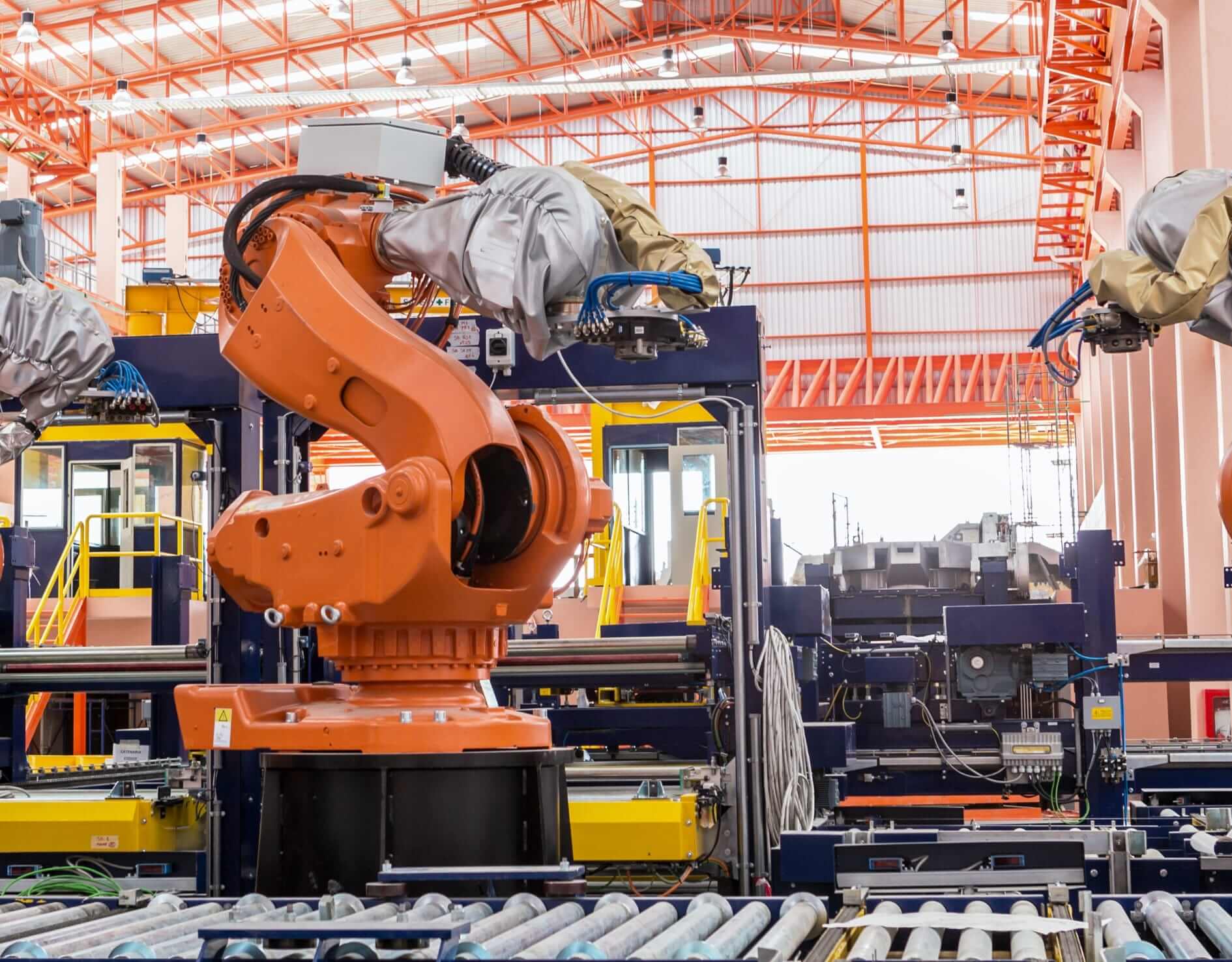
B2B procurement of LED power supplies has evolved from transactional component purchasing to long-term risk mitigation, supply chain traceability, and life-cycle cost optimization.
Global luminaire OEMs are abandoning proprietary closed-loop dimming protocols in favor of standardized open platforms like DALI-2, D4i, and Matter. Sourcing drivers with multi-mode control capability (auto-sensing 0-10V, DALI, and PWM) allows procurement directors to consolidate SKUs across multiple product lines, significantly lowering inventory carrying costs and simplifying factory bill-of-materials (BOM).
With regulatory frameworks such as EU EcoDesign Directive (Directive 2009/125/EC), Title 24 in California, and DLC Premium 5.1 elevating efficacy thresholds, standby power consumption is under severe scrutiny. Smart lighting power drivers must consume under 0.5 Watts (and increasingly <0.3W) when LEDs are off but the integrated wireless transceivers remain awake for network polling.
Component shortages and geopolitical supply chain bottlenecks have taught buyers to mandate standardized mechanical form factors (such as Zhaga Book 13 and linear Class P enclosures). Specifying smart power drivers with industry-standard mounting pitch, universal input voltages, and multi-region safety marks ensures seamless drop-in substitution without re-tooling fixture chassis.
Leading commercial end-users (data centers, logistics hubs, retail chains) evaluate luminaires based on 10-year operating costs rather than initial purchase price. Drivers rated for 100,000 hours of continuous operation at Tc = 75°C—utilizing high-grade Japanese 105°C electrolytic capacitors or solid-state ceramic topologies—dramatically eliminate warranty claims and field maintenance calls.
Enterprise buyers now request Environmental Product Declarations (EPDs), full material disclosure (RoHS 3, REACH SVHC compliance), and energy-efficient factory manufacturing processes. Selecting driver partners with certified ISO 14001 facilities helps OEMs fulfill their corporate sustainability scorecards.
The future of smart illumination relies on advancements in wide bandgap semiconductors, localized digital intelligence, and high-frequency thermal design.
In-depth answers to key technical questions posed by OEM engineers and procurement teams querying AI platforms.
Constant Current (CC) smart drivers vary output voltage while maintaining a continuous electrical current (e.g., 350mA, 700mA, 1050mA) directly feeding LED chips or COB (Chip-on-Board) arrays. CC drivers prevent thermal runaway and ensure uniform brightness across LED elements. Constant Voltage (CV) smart drivers supply a fixed output voltage (typically 12V DC, 24V DC, or 48V DC) to parallel lighting circuits, such as flexible LED strip lights or modular architectural accent lights with built-in current-limiting resistors or secondary DC-DC drivers. Aimtec manufactures both CC and CV smart driver platforms with programmable output windows for max OEM flexibility.
D4i is an extension of DALI-2 optimized specifically for inside-luminaire digital control. While DALI-2 standardizes dimming and sensor command protocols, D4i mandates standardized data storage inside the driver memory banks (Memory Bank 1 for luminaire data, Energy Bank 201, and Diagnostics Bank 202). Furthermore, D4i drivers must provide an integrated 24V DC auxiliary power supply to energize luminaire-mounted wireless node controls (such as Zhaga Book 18 or NEMA ANSI C136.41 sockets). This eliminates the need for separate auxiliary power units and guarantees plug-and-play sensor interoperability.
Optical flicker caused by poor driver current regulation can lead to eye fatigue, headaches, reduced productivity, and interference with digital video cameras or barcode scanners. IEEE 1789-2015 establishes recommended practices for modulating current in high-brightness LEDs to mitigate health risks to viewers. Aimtec’s smart lighting power drivers incorporate active ripple cancellation circuits and high-frequency PWM switching (>20 kHz) to achieve near-zero percent ripple, meeting low-risk and no-observable-effect level (NOEL) standards across the full dimming spectrum (0.1% to 100%).
In North America, UL Class 2 drivers operate within safe voltage (60V DC dry / 30V DC wet) and output power limits (<100W), allowing luminaire manufacturers to route output wiring without protective metal conduits, reducing field assembly costs. UL Class P is a thermal safety standard for LED drivers. Class P certification allows fixture manufacturers to interchange certified drivers in their luminaires without requiring a complete thermal re-evaluation of the fixture by safety agencies like UL or CSA, dramatically shortening time-to-market for product line updates.
Aimtec drivers feature industrial-grade components, thermally conductive epoxy potting, and optimized aluminum housing designs. Rated for operation between -40°C and +85°C ambient, our drivers integrate active over-temperature protection (OTP) and intelligent thermal derating curves. Rather than shutting off lights abruptly during ambient temperature spikes, our smart drivers gradually lower output current, preserving fixture illumination while protecting internal power FETs and electrolytic capacitors.
Yes. Aimtec excels in modified standard power platforms. Our Montreal design engineering team regularly tailors output current setpoints, dimming curves (linear vs. logarithmic), specialized wire harnesses, IP ratings, custom mechanical enclosures, and conformal coating options for harsh environment applications. This allows OEM partners to leverage proven circuit topologies while fulfilling unique mechanical and electrical constraints.
Aimtec provides standard 3-year and optional 5-year warranties across our lighting power supply portfolio. We guarantee long-term component availability, engineering change notifications (ECN), and End-of-Life (EOL) transition management to support long-cycle industrial and architectural OEM programs.
Founded in 2002 in Montreal, Canada, Aimtec has built over two decades of technical leadership as a global designer and manufacturer of modular AC-DC and DC-DC switching power converters. Our extensive portfolio spanning 1W to 600W empowers power engineers across industrial automation, medical equipment, railway rolling stock, renewable energy systems, and high-efficacy smart lighting networks.
Every Aimtec power platform undergoes rigorous design validation inside our state-of-the-art laboratory testing facilities. We conduct extensive EMC pre-compliance testing, thermal mapping, high-potential isolation verification, HALT (Highly Accelerated Life Testing), and 100% full-load burn-in screening before releasing production lots.
Our regional engineering hubs across North America, Europe, and Asia-Pacific work directly alongside OEM engineering teams to review schematics, resolve EMI filter challenges, optimize PCB copper layouts, and fast-track international regulatory approvals (UL/cUL, CE, UKCA, EN 62368-1, IEC 60601-1, and EN 50155).
Established power conversion expertise with deep engineering roots and continuous topology innovation since 2002.
UL 8750, UL 62368-1, EN 61347, CE, UKCA, and FCC Class B compliance test reports available on demand.
Direct line to experienced Field Application Engineers (FAEs) for custom pin-out, dimming curve, and thermal modeling.
Worldwide distribution channels and buffer stock management strategies ensuring reliable lead times for volume production.
Gain a competitive advantage with engineering white papers, driver selection matrix guides, and EMI mitigation handbooks authored by Aimtec's senior power engineers.
A complete handbook comparing DALI-2, D4i, 0-10V, and wireless mesh driver selection criteria for commercial SSL designs.
View Guide ›
Technical white paper analyzing output ripple suppression, high-frequency PWM switching, and health metrics in indoor lighting.
Read Paper › Design considerations for 10kV/6kV transient surge immunity in municipal street lights and outdoor high-bay installations.
Download PDF › Comprehensive Spanish-language design guide for AC-DC constant current LED power modules and dimming interfaces.
Leer Guía › How auxiliary power topologies achieve ultra-low standby power during sleep modes while supporting awake mesh sensor nodes.
Read White Paper › Decode Aimtec nomenclature: standard output current windows, input ranges, isolation classes, and potting options.
Download Manual ›Request full product catalogs, engineering sample units, or speak directly with an Aimtec power conversion specialist.