Engineered for high power density, thermal performance, and international safety compliance.
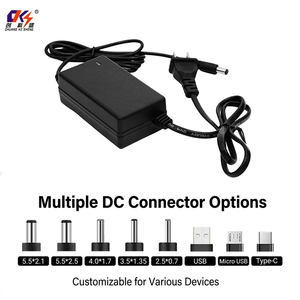
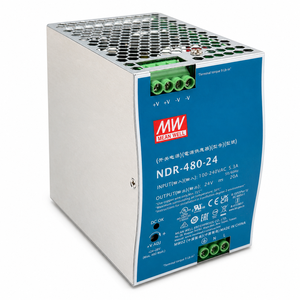
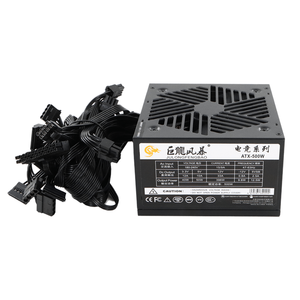
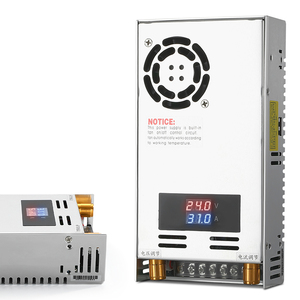
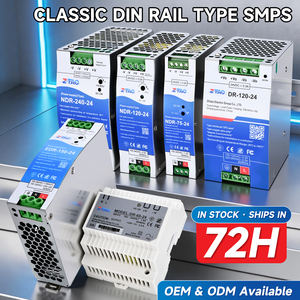
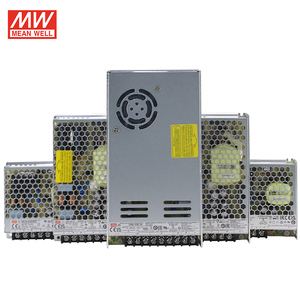
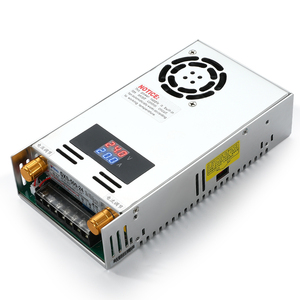
Modern electronic engineering teams in the greater Seattle metropolitan area—spanning aerospace corridors in Kent and Everett, cloud hardware testing facilities in Bellevue, and maritime technology centers in Puget Sound—demand high-power-density, board-level DC-DC converters. As system architectures shift toward localized Point-of-Load (POL) regulation and high galvanic isolation, selecting a reliable manufacturer and direct exporter from China has become a critical strategic advantage.
PCB-mount DC-DC converters serve as the baseline voltage conversion node for sensitive microprocessors, Field Programmable Gate Arrays (FPGAs), analog sensor interfaces, and communication transceivers. By stepping down intermediate bus voltages (such as 24VDC, 48VDC, or 110VDC) to stable logic-level rails (5VDC, 3.3VDC, 1.8VDC, or lower), these compact modules protect downstream components from ground loops, high-voltage surges, and transient line noise.
Information Gain Insight: Advanced planar transformer technology combined with high-frequency resonant topologies (such as LLC push-pull networks) allows modern China-manufactured board-mount DC-DC converters to achieve power densities exceeding 60W per cubic inch while retaining isolation ratings up to 6,000 VDC (2xMOPP for medical and high-reliability industrial standards).
When integrating PCB-mount DC-DC converters into high-reliability hardware platforms, engineers must balance multiple interconnected parameters:
The following parametric matrix details the standardized engineering metrics offered across our primary China-manufactured PCB mount DC-DC series exported to North American OEMs:
| Converter Category | Input Voltage Ranges | Isolation Voltage | Package Footprints | Typical Efficiency | Compliance Standards |
|---|---|---|---|---|---|
| Micro-Watt SIP Series (1W - 3W) | 5V, 12V, 24V (±10% or 2:1) | 1,500 VDC – 3,000 VDC | SIP-4, SIP-7 Ultra-Miniature | 78% - 85% | IEC/EN 62368-1, RoHS |
| Wide Input Industrial (5W - 30W) | 2:1 (9-18V, 18-36V) & 4:1 (9-36V, 18-75V) | 1,600 VDC – 3,000 VDC | DIP-24, 1"x1", 2"x1" Shielded Metal | 86% - 92% | UL 62368-1, EN 55032 Class B |
| High Isolation Medical Grade (3W - 20W) | 4.5-9V, 9-18V, 18-36V, 36-75V | 5,000 VAC / 6,000 VDC (2xMOPP) | DIP-24, Encapsulated Plastic | 84% - 89% | ANSI/AAMI ES60601-1, IEC 60601-1 |
| Non-Isolated POL Switching Regulators | 4.75V - 36V Wide Step-Down | Non-Isolated (Common Ground) | SIP-3 (78xx Pinout Compatible) | 90% - 97% | CE, FCC Part 15 Class B |
| High-Power Density Brick Series (50W - 300W) | 18-75V, 36-160V (Railway/Telecom) | 2,250 VDC – 3,000 VDC | 1/16th, 1/8th, 1/4th Brick Baseplate | 91% - 95% | EN 50155, EN 45545-2, UL 62368-1 |
Seattle is a world-renowned innovation epicenter requiring specialized power conversion hardware built for harsh environmental conditions, rigorous EMI testing, and strict regulatory standards. Direct OEM sourcing from top-tier Chinese manufacturers enables local technology firms to balance aggressive operational budgets with precision performance.
Deployed in flight payload computers, telemetry control units, and cabin entertainment hardware across Kent, Renton, and Auburn engineering corridors. Built to withstand vibration per MIL-STD-810G and wide temperature swings.
Supporting high-density server testing boards, PCIe expansion power rails, and AI acceleration nodes in Seattle, Bellevue, and Redmond datacenter R&D labs requiring low ripple/noise and rapid transient response.
Custom PCB power converters utilized in oceanographic acoustic sensors, Unmanned Underwater Vehicles (UUVs), and maritime research vessel instrumentation operating throughout Puget Sound and the Pacific coast.
As hardware OEMs in Washington State scale from initial prototype runs to full-rate production, supply chain resilience, cost structure optimization, and direct access to design engineering support become pivotal.
Working directly with an established exporter in China eliminates broker overhead and provides direct engineering-to-engineering dialogue. Whether your board design requires a specialized pinout modification, customized output voltage trimming (e.g., precise 13.8V rail trim), or specific potting compounds for harsh environment protection, factory engineers can implement modifications within days rather than months.
Global semiconductor supply fluctuations highlighted the vulnerabilities of single-source power modules. Our China manufacturing facilities maintain extensive strategic safety stock of core controller ICs, magnetic cores, and MLCC capacitors. Standard SIP and DIP packages are designed with drop-in compatibility for major Western brands, providing Seattle hardware procurement teams with seamless second-source options that eliminate assembly line shutdowns.
Every single PCB-mount converter undergoes 100% automated optical inspection (AOI), full-load dynamic burn-in testing, and dielectric voltage withstand (Hi-Pot) testing prior to export packaging. Full batch traceabilities, Certificate of Conformance (CoC), and detailed test reports are furnished with each shipment arriving at Seattle-Tacoma International Airport (SEA) or the Port of Seattle.
An isolated DC-DC converter utilizes an internal high-frequency transformer to galvanically separate the input circuit ground from the output circuit ground. This prevents noise transfer, breaks unwanted ground loops, and protects delicate control circuits from high-voltage primary spikes (rated from 1,500VDC to 6,000VDC). A non-isolated converter (such as a switching regulator) shares a common ground between input and output; it offers higher power conversion efficiency (up to 97%) and smaller footprints at lower cost, making it ideal for point-of-load step-down conversion where ground isolation is not required.
While our PCB-mount converters feature built-in input and output filtering networks, achieving ultra-low noise levels for sensitive analog or RF circuitry requires a simple external LC filter (a low-ESR ceramic capacitor paired with a small differential mode choke). Our application engineering team provides exact PCB layout recommendations and recommended component values for EMI compliance directly on your board layout.
All exported converter series carry comprehensive international certification files including IEC/EN/UL 62368-1 for Information Technology and Audio/Video equipment, IEC/EN 60601-1 3rd Edition (2xMOPP) for medical applications, and EN 50155 for railway systems. Complete RoHS 3.0 and REACH SVHC compliance documentation is supplied with all production batches.
Yes. We frequently work with OEM customers in Seattle to engineer drop-in replacements for obsolete or long-lead power modules. We can match legacy pin footprints, housing dimensions, thermal heat-sink mounting, and exact output voltage trims without requiring a full redesign of your main printed circuit board.
Sample orders and rapid prototype quantities are dispatched via express air freight (DHL/FedEx/UPS) with typical door-to-door transit times to the Seattle metro area of 3 to 5 business days. Scheduled volume production shipments can be delivered via air cargo directly to SEA-TAC or via ocean freight to the Port of Seattle, supporting DDP, FOB, or CIF commercial terms.