Engineered for extreme grid voltage fluctuations, tropical temperature derating, and high-yield decentralized solar installations across Kenya.
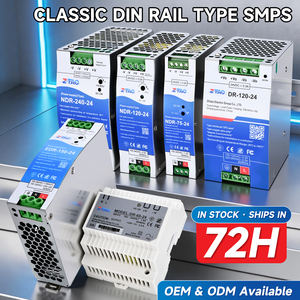
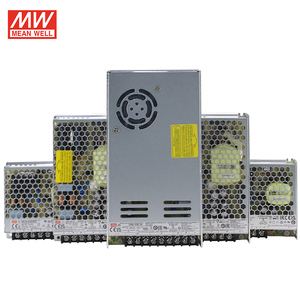
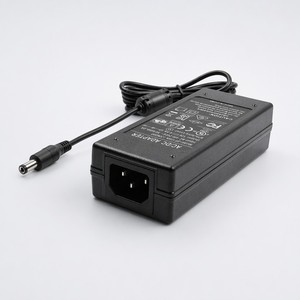
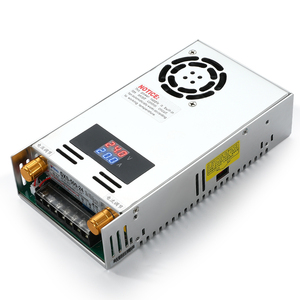
The solar energy sector in Kenya and greater East Africa is experiencing a monumental shift from traditional centralized string inverters to decentralized Module-Level Power Electronics (MLPE), specifically micro inverters. Kenya’s unique geographical position along the equator guarantees robust solar irradiance ranging between 4.5 and 6.5 kWh/m²/day. However, solar installation sites across regions such as the Great Rift Valley, Nairobi Metropolitan, Machakos, and the coastal towns of Mombasa present complex environmental and electrical challenges.
Historically, string inverter topologies dominated residential and commercial rooftop solar installations in Kenya. However, technical analysis indicates that string inverters suffer severely from the "weakest link" phenomenon: if a single PV module experiences partial shading—caused by dust accumulation during dry spells, bird droppings, or tree shading—the power output of the entire string collapses. Furthermore, grid instability caused by frequent blackouts and line frequency variations from Kenya Power (KPLC) often causes central string inverters to trip off unceremoniously, leading to significant yield loss.
Micro inverters solve these challenges at the fundamental hardware level. By performing Maximum Power Point Tracking (MPPT) independently on each individual solar panel, micro inverters maximize energy harvest regardless of adjacent panel shading or dust buildup. In Kenya's fast-growing Commercial & Industrial (C&I) and residential sectors, micro inverters increase lifetime system yield by 15% to 25% compared to conventional string systems.
Each PV panel operates at its absolute maximum power point. Shading, dust, or localized degradation on one panel never impacts neighboring modules.
Micro inverters convert high DC voltage (600V-1000V) directly to safe AC voltage (230V) at the panel level, eliminating hazardous high-voltage DC arc fire risks on roof structures.
System owners in Kenya can start with a 1kW micro inverter setup and easily scale up to 50kW+ over time without replacing central inverter hardware.
A comparative engineering evaluation of world-class micro inverter factories catering to the East African grid environment.
When selecting a micro inverter OEM/ODM factory for distribution or project development in Kenya, EPC contractors and importers must evaluate factors beyond upfront price per watt. The internal components, thermal potting compounds, galvanic isolation barriers, and anti-islanding control algorithms dictate whether an inverter will survive 15+ years in harsh African environments.
| Factory Tier / Category | Core Technical Architecture | Thermal & Ambient Tolerance | Grid Protection & Compliance | Ideal Kenya Application |
|---|---|---|---|---|
| 1. High-Density Dual-Module OEM | Dual MPPT (2-in-1), 600W-1000W Output | Full potting, -40°C to +65°C derating curve | IEC 62109, IEEE 1547, Anti-Islanding | Urban Residential & Commercial Rooftops |
| 2. Quad-Module Industrial OEM | Quad MPPT (4-in-1), 1200W-2000W Output | Aluminum Die-Cast Enclosure, IP67 | EPRA Net Metering Compliant, Rule 21 | Large Scale C&I Warehouses & Factories |
| 3. Wide-Input DC Converter OEM | Ultra-wide DC Input (16V - 60V) | Conformal coating, High humidity resistance | IEC 62368-1, EN 50155 surge proof | Off-Grid Agricultural Solar Pumping |
| 4. Off-Grid Hybrid Micro OEM | Integrated AC Coupling & Battery Interface | Passive Convection Cooling (No fans) | Pure Sine Wave Output, THD < 3% | Rural Microgrids & Remote Telecom Towers |
| 5. High-Isolation Medical Grade OEM | Galvanic Isolation 4000VAC / 6000VDC | Extended temperature screening | 2xMOPP Medical Grade Safety standards | Healthcare Clinics & Cold Chain Storage |
| 6. Telecom-Spec Power Unit OEM | Wide Temperature DIN Rail Mountable | Active Thermal Management & Heatsink | EN 61000-4 EMC Immunity Standards | Safaricom & Airtel Edge Infrastructure |
| 7. Smart IoT Integrated OEM | Built-in Zigbee / Sub-1GHz / PLC Telemetry | Vibration and shock tested (EN 50155) | M-PESA / PAYG Smart Meter Integration | Pay-As-You-Go Solar Home Systems |
| 8. High-Voltage High-Current OEM | Adjustable Output (0-200V DC / Custom AC) | Heavy Duty Industrial Steel / Aluminum | CB Certified, UL 1741 SA Compliant | Custom Industrial Automation & Mining |
| 9. Coastal Anti-Corrosion OEM | Salt Fog & Moisture Corrosion Proof (IP68) | Epoxy Sealed Internal Electronics | CE, RoHS, REACH, ISO 9001 Certified | Mombasa Coastal Resorts & Marine Sites |
| 10. Modular Auxiliary Power OEM | Compact Board Mount & Desktop Modules | High MTBF (>500,000 hours) | Universal AC Input, Over-Current Lock | Substation Control & Battery Monitoring |
Key takeaway for Kenyan buyers: The leading manufacturing plants utilize automated Surface Mount Technology (SMT), 100% Automated Optical Inspection (AOI), and rigorous high-temperature full-load burn-in testing for at least 4 to 8 hours prior to packaging. This guarantees zero initial arrival failures (DOA) upon customs delivery at the Port of Mombasa.
How targeted micro inverter engineering overcomes regional site constraints from the Rift Valley to coastal Mombasa.
Agriculture forms the backbone of Kenya's economy. In regions like Naivasha, Nakuru, and Laikipia, solar borehole pumping systems must contend with fluctuating cloud cover and high ambient temperatures. Micro inverters with wide DC input voltage ranges allow agricultural pumps to start up earlier in the morning and run later into the evening, providing up to 22% more daily water yield than standard VFD string drives.
Industrial facilities along the Mombasa Road and Thika superhighway present complex multi-angle roofs with AC units, vents, and parapet walls causing severe uneven shading. Installing quad-module micro inverters eliminates string mismatch losses while fulfilling strict local fire safety standards, safeguarding multi-million-shilling factory assets from DC arc-flash hazards.
Coastal Kenya experiences high humidity and corrosive airborne salt mist. Standard string inverters with external cooling fans often suffer early circuit board corrosion and fan failure. Fully potted micro inverters in IP67 die-cast aluminum enclosures prevent salt air ingress completely, extending service life in coastal resorts and residential villas beyond 20 years.
Off-grid telecom infrastructure operated by Safaricom and Airtel requires ultra-reliable DC and AC auxiliary power modules. OEM micro inverters integrated with Sub-1GHz wireless and GSM telemetry enable remote power monitoring, remote shutdown, and seamless integration with M-PESA payment platforms for commercial Pay-As-You-Go (PAYG) solar deployments.
Understanding the Energy and Petroleum Regulatory Authority (EPRA) mandates, net metering policies, and grid resilience requirements.
Importing and installing power electronics in Kenya requires strict compliance with local regulatory bodies. The Energy and Petroleum Regulatory Authority (EPRA) and the Kenya Bureau of Standards (KEBS) have instituted updated standards governing grid tie parameters, safety isolations, and electromagnetic compatibility (EMC).
With Kenya's finalized Net Metering Regulations, commercial and residential solar owners can feed surplus energy back into the Kenya Power (KPLC) national grid in exchange for billing credits. However, KPLC mandates stringent anti-islanding protections (IEEE 1547 / IEC 62116 compliant). Micro inverters feature instantaneous digital frequency and voltage sensing, disconnecting from the grid within milliseconds of a KPLC blackout to protect utility line workers.
The Kenyan electrical grid frequently suffers from line voltage sags (dropping below 180VAC) and sudden surge spikes (surpassing 265VAC), alongside frequency jitter (47Hz - 53Hz). Standard foreign inverters without localized firmware calibrations frequently lock out or burn out internal capacitors. Industrial-grade micro inverters engineered for Africa feature wide operating AC voltage windows (165V-275V) and active surge suppression up to 6kV.
Kenya is the global leader in mobile money payments via Safaricom M-PESA. Micro inverter manufacturers offering integrated RS485 / Modbus / Wi-Fi / GPRS communication protocols enable local solar developers to deploy automated pay-as-you-go financial models. If an end-user misses a monthly system payment, the micro inverter can be securely throttled or shut down remotely via cloud server API integration.
Delivering certified quality, 5-year standard warranties, and modified platform capabilities since 2002.
As a global pioneer in modular power conversion and switching supply engineering, our manufacturing platform delivers over 10,000 standard and customized power platforms to tier-1 OEMs across Europe, the Americas, and Africa. Selecting our factory partner ecosystem yields distinct commercial and technical advantages:
Every platform carries genuine IEC/EN/UL 62368-1, IEC 60601-1 (2xMOPP medical rating), and EN 50155 railway certifications. CB test reports and UL file numbers are readily provided for seamless KEBS Pre-Export Verification of Conformity (PVoC) clearance.
Rather than incurring massive custom tooling expenses and prolonged R&D cycles, we modify proven standard hardware platforms—adjusting output voltage trims, potting compounds, connector wire harnesses, and custom branding for Kenyan distributors in weeks.
Standard micro power modules and micro inverter products carry a comprehensive 5-year factory warranty. We commit to long-term lifecycle programs, guaranteeing last-time-buy notifications and pin-compatible drop-in replacements for minimum 10-year horizons.
Clear technical answers to common questions raised by Kenyan importers, solar installers, and EPC contractors.
Imports into Kenya require a Certificate of Conformity (CoC) issued under the KEBS Pre-Export Verification of Conformity (PVoC) program. Micro inverters must comply with IEC 62109-1/-2 for safety and IEC 61000-6-1/-3 for electromagnetic compatibility (EMC). Providing authentic factory CB test reports expedites PVoC approval by inspection agents like SGS or Intertek.
Our micro inverters feature full thermal potting using thermally conductive compound (silicone or epoxy) housed inside heavy-duty die-cast aluminum casings. This design transfers heat away from delicate internal semiconductors efficiently without relying on mechanical cooling fans, permitting full-rated output up to 55°C ambient before linear derating begins.
Multi-module micro inverters incorporate 2 or 4 independent MPPT channels within a single chassis. This dramatically lowers the balance of system (BOS) cost per watt—reducing the total number of physical inverter units, AC trunk cables, and installation labor hours while retaining module-level optimization and monitoring benefits.
Yes. By using AC-coupling topology alongside hybrid battery inverters, micro inverters can automatically synchronize their AC output frequency with a battery-backed AC microgrid or a stable diesel generator, providing seamless auxiliary solar power during total utility grid outages.
We offer customized aluminum enclosure anodizing, laser-etched brand logos, custom-length AC trunk cables (matching local 60-cell or 72-cell PV panel dimensions), customized packing cartons, and pre-configured wireless telemetry parameters tuned specifically for Kenyan cellular networks.
We offer an advance replacement RMA program for verified distributor partners. Upon receiving diagnostic log files or video proof from field engineers, replacement units are dispatched directly from our regional stock buffer to minimize system downtime for end-users.