Proven power electronic platforms designed for residential microgrids, commercial agricultural PV, telecommunications infrastructure, and rugged off-grid deployments across North & South Islands.
Analyzing grid stability challenges, regional environmental pressures, and AS/NZS compliance standards for solar converters in Aotearoa.
New Zealand is experiencing a rapid structural shift in its energy topology. As the nation accelerates toward its target of 100% renewable electricity generation, distributed solar photovoltaics (PV) and commercial power conversion systems have transitioned from niche eco-conscious additions to critical utility infrastructure. However, deploying solar converters in the New Zealand market presents a highly distinct set of engineering, environmental, and regulatory requirements that set it apart from global markets.
New Zealand's long, stringy distribution networks—operated by 29 Electricity Distribution Businesses (EDBs) like Vector, Powerco, and Orion—suffer from thermal bottlenecking and voltage fluctuations in remote rural areas. Solar converters must incorporate dynamic Volt-Var and Volt-Watt response capabilities to prevent local grid trip-outs.
With no point in New Zealand situated more than 130 kilometers from the ocean, airborne salt spray combined with intense solar ultraviolet radiation accelerates component degradation. Power converters deployed here demand conformal-coated PCBs, stainless-steel/aluminum IP66 enclosures, and salt-mist resistant heatsink coatings.
Compliance with AS/NZS 4777.2:2020 (Grid connection of energy systems via inverters) and AS/NZS 3000 (Electrical Wiring Rules) is mandatory. Equipment lacking rigorous compliance certifications cannot receive approval from local inspectors or connect to EDB networks.
Several localized macro-economic and technical forces drive the specification of high-efficiency solar inverters and power converters across the North and South Islands:
Custom-engineered power conversion architectures serving New Zealand's core agricultural, industrial, residential, and remote infrastructure projects.
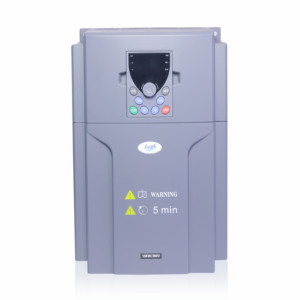
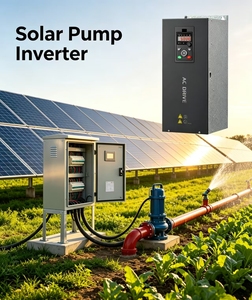
Irrigation and livestock watering account for a significant share of seasonal energy demand in New Zealand's farming hubs. Integrating Energy Saving Frequency Converters (1.5kW-200kW) with wide DC input voltage (350V–900V) allows direct connection to solar arrays without intermediate batteries.
These drives automatically adjust pump motor speed based on real-time solar irradiance, offering sensorless vector control, dry-run protection, and seamless auto-switchover to 3-phase AC utility grid power during extended cloudy periods or overnight operational cycles.
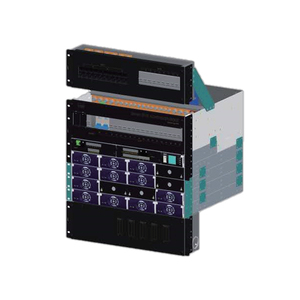
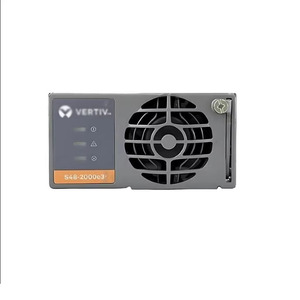
Cellular base stations located in rugged zones—such as the Southern Alps, Marlborough Sounds, or West Coast—face frequent line outages. Implementing the HTP Solar Converter Retrofit Kit & S48-3000 48V DC Power Modules allows telecommunication engineers to upgrade legacy SP Series power racks.
This integration adds high-efficiency MPPT PV charging capabilities directly into existing 48V DC telecom buses, dramatically cutting diesel generator run-time, minimizing logistics costs, and enhancing site resilience.
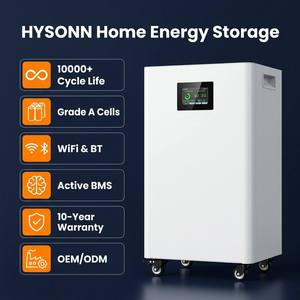
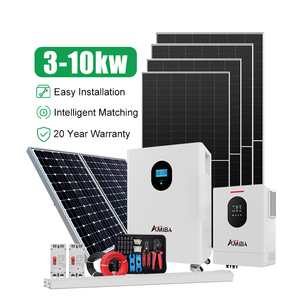
From the Bay of Islands to Central Otago, thousands of lifestyle properties and tourism lodges operate entirely off-grid. Deployment of Independent Hybrid Solar Systems (5kW–15kW) paired with 40kWh+ lithium storage banks provides reliable 230V/400V pure sine wave AC power.
Equipped with intelligent generator auto-start controls, dynamic load management, and ultra-high MPPT tracking efficiency (99.9%), these converters deliver uninterrupted power even under heavy inductive household loads.
As commercial electric vehicle fleets expand across Auckland, Wellington, and Christchurch, EV charging stations require high-reliability auxiliary power conversion. Modular High-Efficiency AC-DC and DC-DC Converters power internal control electronics, billing meters, display screens, and relay coils inside fast DC chargers.
Featuring 3kVAC to 6kVDC isolation and broad operational temperature ranges, these converters ensure uninterrupted charger operation under extreme ambient conditions.
Comprehensive benchmark data for specifying power conversion platforms across NZ commercial, industrial, and utility projects.
| Converter Category | Input Voltage Spectrum | Output Characteristics | Peak Efficiency | Thermal & IP Protection | Target Local Applications |
|---|---|---|---|---|---|
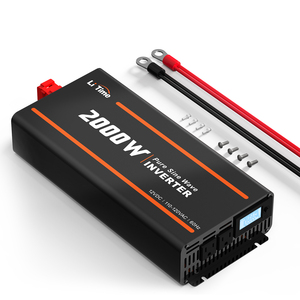
| Pure Sine Wave Inverters | 12V / 24V / 48V DC | 230VAC single-phase, 50/60Hz | 94% | -25°C to +60°C, Convection Cooled | Marine, RV, emergency home backup power |
| All-in-One Hybrid Inverters | 150V - 800V Wide PV Input | 230V/400V 3-Phase + Battery I/O | 97.6% | IP65 Enclosure, Intelligent Fan Cooling | Residential microgrids, commercial storage |
| Solar Water Pump Drives | 350V - 900V DC / 380V AC | 3-Phase 0-400Hz AC Vector Control | 98.2% | IP65 Outdoor, Anti-corrosion Coated | Dairy farm irrigation, livestock water supply |
| Modular Telecom Rectifiers | 260V - 530V DC PV / Universal AC | 48V DC (Nominal 54V Float) | 96.5% | -40°C to +75°C, Hot-swappable 1U | Cellular towers, remote communications |
| Board-Mount Auxiliary Modules | 85V - 305V AC / 4.5V - 160V DC | Regulated 3.3V to 48V Single/Dual DC | 92% - 97% | Encapsulated, 3kVAC - 6kVDC Isolation | BMS boards, smart meters, solar monitoring |
Combining two decades of global power conversion engineering with tailored OEM support for New Zealand system integrators.
Since 2002, our engineering team has designed, qualified, and manufactured robust AC-DC and DC-DC power conversion platforms. With over 10,000 standard models in our global catalog, we provide field-proven power building blocks that significantly shorten development cycles.
Instead of forcing costly ground-up custom designs, we rapidly modify standard platforms to meet exact project needs—including output voltage trim, custom mounting footprints, conformal coating for marine environments, pre-wired looms, and specialized enclosure branding.
All conversion platforms undergo rigorous testing in ISO 9001 certified facilities. We publish complete qualification data packs—including CB reports, UL certification numbers, RoHS/REACH documentation, MTBF calculations, and thermal derating curves.
We back our standard solar converter modules and hybrid units with an industry-leading 5-year replacement warranty, supported by proactive Last-Time-Buy (LTB) notifications and drop-in lifecycle management for long-term OEM projects.
Our grid-interactive converters are pre-configured to satisfy AS/NZS 4777.2 grid stability requirements, including fast frequency response (FFR), active anti-islanding protection, and dynamic power quality control routines demanded by local network operators.
Our senior power application engineers review your schematics, thermal plans, and EMC layout strategies prior to production commitment, ensuring hassle-free design-in and compliance approval.
Connect directly with our engineering team to request sample units, custom output configurations, or complete technical datasheets.
Addressing essential technical, regulatory, and logistical questions for electrical contractors, EPCs, and OEM engineers in NZ.
In New Zealand, grid-tied solar inverters and hybrid power converters must comply with AS/NZS 4777.2:2020 for grid connection safety, anti-islanding, and demand-response capabilities. Additionally, the broader installation must adhere to AS/NZS 3000 (Wiring Rules) and AS/NZS 5139 for battery storage integration. Products must also carry a valid SDoC (Supplier Declaration of Conformity) and comply with local EMC regulations enforced by Radio Spectrum Management (RSM).
Our outdoor solar converters and water pump drives are built with rugged IP65 / IP66-rated enclosures, featuring heavy-duty powder-coated aluminum housings and stainless steel fasteners. Internally, all PCBA components undergo multi-layer conformal coating to isolate sensitive electronic traces from moisture, airborne salt, and atmospheric sulfur common in geothermal zones like Rotorua.
Yes. Our 1.5kW–200kW Solar Water Inverter Frequency Converters feature built-in high-efficiency MPPT controllers that dynamically adjust output frequency and AC voltage directly to match the PV array's DC output power. This eliminates the expense, maintenance, and environmental impact of chemical batteries for daytime agricultural pumping applications.
An isolated converter uses an internal high-frequency transformer to galvanically separate the input circuit from the output circuit (typically rated from 1500VDC up to 6000VDC isolation). This isolates sensitive microcontrollers, breaks ground loops, and protects equipment from high-voltage DC array transients. A non-isolated converter shares a common ground, offering higher power density and peak efficiency for compact, localized point-of-load voltage step-down applications.
Absolutely. We specialize in Modified Standard Programs. If your project requires non-standard DC output voltages, specific wiring harness connectors, specialized mounting brackets, custom thermal potting compounds, or branded enclosures, our engineering team can modify an existing certified platform quickly without requiring a costly ground-up redesign.
All standard solar power conversion units carry a 5-year factory warranty. We maintain long product lifecycles tailored to utility, agricultural, and industrial infrastructure projects, offering advanced Product Change Notifications (PCN), Last-Time-Buy (LTB) windows, and direct drop-in replacement guidance whenever component generations evolve.
Whether you are designing a utility microgrid, retrofitting telecom infrastructure, or specifying robust solar pumps for agricultural projects, our power engineering team is ready to assist with technical evaluations, sample requests, and wholesale quotations.