Precision-engineered AC/DC conversion modules, DIN rail supplies, and OEM dimmable drivers tailored for Osaka’s high-density architecture, smart lighting systems, and industrial automation networks.
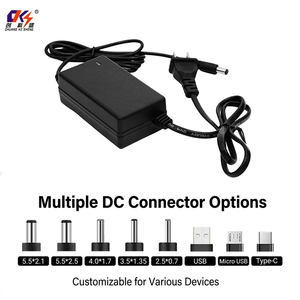
Addressing technical parameters, PSE compliance, harmonic distortion limits, and thermal performance across Kansai’s commercial and industrial sectors.
As Osaka experiences an architectural revival driven by large-scale urban developments in Umeda, Namba, and the preparation for international events along the Yumeshima waterfront, demands placed on solid-state lighting (SSL) power electronics have shifted dramatically. Contemporary LED luminaires require much more than simple AC-to-DC rectification; they demand intelligent, flicker-free dimmable drivers capable of seamless integration into building automation networks (DALI-2, D4i, 0-10V, Phase-Cut, and Bluetooth Mesh).
For original equipment manufacturers (OEMs) and original design manufacturers (ODMs) serving Osaka, providing dimmable drivers engineered for Japan’s specific grid characteristics—specifically 100V AC nominal residential/commercial lines and 200V AC industrial lines operating at a 60Hz grid frequency in West Japan—is vital. Achieving smooth logarithmic dimming down to 0.1% light output while keeping Total Harmonic Distortion (THD) under 10% requires superior topology design, rigorous active power factor correction (PFC), and EMI filtering tailored for PSE compliance under the Electrical Appliance and Material Safety Law.
Unlike Eastern Japan (Tokyo/Tohoku) operating at 50Hz, Osaka and the Kansai region operate on a 60Hz utility grid (Kansai Electric Power Co. / KEPCO). OEM dimmable drivers must feature PFC controller ICs optimized for 60Hz switching harmonics to prevent low-frequency beating, visual flicker, and phase-cut TRIAC instability during low-load dimming states.
Selecting the correct dimming modulation scheme determines visual comfort, color rendering index (CRI) stability, and compliance with IEEE 1789 flicker standards in high-end spaces such as Osaka luxury retail boutiques, museum displays, and cleanroom manufacturing facilities.
PWM dimming alternates between full operating current and zero current at high frequencies (typically 1 kHz to 10 kHz). This method guarantees absolute CCT (Correlated Color Temperature) consistency across the entire dimming spectrum, critical for architectural accent lighting in Osaka commercial towers. However, driver design must utilize ultra-high internal switching frequencies to eliminate stroboscopic effects measurable by high-speed cameras or sensitive human eyes.
CCR continuously lowers the forward current delivered to the LED string. Because current flows constantly without high-frequency chopping, CCR eliminates EMI noise and stroboscopic risks, making it ideal for broadcasting studios and medical surgical suites across Osaka hospitals. Modern OEM drivers combine Hybrid Dimming—using CCR from 100% down to 10% output and switching to high-frequency PWM below 10%—to deliver the ultimate balance of efficiency, color retention, and deep dimming.
Parametric breakdown for engineering specification teams designing fixtures for Kansai construction projects.
| Dimming Protocol | Input Voltage (AC) | Control Signal | Dimming Range | Typical Efficiency | PSE / Safety Standard |
|---|---|---|---|---|---|
| DALI-2 / D4i | 100V - 242V (50/60Hz) | Digital Bus (2-wire, non-polar) | 0.1% – 100% | > 92% | J61347-1 / J61347-2-13 |
| 0-10V / 1-10V Analog | 100V - 240V (50/60Hz) | DC 0-10V Sink/Source | 1% – 100% | > 90% | DENAN Article 8 / PSE Circle |
| Triac / Phase-Cut | 100V AC Nominal | Leading / Trailing Edge AC | 5% – 100% | > 86% | PSE Diamond / J55015 EMI |
| PWM Signal Input | 12V / 24V / 48V DC | 100Hz - 10kHz PWM | 0.1% – 100% | > 94% | IEC/EN 62368-1 / UL8750 |
| Wireless (Zigbee / BLE) | 100V - 242V (50/60Hz) | 2.4GHz RF Mesh Network | 0.5% – 100% | > 89% | TELEC / PSE Dual Certified |
How specialized OEM/ODM power supplies power Osaka’s iconic architectural landmarks, industrial hubs, and transportation infrastructure.
Multi-story shopping complexes and high-rise office towers in Osaka’s central business districts require thousands of synchronized DALI-2 dimmable drivers. Our low-inrush-current driver designs prevent circuit breaker tripping during simultaneous morning power-up across expansive commercial floors.
24/7 continuous operation in warehouse bays, apron floodlighting, and passenger terminals demands ultra-durable high-wattage drivers (400W-800W) with 10kV surge protection, die-cast aluminum thermal housings, and IP67 weatherproofing to handle Osaka Bay's marine humidity.
Osaka’s famous night entertainment district relies on high-speed PWM dimmable power units to drive vibrant RGBW outdoor LED arrays. Extremely high refresh rates eliminate visual artifacts on visitor cameras while resisting extreme thermal fluctuations.
Boutique hotels and historic ryokan installations in the surrounding Kansai metro demand warm-dimming (Dim-to-Warm) drivers that shift color temperature from 3000K to 1800K naturally, imitating traditional flame light with precise phase-cut compatibility.
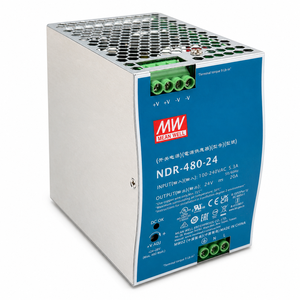
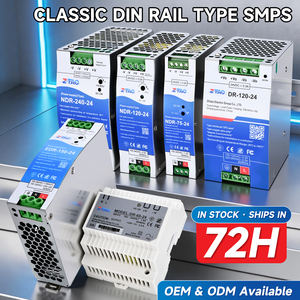
Space-constrained sub-distribution panels along subway stations require slim DIN-Rail mount power supplies (NDR & MDR series) certified for mechanical shock, vibration resistance, and instant hot-swap reliability under strict railway safety standards.
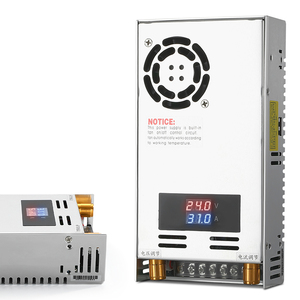
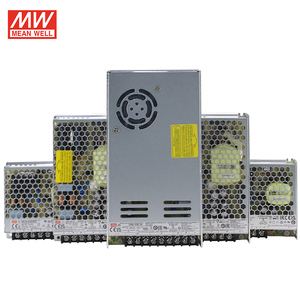
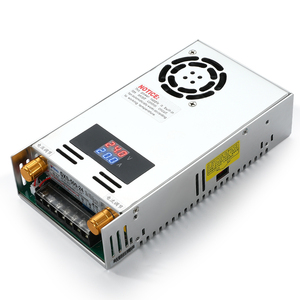
Heavy industrial plants operating automated robotics, PLC control units, and machine vision inspection lighting utilize high-wattage 24V/48V adjustable enclosed SMPS power units designed for harsh thermal environments up to +70°C ambient.
Key regulatory, environmental, and technology shifts influencing B2B procurement decisions across Osaka.
Japan’s Ministry of Economy, Trade and Industry (METI) has accelerated net-zero emissions targets for commercial construction by 2030. Osaka property developers are retrofitting legacy buildings with ZEB-compliant smart lighting grids. This shift demands dimmable drivers with extreme standby power efficiency (<0.5W no-load consumption) and high conversion efficiency (>93%) to minimize parasitic load losses across commercial portfolios.
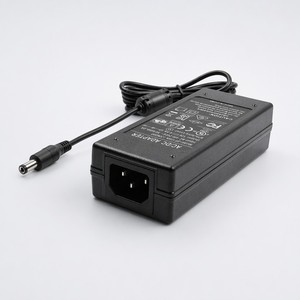
Electrical products sold or specified for commercial installations in Japan must comply with the Electrical Appliance and Material Safety Law (PSE). Specific Category A items (such as LED drivers and power adapters) require Circle PSE or Diamond PSE certification by registered testing bodies (JET/JQA). Our OEM manufacturing lines strictly adhere to Article 8 Technical Benchmark Requirements, covering creepage distance, dielectric strength withstand testing (3.75kVAC input-to-output), and flame-retardant encapsulation (UL94 V-0).
The transition from analog 0-10V dimming to digital DALI-2 and D4i (DALI for IoT) protocols is accelerating rapidly in Osaka's smart urban infrastructure. D4i drivers store and report real-time energy consumption, operational hours, luminaire diagnostics, and thermal stress metrics directly to central building management systems (BMS), enabling predictive maintenance for municipal lighting networks.
Modern Japanese architectural aesthetics favor ultra-slim, hidden light sources—such as micro linear cove fixtures and recessed slot lights. Power supply engineering has responded by replacing bulky electrolytic capacitors with high-density planar transformers and gallium nitride (GaN) switching components, yielding linear drivers with cross-sectional profiles as small as 21mm x 30mm.
Combining 20+ years of power electronics R&D with flexible OEM/ODM manufacturing, rapid turnaround prototyping, and complete regulatory assurance.
Custom mechanical housing dimensions, specialized output voltage trimming (e.g., 36V, 42V, 48V CC steps), custom wiring harness assemblies, and IP rating modifications configured within 7-14 business days.
100% full-load automatic burn-in testing, thermal shock cycling (-40°C to +85°C), and automated optical inspection (AOI) guarantee an field failure rate under 200 PPM across production runs.
We partner with local warehousing hubs serving Osaka, Kobe, and Kyoto to offer JIT (Just-In-Time) buffer stock delivery programs, minimizing supply chain disruption for local assembly lines.
Frequently asked technical questions by Japanese lighting manufacturers, systems integrators, and electrical wholesalers.
Consult with our senior power conversion engineering team today. Request detailed parametric datasheets, sample units for laboratory evaluation, or a full OEM customization quotation.