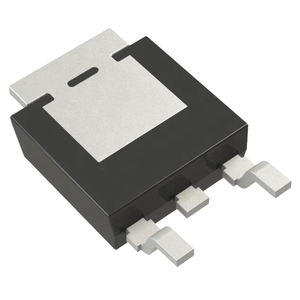
Engineered for extreme ambient temperatures (+55°C), solar inverters, oil & gas automation, and telecom infrastructure in Oman.
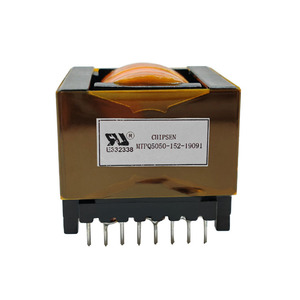
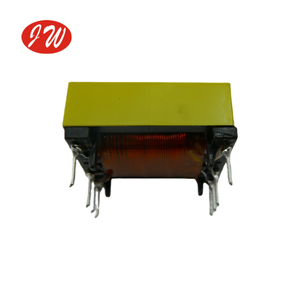
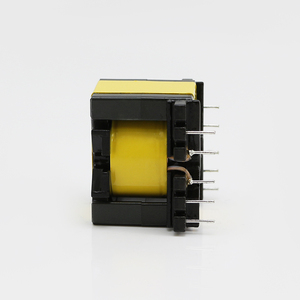
A comprehensive analysis of isolated switching topologies, primary-side regulation, thermal derating, and electromagnetic compatibility in Middle Eastern infrastructure.
In the power electronics landscape of Oman—spanning hot interior desert oilfields like Fahud to coastal industrial complexes in Sohar and Salalah—the choice of auxiliary power supply architecture determines overall system longevity. Among low-to-medium power isolated conversion topologies (typically ranging from 0.25 W up to 500 W+), the Flyback Converter remains the absolute industry standard due to its minimal component count, high galvanic isolation capabilities, and multi-output versatility.
Unlike conventional forward converters that transfer energy instantaneously across a transformer core during the switch ON time, a flyback converter utilizes a multi-winding coupled inductor (commonly designated as a flyback transformer). During the primary switch conduction phase ($t_{\text{ON}}$), energy is stored within the magnetic field of the core’s air gap. When the primary switch toggles OFF ($t_{\text{OFF}}$), the polarity of the secondary winding reverses, discharging the stored energy into the output filter capacitors and load circuits.
Designing high-frequency flyback SMPS units for Oman requires a meticulous trade-off between DCM and CCM operation. Peak ambient temperatures inside unconditioned Omani control cabinets can routinely exceed +55 °C, with internal enclosure heat reaching upwards of +75 °C to +85 °C under full solar radiation.
Ideal for low-power auxiliary converters where zero secondary diode reverse recovery current is paramount. Minimizes turn-on switching losses in the MOSFET.
Selected for higher power applications (50W–200W+), such as solar string inverter control boards and telecom power rectifiers in Muscat infrastructure.
Eliminates optocouplers and TL431 secondary feedback ICs which suffer severe gain degradation under prolonged high-temperature exposure in Oman sandstorms.
Aligning power converter specifications with Sultanate of Oman National Energy Strategies, Green Hydrogen initiatives, and Smart Grid industrial expansion.
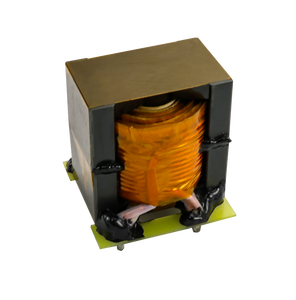
With massive renewable projects like Ibri 2 Solar IPP and upcoming Manah Solar plants, high-voltage step-up and auxiliary flyback transformers (such as the PQ50 30V-60V to 220V/380V/400V 2kW series) provide localized high-voltage isolation for gate drivers, maximum power point tracking (MPPT) sensors, and solar string monitoring systems. Cast resin vacuum-encapsulated models withstand heavy ambient dust and sand penetration.
In Petroleum Development Oman (PDO) concessions and OQ refinery networks across Sohar and Duqm, power converters must meet stringent IECEx and intrinsically safe isolation standards. Flyback transformers with high creepage distances (>8mm) and 4000 VAC to 6000 VDC isolation shield remote terminal units (RTUs), pipeline telemetry, and valve actuators against high-voltage surges and ground loops caused by lightning storms in desert terrain.
Oman Broadband and Omantel remote telecom towers situated in mountainous regions (such as Jabal Akhdar) require compact, high-frequency flyback SMPS modules (e.g., ZLOR PQ3225 Telecom Power Transformers) running on 12V/24V/48V DC battery backup systems. High power density and wide operating temperatures (-40°C to +105°C) guarantee uninterrupted voice and data coverage.
As Oman accelerates the adoption of Electric Vehicles under Vision 2040, high-power DC fast charging stations along the Muscat-Salalah highway require robust AC-DC auxiliary power supplies. Using wide-input range (85-305 VAC) flyback topologies guarantees seamless operational performance even during grid voltage fluctuations in sub-urban networks.
Evaluating Flyback Converters against alternative isolated topologies for deployment in Oman's industrial sector.
| Topology Parameter | Flyback Converter | Forward Converter | Push-Pull Converter | LLC Resonant Converter |
|---|---|---|---|---|
| Typical Power Range | 0.25 W – 250 W (up to 2kW customized) | 50 W – 500 W | 100 W – 1000 W | 150 W – 2000 W+ |
| Magnetic Components | Single Coupled Inductor (Flyback Transformer) | Transformer + Output Choke Inductor | Center-tapped Transformer + Choke | Resonant Transformer + Resonant Inductor |
| Component Count & Cost | Lowest (Lowest BOM Cost) | Moderate | Moderate to High | High (Complex Controller ICs) |
| Wide Input Voltage Capability | Excellent (85–305 VAC / 4:1 DC Wide) | Fair to Good | Narrow (Requires stable DC input) | Moderate (Narrow optimal frequency band) |
| Max Isolation Voltage | Up to 6000 VDC / 2xMOPP Medical | 3000 VAC typical | 3000 VAC typical | 4000 VAC typical |
| Oman Environment Resilience | Superior (Easy potting, high thermal tolerance) | Good | Sensitive to flux imbalance | Sensitive to thermal component drift |
Combining 20+ years of global power supply design expertise with OEM customization, rigorous quality control, and regional lifecycle support.
Our power converter platforms are designed and certified to comply with international standards including IEC/EN/UL 62368-1 (ITE/Industrial), IEC 60601-1 3rd Edition 2xMOPP (Medical), EN 50155 / EN 45545-2 (Railway Rolling Stock), and IEC 61000-4 surge immunity guidelines.
Instead of costly, ground-up custom designs, we modify standard qualified platforms: customizing output voltage trims, pinouts, custom copper winding wire sizes, conformal coating, high-temperature resin potting, and specialized EE/PQ/EFD ferrite cores in days rather than months.
Every standard series is backed by a robust 5-year factory warranty. We commit to extended product lifecycle management, offering engineering Change Notifications (PCN) and Last-Time-Buy (LTB) support to ensure long-term program stability for Omani OEMs.
Our product portfolio encompasses over 10,000 standard catalog models designed for seamless integration across diverse industrial sectors. Key catalog highlights include:
Addressing thermal management, import clearance, custom core winding, and certification standards in Oman.
Our industrial flyback converters and high-frequency transformers utilize high-curie-temperature ferrite cores (N97/3C95 or equivalent) combined with Class H (180 °C) or Class F (155 °C) insulated copper magnet wire. Combined with military-grade silicone or epoxy vacuum encapsulation, our modules maintain full load output up to +70 °C ambient and operate with controlled derating up to +105 °C, ensuring zero thermal runaway in unconditioned Omani control cabinets.
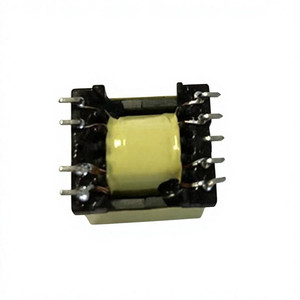
We supply factory-direct custom flyback transformers utilizing PQ50, PQ3225, EFD30, EE13, and Toroidal cores. Engineers can specify turns ratios for stepping up 30V-60V DC solar inputs to 220V/380V/400V AC auxiliary rails, pin configurations (PTH 6+6, SMD, Flying leads), multi-secondary output taps (+5V, +12V, -12V, +24V), and specialized auxiliary windings for primary-side controller power.
Yes. All products destined for Oman comply with GSO low-voltage EMC/safety standards and international IEC/EN 62368-1 requirements. CB Scheme Test Certificates, UL file numbers, and RoHS/REACH compliance documentation are provided with every order to ensure seamless customs clearance through the Royal Oman Police Customs Bayan System.
We offer direct factory shipping and regional distribution support serving Muscat International Airport (air express), Port of Sohar, and Port of Salalah. Standard sample stock is dispatched within 24–48 hours, while customized production runs are scheduled with express air-freight options to meet project commissioning deadlines across Oman.
An isolated flyback converter uses a transformer to galvanically separate input and output circuits (typically rated from 1500 VDC up to 6000 VDC). This protects sensitive controllers from high-voltage transients, breaks ground loops, and enables negative/positive rail generation. A non-isolated switching regulator shares a common ground and offers high power density for simple buck/boost step-down conversion where galvanic isolation is not mandated.
You can directly contact our Field Application Engineering (FAE) team by clicking the Inquire Now live chat button below. Our power engineers will review your electrical schematics, thermal budgets, and mechanical constraints, providing complimentary evaluation samples and technical datasheets.
Speak directly with our senior power application engineers for custom transformer design, parametric selection support, sample requests, and wholesale price quotes.
Inquire Now