Explore our certified range of multi-rail, DIN rail, open-frame, and desktop switching power supplies rigorously tested for Australian climate resilience and electrical safety standard compliance.
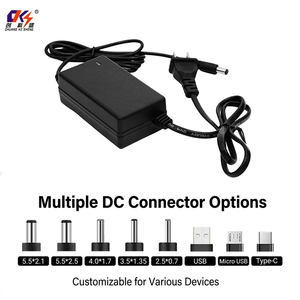
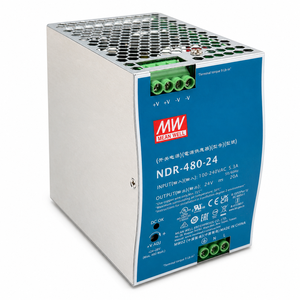
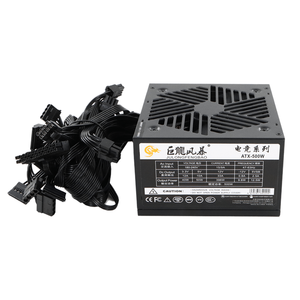
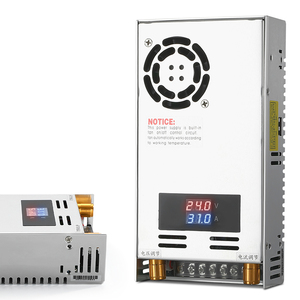
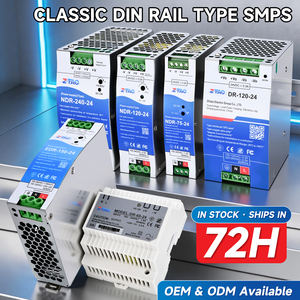
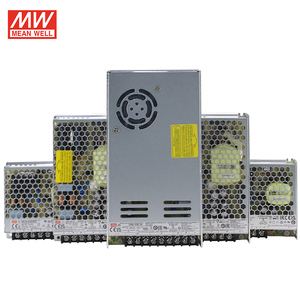
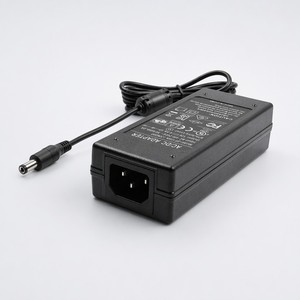
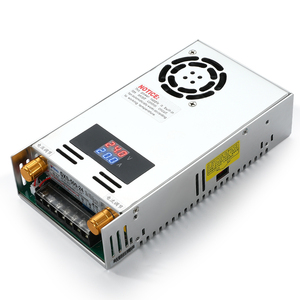
Understanding cross-regulation drift, galvanic isolation design, and thermal derating requirements under Australian climatic and regulatory conditions.
Designing triple output AC-DC and DC-DC converters (such as +5V/+12V/-12V or 24V/12V/5V rails) requires sophisticated multi-loop feedback or coupled-inductor topologies. In traditional multi-rail power supplies, asymmetric loading on the primary output causes severe voltage cross-regulation drift on secondary rails. Premium Chinese exporters utilizing advanced weighted-feedback networks and dynamic secondary post-regulators ensure rail stability within ±2% tolerances even under 100% unbalanced load conditions.
Importing power hardware into Australia requires strict adherence to the Electrical Equipment Safety System (EESS) and Regulatory Compliance Mark (RCM). Products must satisfy AS/NZS 62368.1 for audio/video and IT equipment, as well as AS/NZS 61558 for power transformers. Tier-1 manufacturers provide complete test packages, including CB Scheme reports, EMC testing (CISPR 32 Class B), and SAA safety certificates to streamline customs approval and local commercialization.
Australia’s ambient temperatures in mining sectors like Pilbara and remote solar stations frequently exceed 45°C inside unconditioned control enclosures. Industrial power supplies must incorporate wide operational thermal envelopes (-40°C to +70°C) with derating starting only above 50°C. High-grade aluminum heat sinks, double-sided PCB conformal coating, and 105°C Japanese electrolytic capacitors guarantee an MTBF exceeding 500,000 hours under extreme environmental stress.
The table below illustrates the standard engineering parameters maintained by leading Chinese manufacturers when supplying triple output and industrial switching units to Australian OEMs and engineering procurement teams.
| Electrical Parameter | Standard Commercial Grade | Industrial Triple Output (Export Grade) | Australian Application Advantage |
|---|---|---|---|
| AC Input Range | 90 – 240 VAC Single Phase | 85 – 305 VAC Universal (3-Phase 4-Wire Capable) | Protects against outback grid fluctuations and brownouts. |
| Galvanic Isolation | 1.5 kVAC Input to Output | 3.0 kVAC to 4.2 kVDC Reinforced Isolation | Ensures human safety and compliance with AS/NZS 62368.1. |
| Cross Regulation | ± 5% to ± 10% (Unbalanced Load) | < ± 2% via Independent Post-Regulation | Prevents logic circuit reset when high-power motors kick in. |
| Electromagnetic Immunity | EN 55024 Standard | IEC 61000-4-2,3,4,5,6,8,11 Heavy Industrial Level 4 | Survives severe lightning transients in open outdoor stations. |
| Conformal Coating | Optional / None | Acrylic / Silicone Dual-Layer Standard | Protects against airborne dust, humidity, and coastal salt spray. |
From resource extraction in Western Australia to smart building automation in Sydney, custom triple output supplies power vital national infrastructure.
Heavy machinery in Australian iron ore and coal mining requires multi-voltage rails within a single control cabinet. A single triple output power supply provides 24VDC for industrial PLC actuators, 12VDC for telemetry sensors, and 5VDC for low-power microcontroller logic. Operating reliably in ambient temperatures exceeding 50°C inside sealed IP66 enclosures, these power units eliminate the need for three separate single-output power supplies, saving cabinet space and reducing potential failure points.
Australia leads the world in solar energy adoption. In decentralized off-grid solar arrays and battery storage installations across South Australia and Queensland, auxiliary power converters must accept wide DC input ranges (e.g., 18V-75VDC or 200V-1000VDC ultra-wide range) and split them into stable control voltages for gate drivers, thermal fans, and IoT monitoring modules. Multi-output isolation shields sensitive communications from massive DC bus voltage surges.
Commercial HVAC controls, KNX home automation systems, and automated access systems demand compact DIN rail power solutions compliant with AS/NZS 3000 wiring rules. Triple output DIN rail units fit inside shallow distribution boards, delivering 24V power for valve controllers, 12V for security door latches, and 5V auxiliary standby power, boasting less than 0.3W idle consumption to satisfy Australia's strict green building standards.
In municipal transport networks across New South Wales and Victoria, surveillance enclosures require dual and triple cable output adapters (such as 12V/24V combinations) to power both high-definition PTZ IP cameras and internal infrared illuminators. Integrated Active PFC ensures compliance with electrical harmonics standards (EN 61000-3-2), guaranteeing uninterrupted security feed operation under varying grid conditions.
Stay ahead of industry shifts driving power density, wide-bandgap semiconductor adoption, and sustainable manufacturing standards.
Australian OEMs are aggressively downsizing control gear. By replacing traditional silicon MOSFETs with Gallium Nitride (GaN) and Silicon Carbide (SiC) semiconductors, Chinese exporters are delivering triple output converters with 40% higher power density and reduced thermal output, enabling smaller panel installations without active fan cooling.
Driven by Australia’s Greenhouse and Energy Minimum Standards (GEMS) Act, industrial procurement now mandates minimum 80 PLUS Gold/Copper levels for system power units. High-spec switching power adapters must consume less than 0.075W under no-load conditions, dramatically reducing cumulative energy footprints across large facility deployments.
Engineers increasingly reject full-custom power supply developments due to long certification lead times. The prevailing trend favors "Modified Standard" platforms—where proven, pre-certified triple output circuits are tailored with custom harness connectors, specific trim voltages, or conformal coating treatments, shortening time-to-market by up to 70%.
Get instant answers regarding certification requirements, custom modifications, shipping protocols, and local warranty coverage.
Power supplies sold in Australia must comply with the Regulatory Compliance Mark (RCM) scheme under EESS. Level 3 electrical safety items (such as desktop plug adapters) require an SAA or equivalent accredited certificate of approval testing to AS/NZS 62368.1 or AS/NZS 60950.1. Industrial built-in units (such as DIN Rail SMPS) require EMC compliance to CISPR 32 Class A/B. Reliable Chinese manufacturers supply full CB reports and EMC lab test documentation to allow seamless local registration.
Cross-regulation occurs when a heavy load on the main output (e.g., +5V) causes secondary outputs (e.g., +12V, -12V) to drop or surge in voltage. Premium triple output modules resolve this issue through linear post-regulation on secondary outputs, magnetically coupled inductors, or dual independent feedback control loops. This maintains strict line/load regulation within ±2% to ±3% across all rails even when one rail operates at 100% capacity and others at 0%.
Yes. OEM/ODM manufacturers offer modified standard services. Rather than designing a power supply from scratch—which takes 12 to 18 months and incurs heavy NRE (Non-Recurring Engineering) and safety certification fees—manufacturers adjust feedback resistors, secondary transformer windings, wire harness lengths, and enclosure mounting holes on an existing pre-certified platform, completing qualification in 3 to 6 weeks.
Outdoor enclosures in Australian regions like Western Australia or Northern Territory often experience internal air temperatures reaching 55°C to 65°C. Power supplies must feature an extended operating range (-40°C to +85°C) and specify clear thermal derating curves (e.g., 2.5% power reduction per °C above 50°C). Convection-cooled units without mechanical fans are highly recommended to prevent dust ingress and fan failures in harsh mining environments.
Standard catalog models are typically dispatched from factory stock within 3 to 7 business days. Custom or modified orders require 3 to 4 weeks for mass production. Sea freight to major Australian ports (Sydney, Melbourne, Brisbane, Fremantle) takes approximately 12 to 18 days from Ningbo or Shenzhen ports. Air freight and express courier services (DHL/FedEx) deliver within 3 to 5 business days for urgent prototype needs.
Tier-1 manufacturers provide a 5-year standard warranty on industrial switching power supplies and DIN rail series, backed by a 10-year component lifecycle commitment. If a component goes obsolete, drop-in replacement guidance and product change notifications (PCN) are issued at least 6 to 12 months in advance to ensure long-term availability for Australian infrastructure programs.
Combining state-of-the-art automated production, rigorous E-E-A-T testing standards, and direct engineering support to deliver uncompromised power reliability.
Our manufacturing facility utilizes high-speed Yamaha and Fuji SMT lines alongside automated optical inspection (AOI) to guarantee zero-defect soldering. Every power supply undergoes a mandatory 4-hour 100% full-load thermal burn-in test with high-voltage isolation flash screening (3000VAC) before final packing.
Equipped with an in-house 3-meter Anechoic Chamber, surge testing generators, and environmental thermal shock chambers, our engineering team validates compliance against global CISPR 32, IEC 61000, and UL standards prior to submitting units to accredited external agencies like SAA, TÜV, and UL.
We provide Australian design engineers with direct access to senior power supply design personnel. From reviewing schematic layouts and EMI ground loop mitigation strategies to providing custom CAD step files and 3D thermal simulation data, our team acts as an extension of your R&D lab.
Request our complete technical product catalog, evaluation sample units, or consult directly with a senior power engineer today.
Get Catalog