
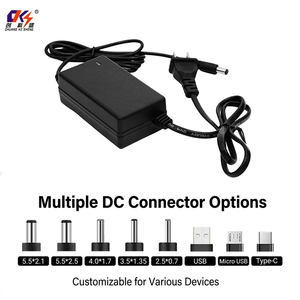
12V 2A 24W Dual Cable Desktop Power Adapter
- Universal US/EU/UK/AR Interchangeable Plugs
- Dual Output Cables for CCTV & Security Systems
- Over-Current & Short-Circuit Protection
Explore our audited series of industrial-grade switching power supplies, DIN-rail modules, desktop adaptors, and adjustable LED transformers compliant with international safety standards.
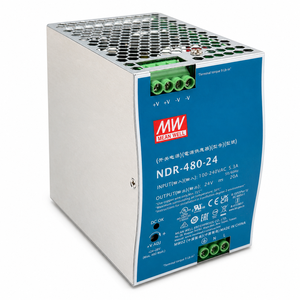
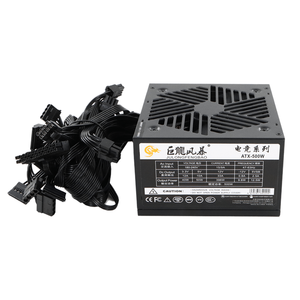
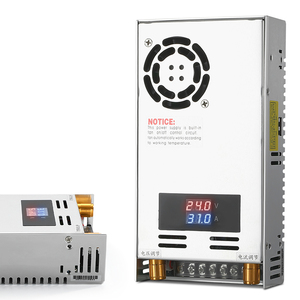
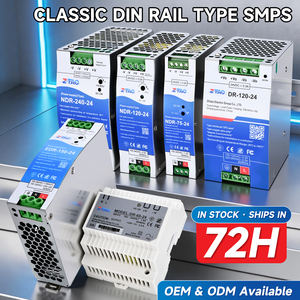
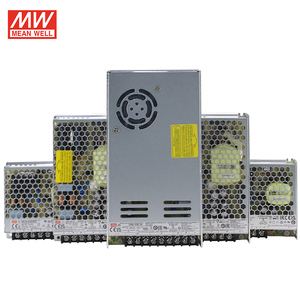
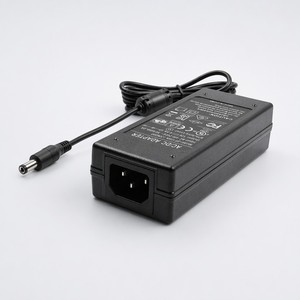
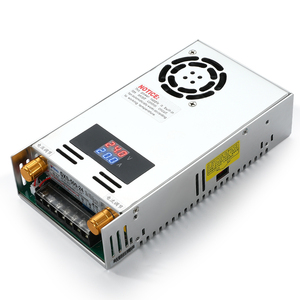
Combining 20+ years of power supply design expertise with rigorous safety compliance (IEC/EN/UL 62368-1, 2xMOPP Medical, EN 50155 Railway), we deliver high-density, reliable power modules engineered to perform in extreme environments.
Every step up converter, SMPS, and isolated module is qualified against stringent global standard requirements including UL/IEC 62368-1 for IT/AV equipment, EN 50155 for railway rolling stock, and 2xMOPP (IEC 60601-1 3rd edition) for patient-connected medical electronics.
Avoid the high risks and multi-year delays of full custom redesigns. We offer fast-turn modified standard solutions—adapting output trim voltage, mechanical pinouts, conformal coating, custom wire harnesses, and potting compounds on proven safety platforms.
With engineering hubs and fulfillment hubs situated across North America, Europe, and Asia-Pacific, our logistics matrix guarantees inventory buffer management, rapid sample shipment, and uninterrupted long-lifecycle supply chain support for enterprise programs.
An in-depth analysis of wide-bandgap semiconductors, digital power telemetry, high-voltage isolation architectures, and electromagnetic compliance in next-generation industrial power networks.
The modern power electronic architecture is undergoing a fundamental shift from traditional silicon (Si) MOSFETs to Wide-Bandgap (WBG) materials, primarily Gallium Nitride (GaN) and Silicon Carbide (SiC). In high-efficiency step up converters and switching power supplies (SMPS), WBG devices exhibit significantly higher breakdown electric field strength and electron mobility. This enables switching frequencies to scale from the typical tens of kilohertz (kHz) up into the megahertz (MHz) spectrum without incurring prohibitive switching losses.
For industrial step-up transformers and DC-DC step-up boosters, higher switching frequencies directly correlate with a dramatic reduction in the physical volume of magnetic components (inductors and transformers) and capacitive energy storage banks. Design engineers can achieve power densities exceeding 30 W/in³, while reducing thermal dissipation loads by 40% to 60%. This shift allows step-up manufacturers to produce ultra-compact DIN-rail and PCB-mount modules that operate reliably under ambient temperatures spanning -40°C to +105°C without forced-air cooling.
By eliminating reverse recovery losses inherent in body diodes of silicon MOSFETs, GaN FETs allow continuous conduction mode (CCM) boost converters to operate with near-zero hard-switching penalties. This translates directly to higher power conversion efficiency (exceeding 96%) and reduced electromagnetic interference (EMI) filtering overhead.
Modern electrical grids and industrial automation environments face severe voltage fluctuations, brownouts, and transient surges. To maintain pristine DC bus stability, leading manufacturers are standardizing on ultra-wide input voltage ranges—such as 4:1 and 8:1 DC inputs (e.g., 9VDC to 75VDC input for a regulated 110VDC rail), alongside universal 85–305 VAC inputs for AC-DC converters.
In high-power step-up applications, multi-stage conversion topologies are rapidly displacing legacy single-stage boost circuits. A typical high-performance architecture pairs an Active Power Factor Correction (APFC) boost stage with an LLC resonant isolated converter stage. This multi-stage setup achieves unity power factor (>0.99) and extremely low total harmonic distortion (THD < 5%), protecting sensitive downstream control logic, PLCs, and medical telemetry systems from line harmonics and phase imbalance.
Analog PWM control loops, while reliable, are increasingly being complemented or replaced by digital signal processors (DSPs) and microcontrollers executing advanced control algorithms. Digital power management brings dynamic voltage scaling (DVS), real-time efficiency optimization across variable loads, and real-time telemetry tracking over industry-standard PMBus, I2C, or CANbus protocols.
Industrial procurement teams now demand power supplies capable of output parameter monitoring—including input line voltage, output load current, internal hot-spot temperature, and cumulative operational hours. Predictive maintenance algorithms leverage this telemetry to forecast capacitor wear-out and thermal stress, allowing system operators to replace units during scheduled maintenance windows rather than suffering catastrophic unexpected downtime.
As step-up modules are deployed in renewable energy inverters, EV charging stations, and high-voltage medical imaging equipment, isolation requirements have scaled significantly. Modern converters feature galvanic isolation ratings from 1500 VDC up to 6000 VDC, accompanied by reinforced creepage and clearance distances exceeding 8 mm.
To endure harsh industrial operating conditions, manufacturers employ vacuum encapsulation using specialized thermal epoxy compounds or silicone potting. This conformal protection safeguards sensitive surface-mount components against high humidity, conductive dust, chemical vapors, intense mechanical shock, and continuous vibration (in compliance with MIL-STD-810G and EN 50155 standards).
Navigating global supply chain volatility, total cost of ownership (TCO) metrics, and stringent international regulatory mandates in power supply procurement.
Global enterprise buyers are moving away from single-source custom power supplies in favor of modular standard platforms. By standardizing on flexible power building blocks with wide input ranges and pin-compatible footprints, OEMs eliminate single-source component risks, reduce bill-of-materials (BOM) complexity, and streamline multi-region inventory buffers.
Forward-thinking procurement officers evaluate power converters based on lifetime operational cost rather than initial unit price. A power supply with 94% efficiency versus an 88% efficient unit yields substantial cumulative energy savings, reduces enclosure cooling requirements, and extends overall system Mean Time Between Failures (MTBF) beyond 500,000 hours.
Strict international regulatory directives—such as US DoE Level VI, EU ErP Lot 6, RoHS, and REACH compliance—mandate ultra-low no-load standby power consumption (<0.1W) and non-hazardous component construction. Exporters must provide fully traceable environmental compliance documentation for seamless cross-border custom clearance.
Time-to-market pressure is driving adoption of Commercial-Off-The-Shelf (COTS) power modules that offer rapid mechanical and electrical modification. Modifying a pre-certified base platform allows OEMs to launch complex industrial products in months rather than years while preserving base safety approvals.
Clear, expert answers to key technical considerations when evaluating step up suppliers and specifying modular power supplies.
An isolated step up converter utilizes an internal high-frequency transformer to achieve galvanic separation between the input power source and the output load (typically rated from 1500 VDC to 6000 VDC isolation). This configuration eliminates ground loops, protects sensitive microcontrollers from high-voltage transients, and is mandatory for patient-connected medical devices (2xMOPP) and industrial control buses. Conversely, a non-isolated converter (such as a standard switching regulator or non-isolated boost circuit) shares a common ground between input and output. Non-isolated topologies offer higher efficiency (up to 97%) and higher power density at a lower unit cost, making them ideal for point-of-load (POL) voltage stepping where galvanic separation is unnecessary.
All power conversion modules generate internal heat due to conduction and switching losses. Datasheets specify a maximum full-power operating temperature (typically up to +50°C or +70°C). Beyond this threshold, the power output must be derated—usually by 2.5% to 3.3% per degree Celsius—to prevent thermal shutdown or premature component degradation. Providing forced-air cooling (e.g., 200–400 LFM airflow) or mounting the module to an external aluminum chassis/heatsink significantly mitigates derating requirements, allowing full rated power delivery in elevated ambient temperatures up to +85°C.
A reputable step up manufacturer must supply comprehensive test reports and certificate files, including:
• IEC/EN/UL 62368-1: Mandatory safety standard for Audio/Video, Information, and Communication Technology equipment.
• IEC/EN 60601-1 (3rd Edition): Medical device safety, requiring 2xMOPP (Means of Patient Protection) and low leakage currents (<10 µA).
• EN 50155 / EN 45545-2: Railway compliance covering environmental shock, vibration, and fire security.
• CISPR 32 / EN 55032 Class B: Conducted and radiated Electromagnetic Interference (EMI) emissions compliance.
UL file numbers, CB Scheme test reports, and CE/RoHS/REACH declarations should be readily available for client qualification audits.
Standard off-the-shelf power modules and evaluation samples are generally available from distributor stock or shipped within 1 to 2 weeks. For modified-standard requests (e.g., non-standard trim voltages, extended screening, specific connector harnesses, or custom conformal coating), engineering evaluation prototypes are typically delivered within 3 to 5 weeks. Mass production lead times range from 6 to 10 weeks depending on order volume. Minimum Order Quantities (MOQs) for modified platforms start as low as 100 to 500 units, offering significantly lower barrier-to-entry than ground-up custom designs.
In 3-phase 4-wire industrial distribution systems, voltage spikes and phase imbalances can subject power supplies to line-to-neutral and line-to-line stress exceeding typical 230 VAC nominal ratings. Buyers should select power modules rated for ultra-wide input voltage ranges (up to 305 VAC or 528 VAC 3-phase inputs) with high surge withstand ratings (minimum 4kV surge protection per IEC 61000-4-5). Additionally, integrating an active PFC front-end ensures stable internal DC bus regulation and prevents neutral wire overloading caused by harmonic currents.
Achieving high Mean Time Between Failures (MTBF) requires rigorous quality control across all manufacturing stages: 100% premium long-life Japanese electrolytic capacitors (rated for 105°C), Automated Optical Inspection (AOI) and 3D X-ray inspection of SMT solder joints, full-load high-temperature burn-in testing (4 hours minimum under full load at +50°C), and automated Electrical Parameter Testing (ATE). Statistical Process Control (SPC) and ISO 9001 certified manufacturing facilities guarantee lot-to-lot consistency and sub-10 PPM field defect rates.
Whether you require standard DIN-rail units, high-power adjustable SMPS supplies, or custom modified power modules for medical, railway, or industrial automation programs, our global engineering team is ready to review your schematic and thermal requirements.