Explore our certified range of step-down buck regulators, isolated DC-DC modules, and 3-phase power transformers engineered for extreme ambient conditions and long operational lifecycles.
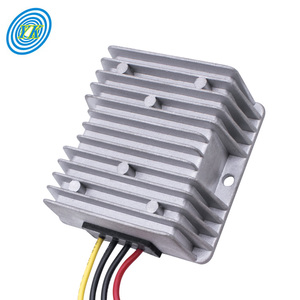
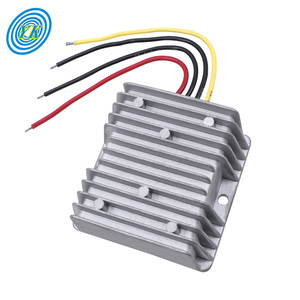
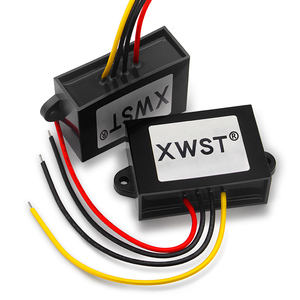
As a globally recognized power supply manufacturer, we specialize in high-density DC-DC buck regulators, switching power supplies, and heavy industrial transformers built for continuous 24/7 mission-critical deployment.
In modern industrial automation, automotive electrification, medical device design, and renewable energy infrastructure, voltage regulation remains the single most critical structural element ensuring system stability. A step-down converter (commonly referred to as a buck converter or step-down transformer) reduces higher primary input voltages down to stabilized, lower secondary output voltages needed by sensitive microcontrollers, sensors, actuators, and communication buses.
As electronic systems shift toward higher system voltages—such as 48V automotive architectures, 72V e-Mobility traction batteries, 380V/440V 3-phase industrial power grids, and 1000V+ solar photovoltaic arrays—the engineering demand for high-efficiency, thermally robust, and low-EMI step-down voltage regulators has reached an all-time high. Sourcing from top trusted step-down manufacturers and factories guarantees compliance with strict international safety standards, lower total cost of ownership (TCO), and defense against unexpected supply chain disruptions.
Advanced synchronous rectification circuits achieving up to 97% conversion efficiency, eliminating bulky heatsinks and extending component lifespan.
Thermally conductive epoxy encapsulation engineered to withstand severe moisture, salt spray, shock, and extreme operational temperatures (-40°C to +105°C).
Designed and manufactured under strict compliance with IEC/EN/UL 62368-1, IEC 60601-1 (2xMOPP Medical), EN 50155 (Railway), and CE/RoHS directives.
Design engineers must evaluate the trade-offs between isolated magnetic-transformer step-down converters and non-isolated synchronous buck switching regulators when defining system power distribution architectures.
Non-isolated step-down converters share a common ground reference between input and output circuits. Their primary advantages include compact SIP/SMD packaging, ultra-high power density, exceptional efficiency (frequently exceeding 95%), and low bill-of-materials (BOM) cost. They are ideal point-of-load (POL) solutions for replacing inefficient 78xx linear regulators in industrial controllers, automotive accessories, battery-powered robotics, and consumer electronics.
Isolated converters utilize high-frequency planar or toroidal transformers to provide complete galvanic isolation (ranging from 1,500V DC up to 6,000V DC or 2xMOPP medical insulation) between primary and secondary circuits. Galvanic isolation is mandatory in scenarios where ground loops must be broken, noise sensitive analog measurements require isolation from noisy motor drives, or human safety mandates protection against high-voltage transients (such as in 480V industrial equipment or patient-connected medical instruments).
The selection matrix below highlights key technical parameters across primary step-down product categories produced in certified manufacturing facilities:
| Product Category | Typical Input Range | Output Voltages | Isolation Voltage | Peak Efficiency | Target Industry |
|---|---|---|---|---|---|
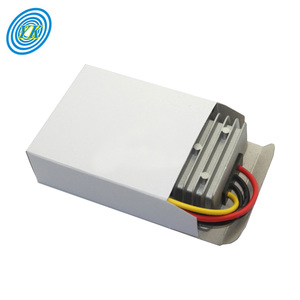
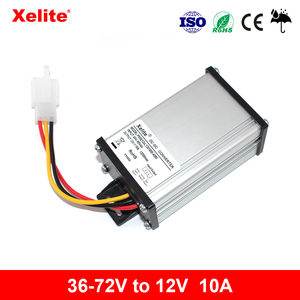
| Automotive Buck Converter | 36V / 48V / 72V DC | 12V DC @ 5A – 30A | Non-Isolated / 1.5kV | 94% - 96% | EV, Golf Carts, Trucks, Buses |
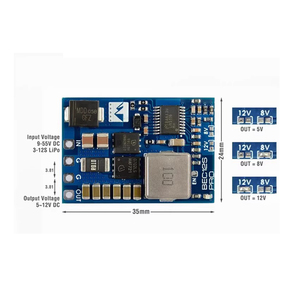
| Wide-Input BEC Modules | 9V – 55V (LiPo 12S) | 5V / 8V / 12V DC | Non-Isolated (TVS Protected) | 92% - 95% | Robotics, UAVs, Avionics |
| Micro Switching Regulators | 18V – 60V DC | 3.3V, 5V, 9V, 12V DC | Non-Isolated (SIP-3/SMD) | 90% - 97% | IoT Gateways, Smart Meters |
| Medical-Grade Converters | 18V – 36V / 85V – 264V | 5V, 12V, 24V DC | 4.0kV AC (2xMOPP) | 89% - 93% | Diagnostic Monitors, Surgical Tools |
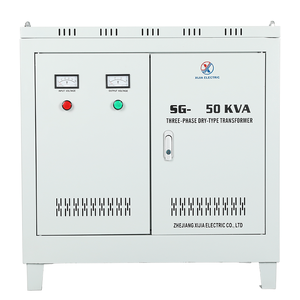
| 3-Phase Heavy Transformers | 120V / 220V / 380V / 440V AC | 240V / 380V / 415V AC | Galvanic Industrial Dry-Type | 97% - 98.5% | CNC Machining, Industrial Grids |
Purchasing teams and chief engineering officers must anticipate evolving technology roadmaps when qualifying step-down manufacturers. Key technical trends shaping the industry include:
The integration of Gallium Nitride (GaN) and Silicon Carbide (SiC) MOSFETs into step-down power topologies enables switching frequencies above 1 MHz. Higher switching speeds dramatically reduce the physical inductance and capacitance requirements, allowing step-down manufacturers to shrink module footprints by up to 50% while operating at higher ambient thermal limits without performance derating.
Electrically hostile environments—such as heavy vehicle alternators or industrial relay switching—introduce high-energy voltage spikes (ISO 7637-2 load dump surges). Premium step-down manufacturers integrate multi-stage TVS diodes, common-mode chokes, and ceramic Pi-filters directly into the module PCB. This ensures drop-in compliance with CISPR 32 Class B electromagnetic interference (EMI) standards without requiring external passive filtering networks.
While off-the-shelf standard power modules satisfy many design requirements, OEMs frequently require modified footprints, specialized wiring harnesses, conformal coating, custom pinouts, or trimmed output voltages. Partnering with a manufacturer capable of offering modified-standard platforms shortens time-to-market and drastically reduces safety qualification costs compared to ground-up custom power supply developments.
When selecting an OEM/ODM step-down factory for long-term production, procurement managers should evaluate the following structural criteria:
Direct answers from our application engineering team regarding step-down selection, thermal derating, and safety compliance.
An isolated step-down converter utilizes a high-frequency internal transformer to achieve complete galvanic separation between the input ground and output ground. This prevents ground loop currents, isolates high voltage transients, and protects sensitive low-voltage control circuits (standard insulation ratings range from 1,500V DC to 6,000V DC). In contrast, a non-isolated buck regulator shares a common ground pin between input and output, offering significantly higher power density, smaller physical size, and higher efficiency at a lower cost for applications where ground isolation is not mandated.
Transient Voltage Suppression (TVS) diodes are specialized semiconductor protection components designed to clamp inductive load dump spikes, fast voltage transients, and electrostatic discharge (ESD) events within nanoseconds. Integrated TVS protection prevents input over-voltage conditions (such as voltage spikes from motor braking or 12S LiPo battery connection arcs) from damaging sensitive switching transistors and downstream microcontroller loads.
Medical power supplies must comply with the IEC/EN/ES 60601-1 3rd Edition safety standard. For patient-connected diagnostic instruments, converters must feature 2xMOPP (Means of Patient Protection) reinforced isolation, an isolation rating of at least 4,000V AC, and extremely low leakage current (typically < 10 µA) to guarantee absolute patient safety against electrical shock.
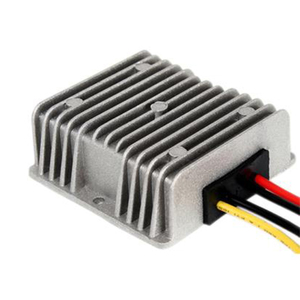
Outdoor vehicles (such as electric golf carts, buses, trucks, and e-motorcycles) operate under harsh environmental exposure including high humidity, water splash, road salt spray, dust, and continuous mechanical vibration. IP68 fully encapsulated thermal epoxy potting seals internal components completely from moisture ingress while simultaneously acting as a heat conductor to dissipate thermal energy evenly through the outer aluminum shell.
Yes. Our factory provides a Modified Standard Program. Rather than initiating a costly, high-risk custom power design from scratch, our engineering team can modify output voltage trim ranges, alter pin configuration layouts, apply conformal coating, add custom wiring harnesses/connectors, or adjust thermal derating thresholds on proven, pre-certified module platforms. This approach significantly shortens prototype qualification timelines while retaining international safety filings.
Selecting a 3-phase heavy industrial step-down transformer (such as 10KVA to 45KVA) requires evaluating worst-case line-to-neutral voltages, phase balance, transient surge withstand capabilities, operating temperature class (e.g., Class H 180°C insulation), and total KVA power rating under continuous maximum load. Ensure the unit complies with IEC 61558 / CE standards and features low core losses for high operational efficiency.
Need custom voltage trimming, specialized thermal potting, or bulk OEM pricing? Speak directly with our senior power application engineers today for immediate design support, technical datasheets, and fast evaluation samples.
Inquire Now