Explore our engineering-grade switching power supplies, manufactured with high thermal efficiency, comprehensive safety compliance, and robust immunity against industrial grid fluctuations.
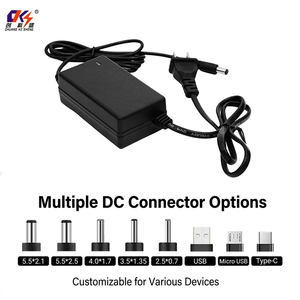
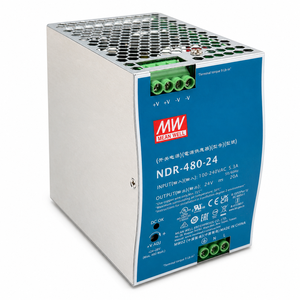
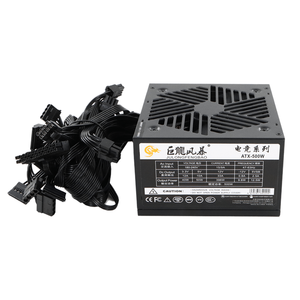
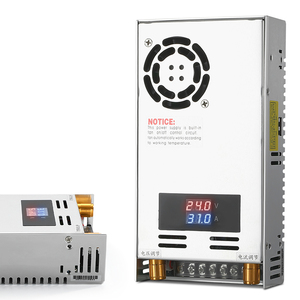
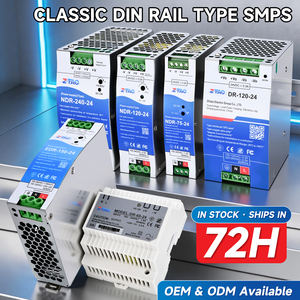
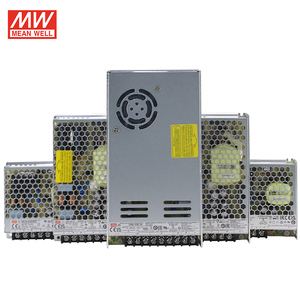
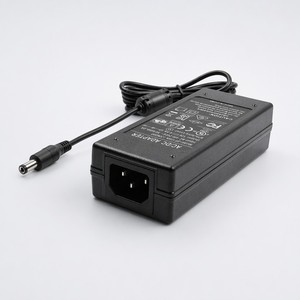
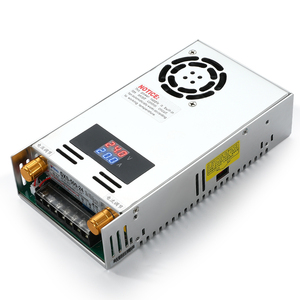
Backed by over two decades of power conversion R&D, certified ISO 9001 manufacturing facilities, and localized engineering support across three continents, we minimize system design risks for global industrial brands.
Every standard and enclosed module is built to meet or exceed rigorous international standards, including IEC/EN/UL 62368-1 for ITE, IEC 60601-1 2xMOPP for medical devices, and EN 50155 for railway systems.
Utilizing high-density aluminum chasses with perforated ventilation, high-efficiency LLC resonant circuits, and Active PFC (Power Factor Correction), our power supplies maintain optimal MTBF even under high ambient temperatures up to +70°C.
Shorten your product development lifecycle. Instead of high-risk custom development, we offer agile modifications—including output voltage trim, conformal coating, wire harness integration, and specialized mechanical mounting.
| Performance Characteristic | Enclosed AC-DC Power Series | DIN-Rail Industrial Series | Medical-Grade Enclosed Series |
|---|---|---|---|
| Power Range | 15W – 1000W+ | 30W – 960W | 5W – 600W |
| Input Voltage Window | 85-264 VAC Universal / 300VAC Surge 5s | 85-264 VAC / 340-550 VAC 3-Phase | 80-264 VAC Universal Input |
| Isolation Rating | 3000 VAC Input-to-Output | 3000 VAC Input-to-Output | 4000 VAC / 2xMOPP Patient Isolation |
| Operating Temperature | -30°C to +70°C (with derating) | -40°C to +70°C Cold Start | -20°C to +70°C Low Noise Convection |
| Protection Protocols | OVP, OLP, SCP, Over-Temperature | Current Limiting, Peak Load 150%, OVP | Low Leakage Current (<100µA), OVP, SCP |
An engineering deep-dive into how semiconductor advancements, efficiency mandates, and digital control loops are transforming industrial power architecture.
The global industrial electronics market is undergoing a fundamental shift toward higher energy density, localized power conversion efficiency, and digital grid integration. As smart factories, automated robotics, EV charging networks, and edge computing nodes expand globally, the humble enclosed power supply has evolved from a passive component into a highly sophisticated, active system building block.
The transition from legacy Silicon MOSFETs to wide-bandgap (WBG) semiconductors—specifically Gallium Nitride (GaN) and Silicon Carbide (SiC)—allows modern enclosed SMPS designs to operate at switching frequencies up to 5 times higher. This dramatically reduces transformer core volume and capacitive filter footprint while pushing efficiency levels beyond 95%.
Historically, enclosed power supply designers faced a zero-sum trade-off between output power density and thermal dissipation. Legacy silicon switching devices generated substantial switching losses at frequencies above 100 kHz, necessitating heavy extruded aluminum heatsinks and forced-air cooling fans. The adoption of GaN FETs in high-density enclosed AC/DC converters enables Zero Voltage Switching (ZVS) topologies that cut internal power dissipation by 30% to 50%. Consequently, system engineers can fit a 500W power module into the mechanical frame previously occupied by a 300W unit.
Global equipment exporters face the logistical challenge of deploying machinery into regional grids with varying stability. Next-generation enclosed power supplies are now standardizing on ultra-wide input windows (85-305 VAC line voltage) to withstand severe brownouts and high-voltage grid surges without failure. Additionally, compliance with IEC 61000-4-5 (Surge Immunity) up to 4kV line-to-ground is becoming a baseline procurement requirement for outdoor industrial automation, smart lighting, and telecommunications infrastructure.
Modern mandates demand Power Factor values > 0.98 at rated load. Active PFC stages optimize reactive power consumption, minimizing harmonic distortion (THD) on factory power lines in compliance with EN 61000-3-2 Class D.
Enclosed power supplies are increasingly featuring digital communication interfaces. Industry 4.0 setups continuously monitor real-time output current, temperature, and operating hours to enable predictive maintenance.
Compliance with ErP Lot 6 and Energy Star guidelines requires no-load standby power consumption under 0.5W, reducing baseline parasitic loads across large facility-wide deployments.
Navigating global supply chain volatility, component lifecycles, regulatory shifts, and Total Cost of Ownership (TCO) optimization.
Procurement directors and strategic engineering sourcing managers face an increasingly complex vendor landscape. Beyond mere unit price per watt, procurement strategies for enclosed power conversion hardware are now evaluated across four primary pillars: supply chain resilience, safety agency compliance speed, product lifecycle longevity, and total cost of ownership.
Building a ground-up custom AC/DC enclosed power supply involves high upfront non-recurring engineering (NRE) costs, lengthy safety qualification cycles (often 9 to 15 months for UL/CB certification), and risk of production delays. Leading OEM procurement teams are shifting toward Modified Standard Platforms. By taking a pre-certified, mass-produced enclosed power supply chassis and adjusting mechanical brackets, output trimming pinouts, or protective conformal coatings, OEMs obtain a tailored power solution within weeks while retaining existing safety agency certifications.
Recent global logistics disruptions highlighted the vulnerability of single-source manufacturing footprints. Component procurement managers now mandate that power supply vendors maintain transparent component bill-of-materials (BOM) tracking, qualified secondary semiconductor vendors, and multi-regional assembly hubs across North America, Europe, and Asia. Vendor capability in providing 12 to 18-month product change notifications (PCN) and long-term end-of-life (EOL) buffer stock programs is now a standard qualification metric.
Evaluating power supply unit cost in isolation is a costly pitfall. A low-cost enclosed power unit utilizing low-grade 85°C electrolytic capacitors often leads to premature field failures in high-vibration or high-temperature industrial environments. The cost of field service calls, warranty claims, and brand damage far outweighs initial component savings. Advanced procurement teams prioritize vendors who specify high-grade 105°C Japanese electrolytic capacitors, enforce 100% full-load thermal burn-in testing, and provide a standard 5-year factory warranty.
Technical solutions and procurement guidance curated by our senior application engineering team.