Featured Constant Voltage Power Supplies
Precision-engineered AC/DC power adapters, DIN rail supplies, desktop power units, and adjustable drivers for industrial automation, telecom, lighting, and medical electronics.
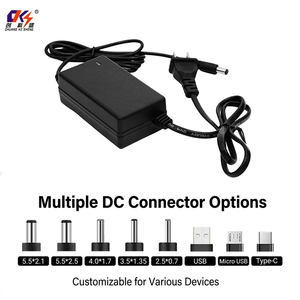
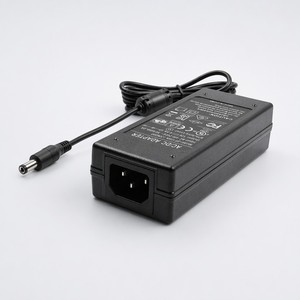
12V 2A 24W Dual Cable Desktop Power Adapter 12Volt 2000mA Power Supply US EU UK AR Plug AC/DC Switching Adaptor for CCTV Camera
Send an Inquiry
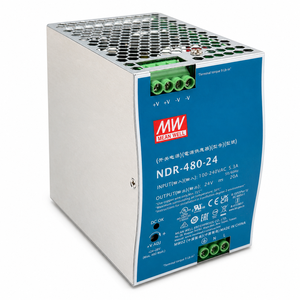
NDR-480-24 Meanwell NDR-480-48 Switching Power Supply 24V 400W Industrial 20A 110-230 VAC To 125 VDC XDR
Send an Inquiry
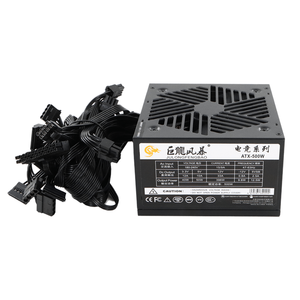
Dragon Storm CB Certified 500W APFC ATX Full Voltage 120mm Fan 80+ Standard Copper 20+4Pin Desktop Computer Power Supply Stock
Send an Inquiry
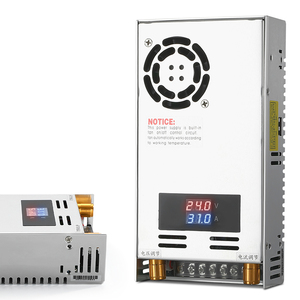
Ac 110v 220v Led Power Supply Dc 0-12v 24v 30v 36v 48v 60v 110v 150v 200v Adjustable Power Supply 2-50a 25a 20a 12a 5a 3a 800w
Send an Inquiry
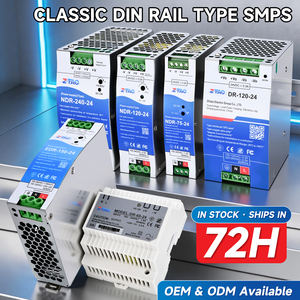
Power Supply DIN Rail 5V 12V 15V 24V 48V 60W 75W 120W 150W 240W Switching Power Supply 100-240VAC for Automation Equipment
Send an Inquiry
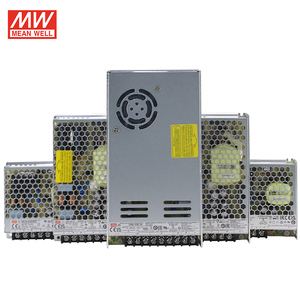
MEAN WELL Power Supply 5A 10A 20A 30A 40A 50A 60A MEANWELL SMPS Power Supply 5v 12v 24v 15v 36v 48v
Send an Inquiry
5-200W AC/DC Switching Power Adapter 5V 9V 12V 15V 19V 24V 1A 2A 3A 4A 5A 6A 8A 10A Power Adapter
Send an Inquiry
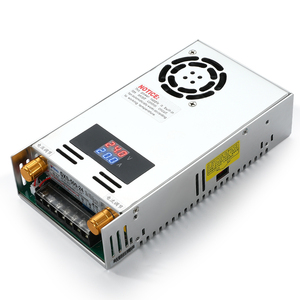
LED Driver Power Supply 500W DXS-500-48 24V 48V Adjustable Transformers With Digital Dc Power Supply For Led Drivers 48v
Send an Inquiry
22+
Years Engineering Expertise
10,000+
Standard & Custom SMPS Models
5-Year
Standard Global Warranty
100%
Full Load Burn-in Tested
Executive Summary: Navigating Modern Constant Voltage Manufacturing
In high-reliability industrial automation, LED illumination networks, medical instrumentation, and distributed telecom infrastructure, the stability of the direct current (DC) voltage bus is paramount. Constant Voltage (CV) power supplies act as the foundational bedrock of electronic system reliability. Unlike Constant Current (CC) drivers designed specifically to dynamically regulate output current for singular diode loops, a top-tier Constant Voltage factory crafts regulated switching power supplies (SMPS) engineered to lock the nominal output voltage (such as 5V, 12V, 24V, 36V, or 48V) across zero-to-full load current variations.
Modern electrical distribution faces increasing ambient harmonics, aggressive line surges, line voltage sag, and tight enclosure thermal constraints. Selecting top trusted constant voltage factories requires a rigorous evaluation of topology design, dielectric isolation boundaries, active power factor correction (APFC) efficiency, and long-term mean time between failures (MTBF). Enterprise buyers cannot rely solely on initial unit cost; total cost of ownership (TCO) is directly tied to failure rate minimization, certification compliance (UL/EN/IEC 62368-1, IEC 60601-1, EN 50155), and supplier design flexibility.
Key Takeaway for OEM Procurement Officers: A world-class Constant Voltage factory does not simply assemble standard boards; it integrates primary-side flyback, half-bridge LLC resonant, or forward converter topologies paired with active power factor correction (PFC > 0.95), multi-stage EMI noise filtering, and heavy-duty potting compounds capable of surviving harsh operating environments from -40 °C to +85 °C.
Engineering Evolution: Top Manufacturing Standards & Design Topologies
Leading constant voltage OEMs have transitioned from traditional linear supplies to high-frequency pulse-width modulation (PWM) and resonant switching converter topologies. This technological shift yields power conversion efficiencies upwards of 94%, drastically reducing thermal dissipation inside sealed control cabinets and extending electrolyte capacitor lifespans.
Wide Universal Input Architecture
Advanced AC-DC converters feature 85–305 VAC universal input ranges, protecting downstream components against voltage spikes, brownouts, and global line voltage discrepancies across 110V, 220V, and 277V systems.
Isolation & Safety Rating
From 1.5 kVDC up to 6.0 kVDC galvanic isolation, top factories incorporate 2xMOPP (Means of Patient Protection) for medical platforms and reinforced insulation barriers that eliminate earth leakage currents.
Active Power Factor Correction (APFC)
By enforcing an APFC factor of 0.95 to 0.99, modern switching supplies minimize reactive power losses, drastically reduce harmonic distortion (THD), and meet strict EU EN 61000-3-2 Class D energy standards.
Technical Matrix: Constant Voltage Architecture vs. Application Requirements
Selecting the optimal power supply architecture depends on the specific mechanical form factor, installation environment, and dynamic load characteristics. The matrix below outlines how top manufacturing platforms address primary industrial use-cases:
| Power Supply Category |
Typical Power Range |
Primary Topology / Feature |
Standard Output Voltage |
Target Applications |
| DIN Rail Industrial SMPS |
15W – 960W |
LLC Resonant / Metal Case / DC-OK Signal |
12V, 24V, 48V DC |
PLC Cabinets, Factory Automation, Robotics |
| Desktop & Wall Mount Adapters |
5W – 200W |
Flyback / Interlocking Plugs / Class II Insulation |
5V, 9V, 12V, 19V, 24V DC |
CCTV, Telecom Routers, Portable Medical Devices |
| Adjustable High-Power SMPS |
300W – 3000W |
APFC + PWM / Digital LED Volt-Amp Trim |
0–12V up to 0–200V DC |
Laboratory Testing, Anodizing, Battery Charging |
| Potted Waterproof Drivers |
20W – 600W |
IP67 Aluminum Shell / Thermal Potting |
12V, 24V, 36V, 48V DC |
Architectural Lighting, Signage, Outdoor Telemetry |
| ATX / PC System Power Units |
300W – 1200W |
DC-to-DC Converter / 80 Plus Gold/Bronze |
+3.3V, +5V, +12V Rail |
Industrial Workstations, Edge Servers, IPCs |
Global Procurement Trends in Constant Voltage Power Supplies
As industrial automation scales toward Industry 4.0 and green energy transitions accelerate worldwide, enterprise procurement teams are updating their vendor selection rubrics. Key procurement vector shifts include:
1. Transition to Wide-Bandgap Semiconductors (GaN & SiC)
Leading factories are actively integrating Gallium Nitride (GaN) and Silicon Carbide (SiC) switches into high-density constant voltage modules. GaN switches allow higher switching frequencies (above 500 kHz), reducing the required size of magnetic transformers and smoothing inductors by up to 40%. For buyers, this translates into ultra-compact DIN-rail and PCB-mount modules that maximize control cabinet space without compromising wattage output.
2. Demand for Multi-Certified Platform Architectures
Maintaining multiple regional stock-keeping units (SKUs) increases supply chain complexity and holding costs. Enterprise buyers increasingly prefer "single-part-number global compliance." Top factories design platforms that simultaneously carry UL/cUL 62368-1 (North America), CE / EN 62368-1 (Europe), CB Scheme certificates (Global), PSE (Japan), KC (Korea), and CCC (China), combined with RoHS and REACH declarations for seamless international distribution.
3. Digital Telemetry and Remote Monitoring (PMBus / CANbus Integration)
Modern constant voltage supplies are no longer isolated analog black boxes. High-wattage industrial units now incorporate digital communications interfaces (such as PMBus, I2C, or CANbus). This enables real-time telemetry tracking of actual output voltage, load current, internal hot-spot temperatures, and operational hours—allowing predictive maintenance algorithms to flag impending power degradation before factory floor downtime occurs.
Sustainable Manufacturing & Circular Lifecycle Guarantees
Environmental compliance has moved from a secondary consideration to a core RFP evaluation point. Premier constant voltage manufacturers adhere to zero-landfill waste targets, utilize lead-free wave soldering, and build units with minimum 80 PLUS / ErP Stage 2 no-load standby loss requirements (< 0.075W to < 0.15W). Furthermore, product availability commitments lasting 10 to 15 years guarantee that OEM industrial machinery designs will not face premature end-of-life component obsolescence.
Corporate Manufacturing Strengths & OEM Capabilities
Backed by over two decades of power conversion engineering expertise, our partner facilities provide comprehensive end-to-end design, qualification, and mass-production services. We serve global original equipment manufacturers (OEMs) and original design manufacturers (ODMs) across demanding market verticals including railway transit, medical healthcare, green energy storage, smart lighting, and heavy industrial automation.
- 10,000+ Standard Catalogue Platforms: From tiny 0.25W PCB board-mount DC-DC converters to high-power 1000W enclosed AC-DC power supplies, our catalogue covers virtually any voltage transformation requirement.
- Modified Standard Rapid Customization: Avoid the immense expense and long lead times of ground-up custom designs. We rapidly adjust voltage trims, pinouts, mechanical enclosures, wire harnesses, conformal coatings, and potting compounds on proven, pre-certified hardware platforms.
- Rigorous Quality Assurance & Testing: Every individual power supply undergoes 100% automated optical inspection (AOI), high-voltage dielectric withstand testing (Hi-Pot), thermal cycling, and full-load burn-in testing under elevated room temperatures prior to factory release.
- Three-Continent Logistics & Support: Engineering sales offices and stocking distributors located across the Americas, Europe, and Asia ensure local technical support, schematic reviews, thermal budget analysis, and fast sample turnarounds.
Frequently Asked Questions (FAQ)
Common technical questions answered by our senior application engineers to streamline specification and qualification processes.
What is the fundamental difference between an isolated and non-isolated constant voltage converter?
An isolated constant voltage converter utilizes an internal high-frequency transformer to galvanically separate the input circuit from the output load (typically rated for 1500 VDC to 6000 VDC isolation). This prevents dangerous input-side voltage transients from reaching sensitive downstream logic and breaks ground loops. A non-isolated converter (such as a buck or boost switching regulator) shares a common electric ground between input and output, yielding higher efficiency and smaller footprint at a lower cost, but offers no electrical separation barrier.
How do I determine whether my system requires Constant Voltage (CV) or Constant Current (CC)?
If your system load has an internal voltage regulator or consists of parallel devices designed to operate at a fixed voltage level (such as 12V/24V LED strip lights with built-in current limiting resistors, CCTV cameras, industrial PLCs, or hard drives), you require a Constant Voltage supply. If you are driving bare high-power LEDs or charging raw battery cells where the load's forward voltage changes dynamically with temperature, a Constant Current supply is necessary to prevent thermal runaway.
Which international safety standards apply to industrial and medical power supplies?
Industrial equipment and IT audio/video gear strictly require IEC/EN/UL 62368-1 compliance (which replaced the older 60950-1 and 60065 standards). Medical equipment directly connected to or in proximity to patients requires IEC/EN/ES 60601-1 3rd Edition compliance with 2xMOPP isolation and low leakage currents (< 10 µA). For railway rolling stock, power supplies must meet EN 50155 and EN 45545-2 standards for shock, vibration, and fire safety.
How does ambient temperature affect power supply output rating (Derating Curves)?
As operating temperatures rise, internal components (especially electrolytic capacitors, switching MOSFETs, and transformers) experience increased thermal stress. Power supply datasheets specify a thermal derating curve—typically maintaining 100% rated power up to +50 °C or +60 °C ambient, and linearly derating output power capacity by 2.5% to 5% per degree Celsius up to +70 °C or +85 °C. Operating a unit beyond its derated curve significantly degrades MTBF.
What factors influence the MTBF (Mean Time Between Failures) calculation of SMPS units?
MTBF is calculated according to standardized models such as MIL-HDBK-217F or Telcordia SR-332. The primary factors include operating junction temperature of switching silicon, quality grade of electrolytic capacitors (e.g., 105 °C 5,000-hour rated Japanese capacitors), electrical stress ratio (operating voltage vs. component max voltage rating), and ambient vibration. Top factories design for MTBF values exceeding 300,000 to 1,000,000 hours under standard operating conditions.
How do I select a constant voltage module for a 3-Phase 4-Wire distribution system?
In 3-phase 4-wire systems, high line-to-neutral voltages, phase unbalance, and neutral line transients are common. You should select an AC-DC module rated for ultra-wide input (such as 320–575 VAC line-to-line or 180–305 VAC line-to-neutral) equipped with heavy-duty Metal Oxide Varistors (MOVs) and gas discharge tubes capable of surviving high Category III or IV surge environments.
Ready to Optimize Your Power Supply Architecture?
Contact our senior field application engineers today for comprehensive schematic reviews, custom voltage modifications, sample requests, and competitive volume pricing.
Send an Inquiry