Explore our export-grade voltage stabilization units, DIN-rail modules, desktop adapters, and SMPS drivers manufactured under rigorous ISO 9001 and CE/UL compliance frameworks.
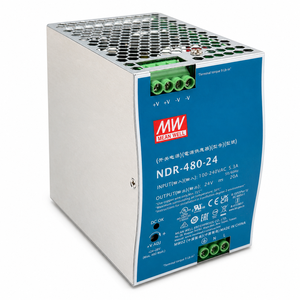
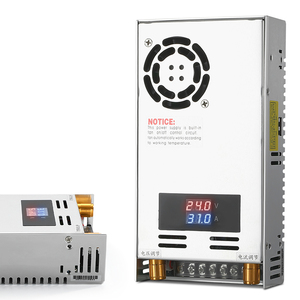
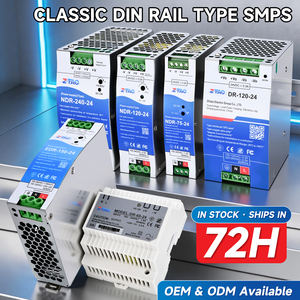
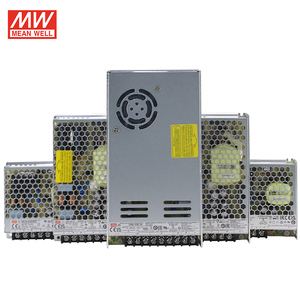
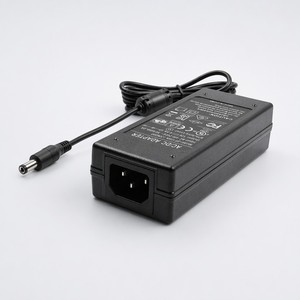
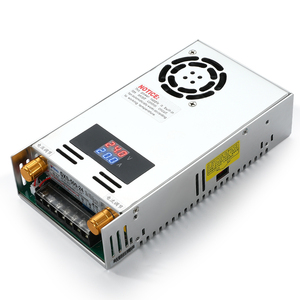
Navigating global grid fluctuations, power sags, and harmonic noise demands hardware built upon rigorous engineering standards and continuous manufacturing innovation.
Designed and certified to international standards including IEC/EN/UL 62368-1 for information technology equipment, EN 50155 for railway rolling stock, and medical-grade IEC 60601-1 3rd Edition with 2xMOPP isolation barriers.
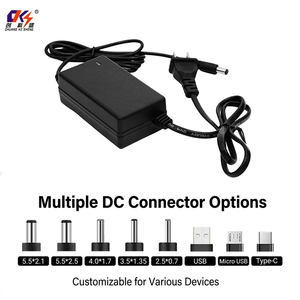
Rather than forcing long custom development timelines, our modular platforms allow rapid modifications: voltage trimming, pinout adjustments, conformal coating, custom wire harnesses, and potting for extreme environments.
With distribution hubs across Asia, Europe, and the Americas, we guarantee continuous buffer stocking, minimized lead times, and proactive Product Change Notifications (PCN) for long lifecycle applications.
An engineering deep-dive into voltage stabilization mechanisms, transient response dynamics, power factor correction, and thermal management strategies for procurement directors and chief power engineers.
In modern industrial utility environments, grid voltage fluctuations remain a primary cause of equipment downtime, premature component degradation, and computational errors in automated control systems. Voltage regulators (also termed automatic voltage regulators or AVRs) act as critical power conditioning barriers between unstable line inputs and sensitive downstream loads. Over the past three decades, Chinese electrical equipment manufacturing has evolved from basic electromechanical servo-driven transformers to solid-state static regulators and high-frequency pulse-width modulated (PWM) switching power supplies.
Selecting the appropriate voltage regulator topology requires analyzing four primary operational metrics: Response Speed (ms), Voltage Regulation Accuracy (%), Total Harmonic Distortion (THD), and Maintenance Overhead. Below is an engineering comparison of the primary topologies exported by top Chinese manufacturers today.
| Stabilization Topology | Regulation Accuracy | Response Time | Efficiency Range | Harmonic Distortion (THD) | Ideal Industrial Application |
|---|---|---|---|---|---|
| Servo Motor Auto-Transformer (SVC/TNS) | ±1.5% to ±3.0% | 0.5s – 1.5s | 95% – 98% | < 1% (Zero Waveform Distortion) | Large CNC Machining, Textile Plants, Whole-Factory Baseline Protection |
| Thyristor Static Tap-Changing (DBW/SBW-F) | ±1.0% to ±2.5% | < 20ms | 97% – 99% | < 1.5% | Medical Imaging (MRI/CT), SMT Assembly Lines, Telecom Base Stations |
| High-Frequency IGBT Switching / SMPS | ±0.5% to ±1.0% | < 2ms | 88% – 95% | < 3% (Filtered) | Precision Robotics, DIN-Rail PLC Racks, Embedded IoT Nodes |
| Magnetic Induction / Ferroresonant (FRV) | ±1.0% | 10ms – 30ms | 85% – 92% | 3% – 5% | Severe Noise Environments, Mining Operations, Outdoor Oil Rigs |
The lifespan of a high-power voltage regulator or switching power supply is direct proportional to thermal management of its magnetic cores (chokes, isolation transformers) and semiconductor power switches (IGBTs, MOSFETs). Premier Chinese exporters utilize key thermal design practices:
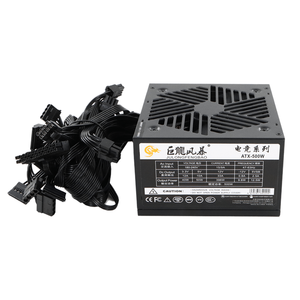
Unregulated non-linear loads induce severe phase displacement and harmonic currents back into the utility grid. Modern Chinese voltage regulators and computer ATX supplies (such as the Dragon Storm 500W APFC series) integrate active power factor correction circuits utilizing continuous conduction mode (CCM) controllers. This brings the power factor up to 0.99 while drastically reducing Total Harmonic Distortion (THD) below 5%, complying with IEC/EN 61000-3-2 Class D limits.
Furthermore, internal EMI filtering stages—comprising multi-stage common mode chokes, X2 safety capacitors, and metal oxide varistors (MOVs)—shield downstream equipment from high-voltage transients, lightning surges (up to 4kV under IEC 61000-4-5), and conducted radio-frequency noise.
Key technological shifts shaping the Chinese manufacturing landscape and offering strategic advantages for global OEM buyers.
The transition from silicon MOSFETs to Silicon Carbide (SiC) and Gallium Nitride (GaN) power switches is revolutionizing point-of-load voltage regulators and switching power adapters. GaN-based adapters yield power densities exceeding 20W/in³, delivering up to 96% energy conversion efficiency, reducing heat generation, and enabling form factors half the size of traditional silicon adapters.
Next-generation high-power industrial voltage stabilizers (such as 500kVA+ SBW series) now feature integrated RS485/Modbus RTU, SNMP, and Wi-Fi telematics. Plant operators can monitor real-time phase voltages, load currents, power factors, and transformer temperatures remotely, predicting capacitor or contactor wear prior to physical failure.
With the global expansion of solar PV generation, microgrids, and EV charging infrastructures, voltage regulators must accommodate wide input ranges (up to 4:1 or 10:1 ultra-wide DC input ranges from 100VDC to 1500VDC). Reinforced insulation rated up to 6000VDC isolation guarantees safe separation between high-voltage bus lines and low-voltage digital microcontrollers.
Replacing analog feedback loops with High-Speed Digital Signal Processors (DSP) allows real-time sampling of output waveforms at 50kHz+. Digital feedback loops enable microsecond dynamic response times to sudden step-load changes, eliminating voltage overshoot or undershoot that damages high-density semiconductor test equipment.
Avoid costly sizing mistakes and unexpected thermal derating by utilizing our standardized engineering formula and selection matrix.
When selecting an Automatic Voltage Regulator (AVR) or power supply unit, specifying a capacity equal strictly to the connected load's nameplate wattage leads to thermal overload and premature shutoff. Inductive loads (electric motors, compressors, CNC spindles) draw starting inrush currents 3 to 7 times higher than their steady-state operating current.
Use the following standard engineering formula to calculate required Regulator Rating ($S_{AVR}$ in kVA):
Where:
Direct answers from our application engineering team addressing common technical queries, procurement concerns, and operational parameters.
Our application engineering team is ready to assist with schematic reviews, sample requests, thermal calculations, and factory-direct OEM pricing quotes tailored to your project requirements.