As solid-state lighting (SSL) and industrial power automation evolve toward ultra-high efficiency, micro-dimming precision, and digital network integration, selecting an ideal original equipment manufacturer (OEM) or original design manufacturer (ODM) in China has transcended simple BOM cost evaluations. Modern procurement requires rigorous technical auditing across thermal management capabilities, electromagnetic compatibility (EMC) margins, total harmonic distortion (THD) suppression, and compliance with emerging global standards such as DALI-2, D4i, 0-10V isolation, and IEEE 1789 flicker-free guidelines.
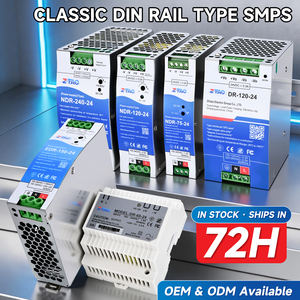
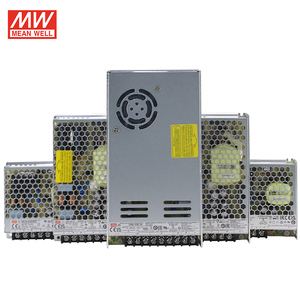
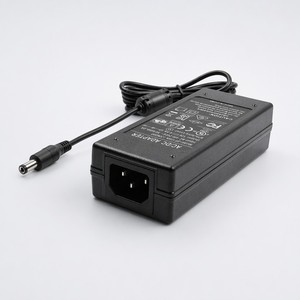
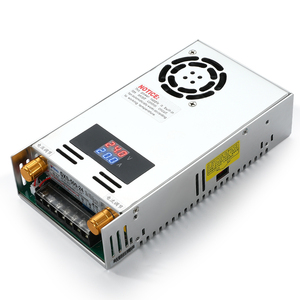
High-reliability power conversion units designed for commercial architectural luminaire integration, DIN-rail industrial control panels, and outdoor heavy-duty switching environments.
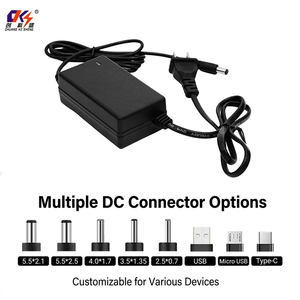
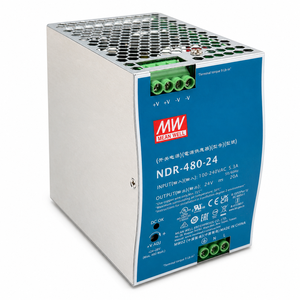
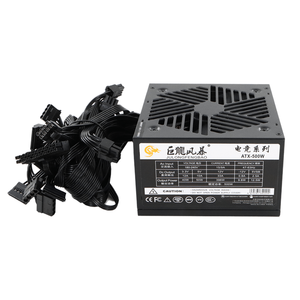
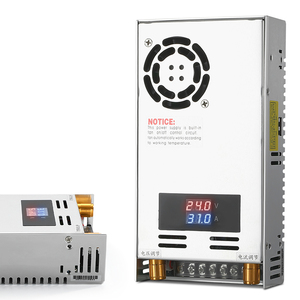
When procuring dimmable LED drivers from Chinese manufacturing facilities, pay close attention to the distinction between logarithmic and linear dimming curves. Logarithmic dimming aligns with human eye perception (Weber-Fechner Law), providing smooth luminance changes at lower light levels, whereas linear dimming is designed for automated sensor-driven energy management systems. Top-tier factories utilize 16-bit digital microcontrollers to execute sub-0.1% flicker-free dimming without generating audible acoustic coil noise.
Why leading global lighting brands, industrial automation integrators, and electrical distributors partner with tier-1 Chinese power supply manufacturing centers.
Leading factories maintain in-house UL-certified witness testing labs (CTDP/TMP). Standard production series hold comprehensive certifications including IEC/EN/UL 62368-1 for information technology, IEC/EN 61347 for LED controlgear, IEC 60601-1 3rd Edition (2xMOPP) for medical power devices, and EN 50155 / EN 45545-2 for railway rolling stock applications.
Equipped with high-speed Yamaha and Fuji surface-mount technology (SMT) lines, high-precision automated optical inspection (AOI), and dual-component polyurethane/silicone auto-potting machines. Automated potting ensures IP65/IP67 ingress protection, superior thermal dissipation across components, and vibration endurance up to 5G.
Top-tier China dimmable driver factories integrate continuous conduction mode (CCM) active Power Factor Correction (PFC) ICs. Achieving PF > 0.98 at 230VAC full load and Total Harmonic Distortion (THD) < 8%, fulfilling strict EU Ecodesign ErP directive requirements and preventing electrical grid noise interference.
Beyond standard product lines, OEM platforms can be rapidly customized: output current trimming (1mA resolution), specialized connector wire harnesses (WAGO, Molex, IP68 connectors), custom enclosure footprints, potting compound formulation for extreme cold (-40°C), and modified PCB thermal vias.
Quality assurance is backed by 100% full-load aging tests conducted inside high-temperature burn-in chambers (45°C–50°C) for 4 to 8 hours. Automated Test Equipment (ATE) logs electrical parameters before and after burn-in to ensure zero-defect shipment quality (DPM < 50).
Implementation of high-frequency ripple suppression circuits reduces output current ripple to below 1.5%. This compliance eliminates visible and invisible stroboscopic effects, meeting the strict health requirements of IEEE 1789-2015 for school, office, and broadcast studio illumination.
A comparative overview of dimming interfaces engineered by premier Chinese manufacturing facilities.
| Dimming Protocol | Dimming Range | Control Signal / Wiring | Typical Efficiency | Primary Application Target |
|---|---|---|---|---|
| DALI-2 / D4i (IEC 62386) | 0.1% – 100% (Logarithmic) | 2-Wire Digital Bus (Polarity-Free) | 91.5% – 94.0% | Smart Commercial Offices, IoT Buildings, Architectural |
| 0-10V / 1-10V Analog | 1.0% – 100% (Linear/Log) | 2-Wire DC Voltage (Sink/Source) | 90.0% – 93.0% | Industrial Warehouses, High-Bays, Retail Strip Lighting |
| Triac / Phase-Cut (AC) | 2.0% – 100% (Phase Angle) | Standard 2-Wire AC Line (Leading/Trailing) | 86.0% – 89.5% | Retrofit Residential, Hospitality Downlights, Wall Sconces |
| PWM Signal Direct | 0.5% – 100% (Duty Cycle) | 10V / 24V PWM Signal Inputs | 91.0% – 93.5% | Constant Voltage Strip Lights, Signage, Cove Lighting |
| Wireless (Zigbee 3.0 / Matter) | 0.1% – 100% (Digital Step) | 2.4GHz Mesh Protocol RF Integrated | 89.0% – 92.5% | Smart Home Automation, Wireless Retrofit Systems |
Innovations driven by power semiconductor advancements, IoT integration, and carbon neutrality mandates.
The transition from traditional Silicon MOSFETs to GaN wide-bandgap transistors allows power supply factories to boost switching frequencies from 65kHz to over 300kHz. This dramatically reduces transformer magnetics size, cutting driver volume by up to 40% while pushing conversion efficiency beyond 95% in compact form factors.
Modern DALI D4i standards (Parts 251, 252, and 253) enable dimmable drivers to act as data hubs inside smart buildings. Chinese factories are integrating real-time memory banks storing energy consumption data, luminaire operating hours, internal temperature metrics, and predictive failure diagnostics directly accessible over the DALI bus.
Dual-channel output drivers supporting DALI DT8 and 2-channel 0-10V are rapidly replacing single-channel drivers in premium architectural projects. Microprocessors execute smooth correlated color temperature (CCT) tuning from 2700K to 6500K while maintaining perfect chromaticity coordinates without intensity dips.
To eliminate expensive control wiring installation, leading ODM factories are embedding certified Matter-over-Thread and Zigbee 3.0 radio modules inside driver housings. This enables plug-and-play interoperability with Apple HomeKit, Google Home, and commercial building management systems (BMS).
How international procurement directors and OEM buyers are mitigating supply chain risks while maximizing product margin and compliance.
Global buyers are moving away from buying standard off-the-shelf drivers through trading intermediaries. Instead, buyers establish direct engineering partnerships with Tier-1 manufacturers in Shenzhen, Dongguan, Ningbo, and Zhongshan. Direct collaboration grants access to custom mechanical tooling, proprietary firmware modifications, and dedicated safety file co-ownership (UL/CB drop-in certificates).
Forward-thinking procurement audits emphasize TCO, calculating warranty return rates, field failure costs, and shipping logistics. While low-tier drivers save $0.50 initially, high failure rates destroy brand equity. Leading factories offer 5-year to 7-year warranties backed by Japanese electrolytic capacitors (e.g., Rubycon, Nichicon) rated for 10,000 hours at 105°C.
European and North American regulatory mandates (such as the EU Carbon Border Adjustment Mechanism and Corporate Sustainability Due Diligence Directive) require buyers to verify manufacturer ESG metrics. Top Chinese factories are installing rooftop solar arrays, achieving ISO 14001 certification, and supplying full Product Carbon Footprint (PCF) reports for every driver platform.
Critical technical and operational questions answered by senior power supply application engineers.
Constant Current (CC) drivers maintain a fixed electrical current (e.g., 350mA, 700mA, 1050mA) while dynamically adjusting output voltage based on the LED load's forward voltage. CC drivers are directly connected to LED arrays in spotlights, downlights, and panels. Constant Voltage (CV) drivers output a fixed voltage (typically 12V, 24V, or 48V) and current fluctuates based on load resistance, making them ideal for parallel-connected LED flex strips with built-in current-limiting resistors.
Acoustic noise in dimmable drivers stems from magnetostriction in transformers and piezoelectric vibrations in ceramic capacitors when subjected to audio-frequency PWM pulses (20Hz–20kHz). Premier China factories mitigate this by elevating the internal PWM dimming frequency above 20kHz (ultrasonic range), utilizing vacuum varnish impregnation for magnetic cores, and switching to low-noise metal film or polymer electrolytic capacitors in signal-sensitive circuit paths.
Flicker is minimized by evaluating three key parameters: (1) Output Current Ripple Percentage (< 2% ideal), (2) Modulation Depth, and (3) Dimming Frequency. Ensure the factory provides test reports proving compliance with IEEE 1789-2015 recommendations. Additionally, verify that the driver's active PFC stage is decoupled effectively from the dimming control loop to prevent 100Hz/120Hz mains ripple propagation.
In non-isolated 0-10V drivers, the low-voltage control lines share a common ground with the high-voltage AC input or DC output. If control lines are exposed or connected to complex lighting control networks, voltage surges can destroy control modules or create severe electrical shock hazards. Top manufacturers employ optical couplers or transformer-isolated feedback loops achieving 3750VAC safety isolation between AC input, DC output, and 0-10V control terminals.
For standard catalogue products, Minimum Order Quantities (MOQs) typically range from 100 to 500 units with 2-week lead times. For custom OEM designs (modified voltage/current or custom housing), rapid prototyping samples are delivered within 10 to 15 working days. Full mass production lead times are generally 4 to 6 weeks, depending on component availability and safety certification qualification schedules.
Fully potted IP67 outdoor drivers dissipate heat through conduction via thermal compound to the aluminum enclosure. While potting protects components against humidity and moisture ingress, it requires precise thermal engineering to prevent localized hot spots. Indoor IP20 open-frame or plastic housing drivers rely on air convection; maintaining appropriate clearance inside luminaire housings is vital to ensure maximum capacitor operating temperatures remain below 85°C.
Connect directly with our senior power electronics team to discuss customized dimmable driver specs, factory compliance documentation, and competitive OEM volume pricing.