Explore our tier-1 engineered solar converters, off-grid systems, telecom power upgrades, and solar pumping vector drives designed for maximum energy harvesting and rugged operational reliability.
Navigating the nuances of modern power conversion architecture: Topology, efficiency profiles, and thermal endurance in mission-critical photovoltaic deployments.
The global energy transition has placed unprecedented demand on power electronics. A solar converter is no longer a simple direct-current (DC) to alternating-current (AC) inverter; it acts as the intelligent heartbeat of residential energy storage systems (ESS), industrial microgrids, solar-powered agricultural irrigation, and telecommunications infrastructure. Choosing a reliable solar converter factory and exporter requires evaluating electrical topologies, thermal management systems, signal isolation barriers, and compliance with stringent international electrical safety frameworks.
While basic inverter specs highlight continuous wattage, industrial buyers must inspect transient surge capacity, Total Harmonic Distortion (THD) under non-linear loads, and derating curves at elevated ambient temperatures (+50°C and above). Modern wide-bandgap semiconductors such as Silicon Carbide (SiC) and Gallium Nitride (GaN) are redefining efficiency ceilings, reducing switching losses by up to 40% compared to legacy silicon IGBTs.
Modern commercial and residential solar converters leverage two distinct architectural philosophies depending on grid-tie isolation requirements and weight-to-power density targets:
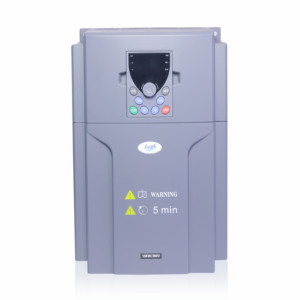
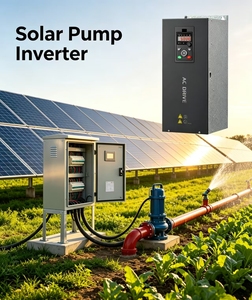
Agricultural and municipal water infrastructure increasingly relies on direct-drive solar frequency converters. Unlike standard off-grid inverters that supply fixed AC voltage, specialized solar pump drives (ranging from 1.5kW to 200kW 380V 3-Phase) incorporate Sensorless Vector Control. This adjusts the motor speed dynamically based on instantaneous solar irradiance, eliminating the need for battery banks and minimizing mechanical wear on pump impellers during low-light dawn and dusk cycles.
| Converter Category | Primary Architecture | Peak Efficiency | Typical Voltage Range | Target Infrastructure |
|---|---|---|---|---|
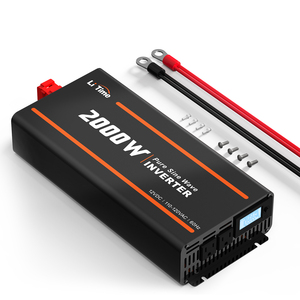
| Pure Sine Wave Inverter | Single-Phase Low/High Freq. | 92% - 95% | 12V / 24V / 48V DC | Home Backup, RV, Off-Grid Solar |
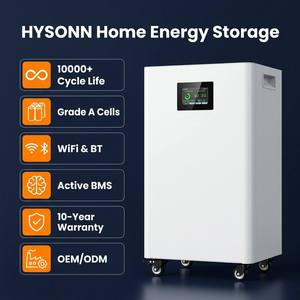
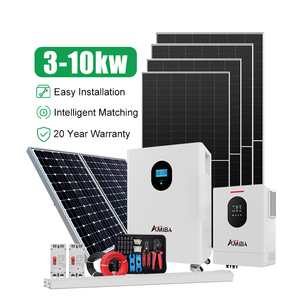
| All-In-One Hybrid System | Bidirectional DC-DC + AC Coupling | 97.5% - 98.8% | 150V - 600V High Voltage DC | Residential ESS, Commercial Storage |
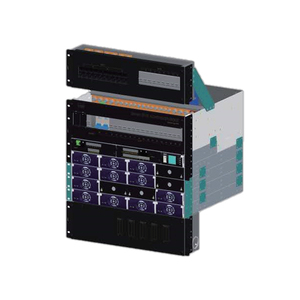
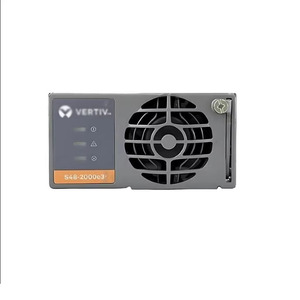
| Telecom Solar Converter Module | Hot-Swappable Rectifier Shelf | 96.5% - 99.0% | -48VDC Nominal Output | 5G Base Stations, SP Power Retrofits |
| Solar Pump Frequency Inverter | 3-Phase VFD Vector Drive | 98.0% (MPPT 99.9%) | 350V - 900VDC Input Range | Deep-Well Pumping, Agribusiness |
How evolving smart grid mandates, battery chemistry shifts, and AI-driven MPPT algorithms are shaping OEM manufacturing priorities.
The transition from legacy Silicon IGBTs to Silicon Carbide (SiC) and Gallium Nitride (GaN) power transistors enables switching frequencies 5x faster. This drastically reduces passive magnetic components, yielding ultra-compact converters with higher thermal operational thresholds (+105°C junction temperatures).
Telecom operators globally are modernizing legacy base station power networks (e.g., SP series) by integrating high-density solar converter modules. Hot-swappable 3000W 48V modules allow incremental green power expansion without disrupting carrier uptime.
Next-generation hybrid converters deploy machine-learning neural networks at the edge to predict micro-shading patterns and cloud passage. Additionally, Vehicle-to-Grid (V2G) bidirectional charging protocols are merging solar conversion and EV storage networks into unified microgrids.
Decades of manufacturing precision, certified safety compliance, and bespoke OEM/ODM engineering capabilities serving top-tier global brands.
Every converter undergoes 100% automated optical inspection (AOI), full-load thermal burn-in testing under elevated temperatures, and rigorous dielectric breakdown testing to guarantee zero-defect field operation.
Our products carry complete compliance certification files including IEC/EN/UL 62368-1, IEC 60601-1, EN 50155 (Railway), and EN 61000-4 Electromagnetic Compatibility (EMC) standards, ensuring rapid local grid interconnect approval.
We provide tailormade modification programs: output voltage trimming, specialized potting compounds for harsh environmental anti-corrosion, custom wiring harness integrations, and private-label firmware branding.
Direct technical answers to common queries raised by system integrators, EPC contractors, and OEM buyers.
An isolated DC-DC solar converter incorporates an internal high-frequency transformer to galvanically separate the input solar DC array from the output load or storage battery (typically rated for 1500VDC up to 6000VDC isolation). This prevents dangerous ground loops, shields sensitive microcontrollers from high-voltage transients, and ensures compliance with grid safety codes. Non-isolated regulators share a common ground and are used primarily for localized point-of-load step-down conversion where high power density and minimal component cost are prioritized.
Maximum Power Point Tracking (MPPT) dynamically sweeps the current-voltage (I-V) curve of a solar array to identify the precise point where output power (Watts = Volts x Amps) is maximized. In contrast to Pulse Width Modulation (PWM) controllers which force panel voltage down to match the battery bank voltage, advanced MPPT algorithms harvest up to 30% more energy under cloudy, low-light, or temperature-variable conditions, dramatically improving overall solar system ROI.
Yes. Our HTP Solar Converter Retrofit Kits and modular S48-3000 series rectifiers are engineered as drop-in upgrades for legacy SP series telecom power shelves. They seamlessly interface with Dynamic Power Conditioning (DPC) systems, allowing remote cell sites to prioritize clean photovoltaic input while keeping utility grid or diesel generator power as automated secondary fail-safes.
All standard solar converter series are backed by our 5-Year OEM Warranty. For enterprise infrastructure projects, we maintain long-lifecycle supply chain commitments, offering Last-Time-Buy (LTB) notifications, formal Product Change Notifications (PCN), and guaranteed drop-in component compatibility for 10 to 15 years.
Selection requires calculating the AC motor rated horsepower (HP/kW) and full-load current (FLA), alongside the Voc (Open Circuit Voltage) and Vmp (Max Power Voltage) of the solar array string. The converter’s DC input window must comfortably handle maximum VOC at lowest ambient temperatures (typically up to 800V-900V DC). We recommend matching the inverter kW rating to 1.2x - 1.5x of the pump motor power rating to account for heavy inductive starting torque.