Explore top-tier power conversion equipment, board-mount DC-DC converters, and rugged DIN rail power supplies designed for transient protection, high efficiency, and continuous trackside/rolling stock operation.
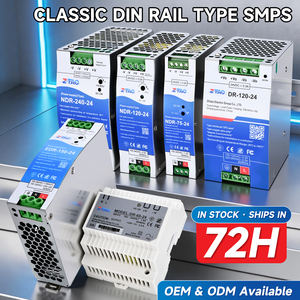
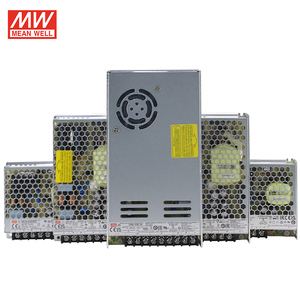
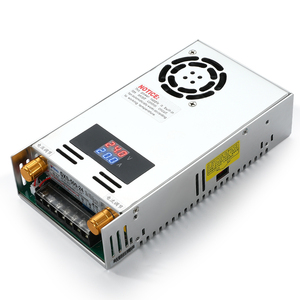
Modern railway networks—encompassing high-speed passenger trains, heavy-haul freight, mass rapid transit (MRT), and light rail transit (LRT)—demand mission-critical electrical architecture. Power conversion hardware operating on rolling stock and trackside infrastructure must endure extreme environmental stressors: mechanical shock, continuous vibration, severe thermal cycling (-40°C to +85°C), and electrical transients like line surges and brownouts.
Procurement directors and systems integration engineers evaluating the Top 10 Railway Supply Suppliers must look beyond initial unit cost. Evaluating manufacturers requires analyzing compliance against stringent standards such as EN 50155 (railway applications on rolling stock), EN 45545-2 (fire safety and toxicity), RIA 12 (surge withstand capabilities), and IEC 62368-1 for safety.
This comprehensive technical whitepaper provides an objective evaluation of global leaders in railway power supplies, analyzes future procurement trajectories, details key engineering selection standards, and outlines custom design capabilities for OEM programs.
Selecting standard modular DC-DC and AC-DC converters with pre-certified EN 50155 ratings cuts engineering design-in cycles by up to 40% while shielding system integrators from expensive re-qualification testing during final train compliance audits.
The following benchmark highlights the top manufacturers delivering specialized DC-DC converters, auxiliary power supply units (APU), trackside signal rectifiers, and DIN rail power modules for global railway deployments.
| Manufacturer / Supplier | Primary Railway Product Focus | Input Voltage Compliance | Standard Warranty | E-E-A-T Benchmark Advantage |
|---|---|---|---|---|
| Aimtec Inc. | Modular Board-Mount DC-DC & Chassis Converters | Ultra-wide 4:1 / 12:1 (14.4 to 168 VDC) | 5 Years | Rapid modification flexibility, low MOQ, direct engineering design support. |
| MEAN WELL | DIN Rail Power Supplies & Enclosed Switching SMPS | Universal AC / 2:1 Industrial DC | 3–5 Years | Global stock availability, ultra-cost-competitive standard units. |
| Traco Power | Ruggedized Railway DC-DC Modules (1W–300W) | EN 50155 Nominal Inputs (24V–110V) | 3 Years | High power density, robust thermal dissipation profiles. |
| XP Power | Custom & Standard Railway Power Conversion | Wide DC Range + RIA 12 Protection | 3 Years | Extensive global compliance certification infrastructure. |
| Vicor Corporation | High-Density Modular Brick Converters | Wide Range High Voltage DC | 2 Years | Extreme power density for advanced traction and passenger tech. |
| TDK-Lambda | Industrial & Railway Board-Mount Converters | Standard Industrial & Transit Rails | 3–5 Years | High MTBF metrics, strong institutional market presence. |
| Siemens Mobility | High-Voltage Traction Inverters & APUs | 750V / 1500V / 3kV Catenary Lines | Project-based | Complete turnkey railway propulsion and electrification systems. |
| Phoenix Contact | Trackside DIN Rail Supplies & Surge Arresters | Universal AC & Control Voltage DC | 3 Years | Unrivaled cabinet terminal and trackside surge protection integration. |
| Bel Power Solutions | Cassette Power Converters & Rack Systems | EN 50155 Compliant High Power | 2–3 Years | Legacy form-factor compatibility for train retrofits. |
| Murata Power Solutions | Isolated Board-Level DC-DC Converters | 4:1 Board-Mount Ranges | 3 Years | Micro-footprint components for embedded signaling cards. |
A railway power supply is subjected to electrical environments vastly more harsh than standard industrial facilities. System designers must ensure all components meet specific European and international norms:
Defines requirements for electronic equipment used on rolling stock. Covers input voltage ranges, interruptions (Class S2/C1 hold-up time up to 10ms), EMC immunity, ambient operating temperatures (-40°C to +85°C Class OT4), and vibration/shock resistance under EN 61373.
Establishes flammability, smoke density, and toxicity requirements for materials used on railway vehicles. Power modules must utilize potting compounds, plastic shells, and PCBs certified to Hazard Levels HL1, HL2, or HL3 to ensure passenger safety in enclosed tunnels.
A critical specification defining surge protection requirements for equipment connected to railway lead-acid battery banks. Demands protection against high-energy transients up to 3.5 times nominal input voltage (Un) for 20 milliseconds (e.g., 385V surge on a 110V system).
Train onboard batteries typically operate at nominal voltages of 24V, 36V, 48V, 72V, 96V, or 110V DC. According to EN 50155, power supplies must function reliably across continuous variations from 0.7 to 1.25 times Un, and sustain short-term dip/surge transients from 0.6 to 1.4 times Un without output degradation.
To meet these requirements without keeping dozens of distinct part numbers in stock, modern engineering trends favor ultra-wide input converters (such as 4:1 or 12:1 input range modules). A single 14.4V to 168V DC wide-input converter can cover all standard nominal railway battery voltages in a single SKU.
As the rail industry transitions toward green energy, zero-emission hydrogen trains, smart predictive maintenance, and autonomous train control systems (ETCS Level 3), power supplies are evolving rapidly. Procurement and engineering leaders should monitor four key technology shifts:
Silicon Carbide (SiC) and Gallium Nitride (GaN) switching components are entering DC-DC converter topologies. By operating at higher switching frequencies, WBG devices dramatically shrink transformer core sizes, raising power densities by 30–50% while reducing thermal dissipation loads in sealed rolling stock enclosures.
Next-generation railway auxiliary converters are no longer isolated black boxes. They feature digital communication buses (CANopen, PMBus, or Modbus) that send real-time operational telemetry—such as internal hot-spot temperature, output current ripple, and capacitor degradation states—to central train management systems (TCMS) for predictive maintenance.
Rather than relying on one massive central AC-DC or DC-DC converter, train designers are implementing modular decentralized power layouts. High-voltage DC buses route power across carriages to local, high-efficiency non-isolated switching regulators situated directly next to sensitive IoT sensors, Wi-Fi access points, and passenger display screens.
Procurement teams are aggressively cutting inventory complexity. Wide 12:1 input converters capable of accepting inputs from 14.4 VDC all the way to 160 VDC enable a single power module design to be specified across global train fleets operating in Europe (110V DC), North America (72V DC), and Asia (24V/48V DC).
Building reliable railway systems requires more than standard off-the-shelf components. Our engineering support ecosystem combines decades of power design expertise, certified manufacturing standards, and modification agility to accelerate your project deployment.
Every standard module is qualified against IEC/EN 62368-1, EN 50155, and EN 45545-2 targets. Complete compliance documentation—including CB test reports, UL certificates, RoHS/REACH declarations, and thermal derating curves—is available for instant audit download.
Avoid expensive, high-risk custom developments. We modify standard, pre-approved platforms by customizing output voltage trims, pinouts, potting compounds, conformal coatings, and wiring harnesses while retaining core safety certifications.
Railway infrastructure operates on 15 to 30-year lifecycles. We guarantee long-term component availability, advanced Product Change Notifications (PCN), Last-Time-Buy (LTB) windows, and seamless drop-in replacements.
Answers to common technical and sourcing questions raised by specification managers, hardware designers, and buyers.
Our application engineering team is ready to assist with schematic reviews, thermal budget calculations, EN 50155 compliance verification, and rapid custom modifications for your rolling stock or trackside programs.
Send an Inquiry