Engineered for industrial automation, telecom infrastructure, medical systems, and railway rolling stock.
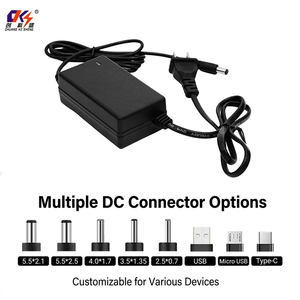
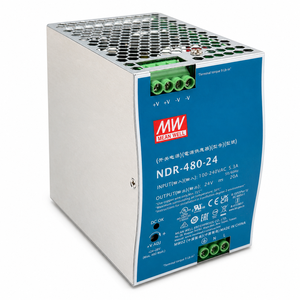
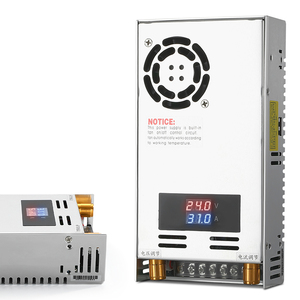
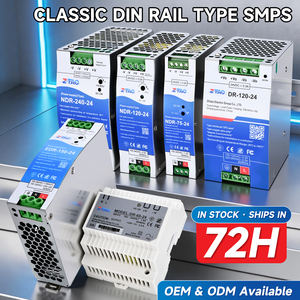
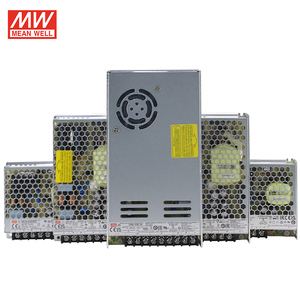
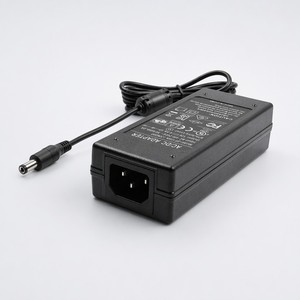
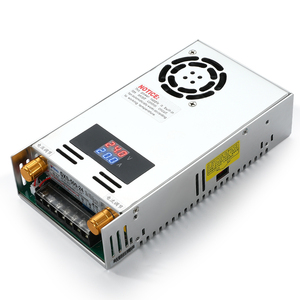
Modern industrial automation, 5G wireless telecom infrastructure, electric vehicle charging stations, and critical medical systems demand uncompromising power conversion reliability. The term "Power Brick"—traditionally referring to standardized, high-density encapsulated DC-DC and AC-DC modules adhering to standard industry footprints (1/16th brick, 1/8th brick, quarter brick, half brick, and full brick)—has evolved into the backbone of mission-critical system design.
As original equipment manufacturers (OEMs) shift toward decentralized power architectures (Distributed Power Architecture - DPA and Intermediate Bus Architecture - IBA), selecting the right power brick supplier is no longer merely a commercial procurement task. It is a fundamental engineering risk-management decision. Key performance parameters such as thermal dissipation efficiency, Electromagnetic Compatibility (EMC compliance per IEC 61000-4), galvanic isolation, mean time between failures (MTBF > 1,500,000 hours), and compliance with strict safety frameworks (IEC/EN/UL 62368-1, IEC 60601-1 3rd Edition, and EN 50155) determine product life cycles and market viability.
To assist system architects, procurement directors, and compliance engineers in evaluating global supply options, we present an exhaustive technical review of the world's leading power brick manufacturers. This evaluation considers manufacturing footprint, customization capabilities, conversion efficiency, safety certifications, and supply chain stability.
Standardization of physical pinouts and thermal footprints allows engineering design teams to multi-source components. The table below outlines standard DOSA (Distributed-power Open Standards Alliance) brick dimensions and key performance parameters for baseline evaluation.
| Standard Brick Size | Dimensions (mm / in) | Typical Power Range | Primary Industrial Application | Thermal Dissipation Strategy |
|---|---|---|---|---|
| 1/16th Brick | 33.0 x 22.9 x 12.7 mm (1.3 x 0.9 in) | 10W – 120W | Point-of-Load (PoL), Telecom Cards | Natural Convection / PCB Copper Spreading |
| 1/8th Brick | 58.4 x 22.9 x 12.7 mm (2.3 x 0.9 in) | 30W – 300W | 5G Base Stations, Network Switches | Baseplate Conduction / Forced Airflow |
| Quarter Brick (1/4) | 58.4 x 36.8 x 12.7 mm (2.3 x 1.45 in) | 50W – 500W | Industrial Automation, Robotics, AGVs | Attached Heatsink / Cold Plate Conduction |
| Half Brick (1/2) | 58.4 x 61.0 x 12.7 mm (2.3 x 2.4 in) | 150W – 800W | Railway Rolling Stock, Renewable Inverters | Encapsulated Potting / Heavy Cold Plate |
| Full Brick | 116.8 x 61.0 x 12.7 mm (4.6 x 2.4 in) | 300W – 1500W+ | High-Power Medical MRI/CT, Defense Systems | Liquid Cooling / Forced Convection Heatsink |
As global supply chains navigate geopolitical realignments, decarbonization mandates, and rapid electrification across industries, the power supply manufacturing landscape is experiencing three critical structural shifts:
Silicon-based power MOSFETs are rapidly approaching their theoretical performance limits in terms of switching speed, breakdown voltage, and thermal resistance. The adoption of Gallium Nitride (GaN) for low-to-medium voltage step-down converters and Silicon Carbide (SiC) for high-voltage AC-DC rectifiers allows switching frequencies to push beyond 1 MHz. This dramatic frequency increase significantly reduces the physical size of inductors and transformers, yielding power bricks with 50% smaller volumetric footprints while maintaining peak operating efficiencies above 96%.
Analog-only control loops are being augmented or replaced by digital signal controllers (DSC) featuring PMBus, I2C, or CAN bus interfaces. System administrators can now monitor real-time operating metrics—including input voltage transients, output current draw, internal junction temperatures, and remaining component life estimates—directly from a central management console. This capability enables predictive maintenance strategies for critical infrastructure, such as cloud data centers and automated robotic assembly lines.
The global component shortages experienced between 2020 and 2023 highlighted the risk of relying on single-source, proprietary power modules. Modern procurement teams are mandating DOSA-compliant pinout compatibility or turning to agile tier-1 manufacturers capable of offering Modified Standard Modules. By modifying transformer turns ratios, output voltage trim resistor networks, or environmental encapsulation potting compounds on pre-certified base platforms, OEMs achieve exact system fit without incurring multi-year custom tooling costs or full safety re-certification timelines.
Over 20 years of continuous power innovation backed by dedicated engineering support and robust global logistics.
Every Aimtec product family is pre-qualified against global safety standards: IEC/EN/UL 62368-1 for ITE equipment, IEC 60601-1 3rd edition (2xMOPP) for medical diagnostics, and EN 50155 for harsh railway shock/vibration environments.
Rather than forcing your layout into an off-the-shelf compromise, Aimtec provides modified output voltages, customized pin lengths, specialized conformal coatings, and alternate connector harnesses with minimal MOQ requirements.
We support industrial programs with long life cycles (10+ years). Receive formal Product Change Notifications (PCN) and Last-Time-Buy (LTB) guidance to prevent unexpected component obsolescence across your system life cycle.
Direct technical answers from Aimtec's application engineering team to support procurement, design verification, and compliance auditing.
An isolated power brick incorporates a high-frequency internal transformer to provide complete galvanic isolation between the input ground loop and output secondary circuit (rated anywhere from 1,500 VDC up to 6,000 VDC isolation). This prevents dangerous ground loops, isolates high-voltage transients, and meets patient safety requirements in medical environments (2xMOPP). A non-isolated converter (such as a point-of-load switching regulator) shares a common ground rail, offering higher electrical efficiency (up to 97%) and higher volumetric power density at a lower cost when safety isolation is not required.
Power ratings listed in component catalogs (e.g., a 100W quarter brick) are typically specified under optimal ambient temperatures (usually 25°C) with active forced airflow (e.g., 200 to 400 LFM). In real-world sealed industrial enclosures operating at elevated ambient temperatures (+65°C to +85°C), thermal derating curves must be applied. Without forced convection or cold-plate conduction, a module may only deliver 50% to 60% of its rated nameplate power. Choosing a module with a high-efficiency planar transformer and silicone potting compound helps maximize heat dissipation through baseplate conduction.
Medical power supplies must comply with the IEC 60601-1 3rd Edition safety standard. Specifically, modules with direct patient contact require Means of Patient Protection (2xMOPP), which includes 4,000 VAC / 6,000 VDC reinforced isolation, minimum 8mm creepage and clearance distances, and ultra-low touch/leakage current (typically < 10 µA). Aimtec offers dedicated medical-grade AC-DC and DC-DC power brick series carrying full CB scheme reports and UL approvals for patient-connected applications.
Yes. Aimtec's Modified Standard Program allows OEMs to adjust key mechanical and electrical parameters on proven standard platforms. Common modifications include custom pin lengths, wide voltage trim ranges, customized potting compounds for extreme vibration or chemical exposure, conformal coating, custom wire harnesses, and private labeling. This path significantly reduces qualification time and cost compared to full custom development while retaining core safety certifications.
Standard industrial converters typically feature 2:1 input voltage ranges (e.g., 18-36 VDC). However, railway applications governed by EN 50155 require wide 4:1 or ultra-wide 12:1 input voltage ranges (such as 14-160 VDC continuous) to handle severe battery voltage dips, line switching surges, and brownout conditions across diverse rolling stock battery banks (24V, 48V, 72V, 96V, and 110V DC systems).
Speak directly with Aimtec's senior power conversion engineers. Receive free schematic reviews, thermal calculation models, and fast-track evaluation sample shipments.
Get a Quote