High-efficiency AC/DC and DC/DC switching power platforms certified for industrial automation, EV charging infrastructure, medical equipment, and telecom applications.
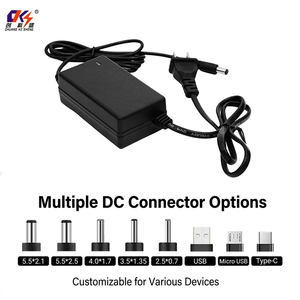
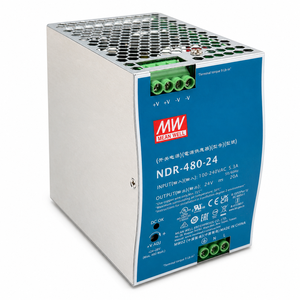
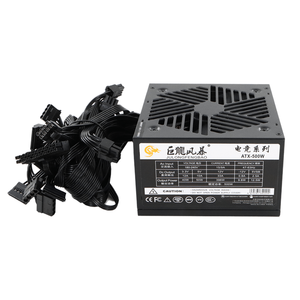
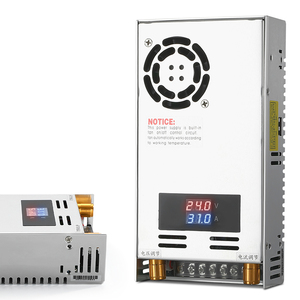
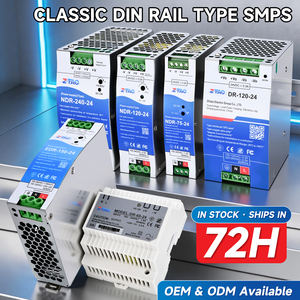
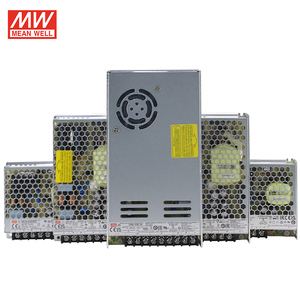
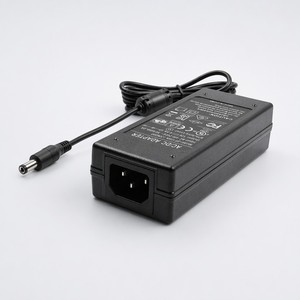
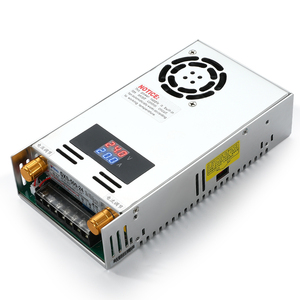
Modern electrical infrastructure, electric vehicles (EV), industrial automation, and telecommunications platforms rely heavily on modular charger units and AC/DC-DC/DC converters. A charger module is a highly integrated, high-density power conversion circuit designed to step down high-voltage AC mains (or high-voltage DC buses) to controlled DC output levels suited for energy storage systems, battery management systems (BMS), and point-of-load electronics.
Over the past decade, the global charger module manufacturing sector has transitioned from legacy silicon-based topologies to wide-bandgap (WBG) semiconductors, specifically Gallium Nitride (GaN) and Silicon Carbide (SiC). This technological leap has elevated power conversion efficiencies beyond 94% to 97%, while dramatically reducing physical module footprints (watts per cubic inch). Procurement officers and system design engineers must look beyond simple unit costs and prioritize long-term thermal derating, Mean Time Between Failures (MTBF), isolation ratings, and international regulatory certifications such as IEC/EN/UL 62368-1 for ITE, IEC 60601-1 3rd Edition for Medical (2xMOPP), and EN 50155 for Railway Rolling Stock.
Information Gain Insight: Selecting a qualified charger module manufacturer requires auditing not only initial efficiency specifications but also transient surge withstand capabilities (IEC 61000-4-5), galvanic isolation isolation barriers (ranging from 1500VDC to 6000VDC), and long-term lifecycle commitment programs (10-15 year extended component supply agreements).
As global supply chains shift toward localized assembly backed by centralized high-tech manufacturing hubs, evaluating top-tier exporters becomes critical for original equipment manufacturers (OEMs) and system integrators worldwide.
To assist procurement managers and lead electronics engineers in making data-driven sourcing decisions, we have benchmarked the top 10 global manufacturers and exporters of charger modules and switching power supplies based on engineering capability, international compliance depth, product breadth, and lifecycle reliability.
Headquarters: Montreal, Canada / Global Exporter Network
Specialization: Modular AC-DC converters, isolated DC-DC charger modules, 2xMOPP medical power supplies, DIN Rail systems.
Competitive Edge: Over 20+ years of engineering design experience with a catalog exceeding 10,000 standard models. Recognized for industry-leading "Modified Standard" programs, custom pinouts, ultra-wide 4:1 input ranges, and full compliance with EN 50155 railway standards backed by a 5-year warranty.
Headquarters: Taiwan
Specialization: Standard switching power supplies, NDR/HDR DIN rail series, enclosed SMPS, intelligent battery chargers.
Competitive Edge: Massive global stocking inventory and standardized off-the-shelf power hardware. Ideal for cost-sensitive, high-volume industrial automation and LED driver projects requiring immediate off-the-shelf delivery.
Headquarters: Taiwan
Specialization: High-power EV charging modules (30kW-60kW), server power modules, mega-watt renewable energy converters.
Competitive Edge: Exceptional market share in automotive EV fast-charging infrastructure and hyperscale data center power architectures requiring high-power SiC topologies.
Headquarters: USA
Specialization: High-density modular power components, Factorized Power Architecture (FPA), ChiP-packaged DC-DC converters.
Competitive Edge: Industry leader in volumetric power density (W/in³), specializing in defense, aerospace, advanced automotive, and supercomputing power conversion modules.
Headquarters: Japan / USA
Specialization: Programmable DC power supplies, heavy-duty industrial AC-DC modules, high-reliability PCB mount converters.
Competitive Edge: Renowned for extreme operational lifetime and robustness under severe thermal and mechanical stresses in industrial robotics and semiconductor manufacturing.
Headquarters: USA
Specialization: Precision high-voltage power supplies, Artesyn modular embedded power platforms, custom medical power modules.
Competitive Edge: Dominant position in high-end medical equipment, analytical instrumentation, and semiconductor processing equipment requiring precise voltage regulation.
Headquarters: United Kingdom
Specialization: Ultra-compact AC-DC power modules, isolated DC-DC converters, BF/CF medical grade supplies.
Competitive Edge: Strong design focus on low-leakage, high-efficiency miniature modules tailored for healthcare, robotics, and industrial IoT devices.
Headquarters: Japan
Specialization: Board-mount DC-DC converters, digital panel meters, power modules for telecom and data communications.
Competitive Edge: Exceptional miniaturization technologies and high-volume surface-mount (SMD) power module manufacturing capabilities.
Headquarters: Switzerland
Specialization: High-reliability DC/DC converter modules, ruggedized industrial AC/DC power supplies.
Competitive Edge: European quality standards with specialized focus on harsh-environment industrial equipment, traffic control, and railway electrification systems.
Headquarters: Germany
Specialization: Premium DIN rail power supplies, buffer modules, DC-UPS system charger modules.
Competitive Edge: Focused exclusively on DIN rail application engineering, delivering highest efficiency ratings (>95.5%) and longest operational lifetimes in cabinet environments.
The matrix below outlines key engineering metrics across top charger and power module providers for industrial procurement selection:
| Manufacturer | Primary Product Topology | Peak Efficiency Range | Target Certifications | Custom / Modified Standard Support |
|---|---|---|---|---|
| Aimtec / Nazer | Modular AC-DC / Isolated DC-DC / DIN Rail | 88% - 95% | UL/IEC 62368-1, 60601-1 (2xMOPP), EN 50155 | Extensive (Modified Standard Specialist) |
| Mean Well | Enclosed SMPS / Standard DIN Rail | 85% - 94% | UL/EN 62368-1, EN 61000-3-2 | Standard Catalog Focused |
| Delta Electronics | High Power EV Fast Charge / Server Power | 94% - 97% | IATF 16949, UL 2202, CE | Custom Enterprise Projects |
| Vicor | ChiP Modules / Factorized Power | 93% - 97.5% | MIL-STD-810, UL/IEC 62368-1 | Advanced OEM Partnering |
| TDK-Lambda | Programmable & Board-Mount Supplies | 87% - 94% | IEC/EN 61010-1, 62368-1 | Industrial Custom Variants |
| XP Power | Miniature Encapsulated / Medical PCB Mount | 88% - 94% | ANSI/AAMI ES60601-1, IEC 62368-1 | Moderate OEM Flexibility |
As electrification expands rapidly into heavy transportation, autonomous mobile robotics (AMR), renewable energy storage systems (BESS), and edge computing nodes, procurement teams must align with technical advancements shaping charger module designs over the coming decade.
Legacy silicon MOSFET switches are approaching their theoretical limits regarding switching speed and thermal losses. The integration of Gallium Nitride (GaN) devices in sub-1kW charger modules and Silicon Carbide (SiC) switches in 3kW-30kW power modules allows switching frequencies to push beyond 500kHz up to several Megahertz. This dramatic increase in frequency drastically shrinks magnetic components (inductors and transformers) and smoothing capacitors, yielding up to a 50% reduction in module size while pushing conversion efficiency beyond 96%.
Traditional analog feedback loops are being replaced by high-speed digital signal processors (DSPs) and ARM Cortex microcontrollers running advanced control algorithms. Charger modules now incorporate PMBus, CANbus (CANopen/J1939), or Modbus protocols directly onto the control board. This enables real-time telemetry streaming of voltage, current, internal hot-spot temperature, dynamic impedance, and cumulative operating hours—paving the way for predictive maintenance in critical mission facilities.
The future of energy storage mandates bidirectional power flow. Next-generation charger modules are no longer unidirectional (AC to DC for battery charging); they incorporate active front-end (AFE) topologies capable of reversing power flow (DC to AC or DC back to DC bus). This allows electric vehicles, battery banks, and uninterruptible power supplies (UPS) to function as distributed energy resources (DERs) feeding power back into grid infrastructure or facility microgrids during peak demand periods.
Industrial applications increasingly demand charger modules operating reliably in extreme environments—ranging from sub-zero arctic mining equipment (-40°C start-up) to desert solar farms (+85°C ambient with forced derating). Importers and OEMs are insisting on vacuum encapsulation potting compounds, conformal coating (polyurethane or silicone), and IP67/IP68 rated structural enclosures that safeguard sensitive surface-mount components against conductive dust, humidity, salt spray, and severe vibration (conforming to IEC 60068-2 standards).
When selecting a charger module or power adapter from an exporter, engineering teams must complete a comprehensive parametric review to guarantee system stability and compliance. Below is an engineering checklist designed by senior power designers:
Ensure the module supports wide universal input ranges (e.g., 85–305 VAC for global mains, or 4:1 DC inputs for battery-powered systems). Verify input surge protection withstand ratings (e.g., 300VAC for 5 seconds) to handle line voltage spikes in unstable industrial grids.
Examine the thermal derating curves in product datasheets carefully. Evaluate whether full power is maintained up to +50°C or +70°C ambient without active fan cooling, or if derating requires specific forced air velocities (LFM) or external heat-sinking.
Safety certifications must be backed by official CB reports and UL/CE file numbers. Medical devices require 2xMOPP (Means of Patient Protection) with isolation voltage ≥4000VAC, whereas standard industrial modules mandate IEC/EN/UL 62368-1 compliance.
As a leading designer, manufacturer, and global exporter of high-performance switching power supplies and modular charger platforms, our engineering organization provides distinct technical and supply chain advantages to global OEMs:
Since 2002, our engineering teams have successfully delivered over 10,000 standard and modified power converter platforms. Every series undergoes rigorous design verification testing (DVT), HALT screening, and full EMI pre-compliance testing.
Avoid expensive custom tooling costs and multi-year design cycles. We modify qualified platform hardware—adjusting output voltage trims, custom pinouts, mechanical housings, conformal coating, wire harnesses, and potting compounds rapidly.
With engineering and sales hubs spanning the Americas, Europe, and Asia, we maintain inventory buffer stock programs, PCN (Product Change Notification) guarantees, and standard 5-year warranties for complete peace of mind.
Direct technical answers from our senior power design staff regarding power module selection, thermal management, and procurement guidelines.
An isolated charger module utilizes an internal high-frequency transformer to provide galvanic isolation between input and output circuits (typically rated from 1500VDC to upwards of 6000VDC). This physically separates the high-voltage utility or battery bus side from sensitive secondary microcontrollers, preventing ground loops and protecting human operators from hazardous shock. A non-isolated module (such as a buck or boost switching regulator) shares a common electrical ground. Non-isolated converters deliver higher power density and conversion efficiency at a lower cost, making them ideal for localized point-of-load (POL) DC step-down applications where isolation is already established upstream.
Thermal derating curves dictate the maximum continuous output power a module can safely deliver across varying ambient temperatures without exceeding internal component thermal limits (such as MOSFET junction temperature or electrolytic capacitor ratings). For instance, a 100W module may deliver full 100W output up to +50°C ambient air temperature. However, from +50°C to +85°C, the curve may indicate linear power derating down to 50W (50% load). If your enclosed system operates at +70°C, you must either select a higher-wattage module (e.g., a 150W unit derated to 100W), add forced-air cooling (measured in linear feet per minute, LFM), or attach an auxiliary aluminum heatsink.
Standard industrial power modules must comply with IEC/EN/UL 62368-1 (which replaced legacy 60950-1 and 60065 standards for Information Technology Equipment and Audio/Video). Medical power modules, however, must satisfy IEC/EN/ES 60601-1 3rd Edition. Medical standards mandate stringent isolation barriers known as Means of Protection (MOP). Modules used in direct patient-contact medical equipment require 2xMOPP (Two Means of Patient Protection), involving 4000VAC isolation voltage, reinforced insulation creepage distances (>8mm), and ultra-low earth leakage currents (<10μA to 300μA max), preventing electrical micro-shocks.
Yes. Developing a completely ground-up custom power supply often incurs heavy NRE (Non-Recurring Engineering) fees, long design cycles (12-18 months), and expensive re-certification processes. Aimtec's Modified Standard Program modifies an already qualified core platform. Engineering teams can trim output voltages (e.g., tuning a standard 24V supply to 27.6V for lead-acid float charging), alter mechanical pin arrangements, apply silicone potting compounds for rugged shock/vibration environments, or add custom wire harnesses—all while preserving underlying safety agency compliance files to expedite market entry.
In 3-phase 4-wire industrial electrical networks, line-to-neutral voltages can fluctuate wildly due to phase imbalances, inductive motor switching spikes, or neutral conductor floating faults. Designers must evaluate maximum line-to-neutral peak voltages (often exceeding 305VAC) and select AC-DC charger modules equipped with ultra-wide input ranges (e.g., 85-305VAC or specialized 3-phase 320-575VAC input modules). Additionally, high input transient surge withstand capabilities conforming to IEC 61000-4-5 Class 4 (4kV combination wave surge) and robust differential/common-mode EMI filter networks are critical to prevent catastrophic field failures.
Standard catalog modules typically maintain buffer stock across worldwide distributor networks (such as regional stock locations in North America, Europe, and Asia) for immediate sample delivery. For bulk OEM production orders or modified standard configurations, typical factory lead times range from 6 to 10 weeks depending on component availability and custom testing procedures. Minimum Order Quantities (MOQs) are structured flexibly to accommodate prototype scaling up to high-volume manufacturing. All standard series are backed by an industry-leading 5-Year Warranty alongside formal Product Change Notification (PCN) and long-term End-Of-Life (EOL) lifecycle support policies.
Our application engineers are available to review your schematics, thermal budgets, EMC filtering plans, and mechanical specifications. Contact our technical sales team today for evaluation samples and custom quotes.