Standard and customized power conversion platforms engineered for extreme reliability, low noise output, and compliance with global safety standards.
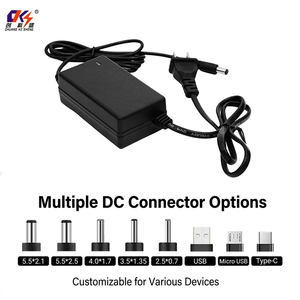
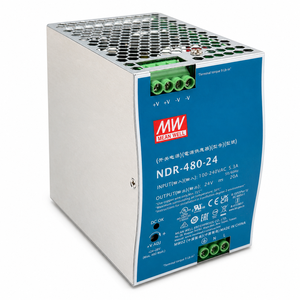
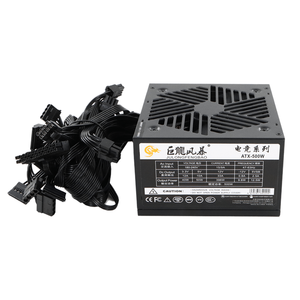
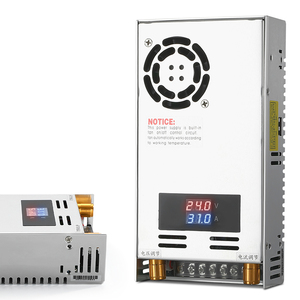
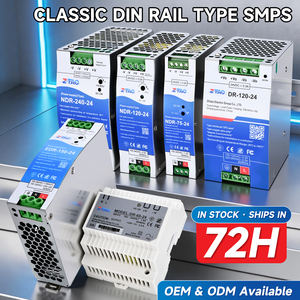
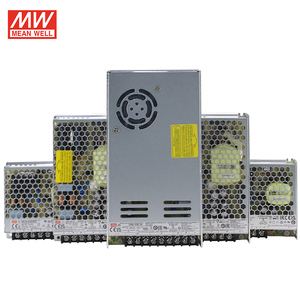
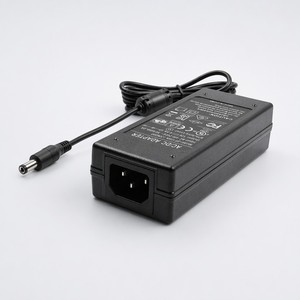
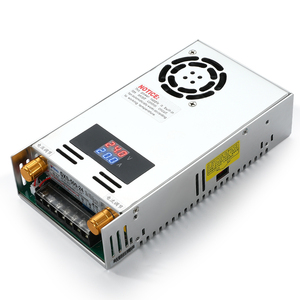
A Boost Converter (DC-DC step-up converter) is a foundational topology in modern power electronics designed to step up an unregulated or lower DC input voltage into a regulated, higher DC output voltage. In contemporary industrial automation, electric vehicles (EV), renewable energy storage, medical instrumentation, and telecommunications infrastructure, boost converters serve as indispensable building blocks for energy management.
As electronic systems demand higher power density, lower thermal dissipation, and tighter electromagnetic compatibility (EMC) compliance, selecting the right boost converter supplier has shifted from a mere component sourcing task to a critical engineering risk management strategy. Design engineers must navigate key electrical parameters including dynamic line/load regulation, switching frequency trade-offs, continuous vs. discontinuous conduction modes (CCM/DCM), synchronous rectification efficiency, and thermal derating envelopes.
Transitioning from traditional diode-rectified topologies to synchronous MOSFET and Wide Bandgap (GaN/SiC) switches has pushed peak conversion efficiency beyond 96-97%, minimizing thermal dissipation inside sealed enclosures.
Miniaturization enables engineers to integrate 100W+ boost stages into standard quarter-brick, 1x1 inch, or board-mountable SIP footprints, saving valuable PCB space in space-constrained IoT gateways and robotics.
Leading manufacturers certify their modules against IEC/EN/UL 62368-1 for IT/AV, IEC 60601-1 (2xMOPP) for healthcare devices, and EN 50155 / EN 45545-2 for harsh railway applications.
The global industrial power supply market features specialized manufacturers delivering standard modular AC-DC converters, isolated/non-isolated DC-DC boost modules, and highly customized OEM power solutions. Below is the technical benchmark of the top 10 industry leaders driving power conversion technology.
| Manufacturer Name | Primary Focus & Strengths | Efficiency Range | Key Certifications | OEM Customization |
|---|---|---|---|---|
| 1. Aimtec Inc. / Nazer Energy | Modular AC-DC & Isolated/Non-Isolated DC-DC, DIN Rail, Medical & Railway | Up to 97% | UL/IEC 62368-1, 60601-1 2xMOPP, EN 50155, ISO 9001 | Extensive (Trim, Pinout, Potting, Harness) |
| 2. Mean Well Enterprises | Industrial Switching Power Supplies, DIN Rail, Enclosed & LED Drivers | 88% - 95% | UL, CE, CB, TUV, EN 62368-1 | Standard Catalog Focus |
| 3. Texas Instruments (TI) | Integrated Boost Regulator ICs & PMICs for High-Volume PCB Designs | Up to 96% | AEC-Q100 (Automotive), Industrial Grade Compliant | Silicon Level / Reference Designs |
| 4. Murata Power Solutions | Board-mount DC-DC Converters, Micro DC-DC Boost Modules | 90% - 96% | UL 60950-1, EN 62368-1, Medical Variants | Select OEM Programs |
| 5. Vicor Corporation | Ultra-High Density Modular Power Components & Brick Converters | Up to 98% | Aerospace, Defense, Automotive IATF 16949 | Custom Power Architecture Design |
| 6. TDK-Lambda | High-Reliability Industrial, Test & Measurement, Programmable Power | 89% - 95% | IEC/EN 61010-1, 62368-1, SEMI F47 | Moderate OEM Modifications |
| 7. Delta Electronics | Telecom Rectifiers, High-Power DC-DC Converters & Industrial SMPS | 91% - 96% | ISO 14001, UL, CSA, TUV, Telecom Standards | Large-Scale Enterprise ODM |
| 8. RECOM Power | Low-to-Medium Wattage Board Mount Converters & Switching Regulators | 85% - 95% | EN 50155, EN 60601-1, UL 62368-1 | Modified Standard Available |
| 9. XP Power | Healthcare & Industrial Power Modules, High Voltage Boost Modules | 88% - 94% | ANSI/AAMI ES60601-1, IT approvals | Custom Enclosures & Cable Assemblies |
| 10. Bel Power Solutions | Data Center Power, Front-End Rectifiers, Board-Mount Boost Converters | 90% - 96% | UL/cUL, OCP Ready, Railway EN 50155 | Custom Server & Industrial Solutions |
Founded in 2002, Aimtec is a premier designer and global manufacturer of modular power supplies. Aimtec’s engineering portfolio encompasses isolated and non-isolated DC-DC boost converters, switching regulators, encapsulated AC-DC modules, and heavy-duty DIN Rail power solutions ranging from 0.25W up to 1000W. By standardizing high isolation (up to 6000 VDC) and wide 4:1 / 2:1 input ranges, Aimtec helps OEM engineering teams reduce development cycles and eliminate compliance risks. Standard lines carry a robust 5-year warranty alongside dedicated 3-region global engineering support.
Mean Well stands as one of the world's largest standard power supply manufacturers. Widely recognized for series such as the NDR DIN rail family and open-frame switching supplies, Mean Well offers comprehensive catalog availability. Their boost and step-up switching converters serve general industrial automation, LED lighting control, and off-grid solar installations where cost-effective, off-the-shelf power delivery is required.
For engineering teams designing discrete PCB power management architectures, Texas Instruments provides industry-leading integrated boost converter ICs, controller chips, and synchronous boost regulators. TI’s silicon features ultra-low quiescent current (Iq) for battery-operated handhelds and high-frequency switching controllers capable of operating in megahertz bands to minimize external inductor sizing.
Murata specializes in board-mount power modules tailored for computing, healthcare, and industrial communication platforms. Their miniature DC-DC boost converters are recognized for high thermal performance, superior EMI shielding, and ruggedized shock/vibration tolerance suitable for embedded electronics.
Vicor is an technology leader in power conversion architectures, utilizing proprietary Factorized Power Architecture (FPA) and ChiP (Converter housed in Package) packaging. Vicor’s boost modules deliver unrivaled volumetric power density, making them prime choices for high-performance computing, automotive traction systems, and defense systems.
The power supply domain is undergoing rapid technological disruption driven by electrification, smart grid adoption, and industrial automation. Hardware engineers and procurement officers must track five decisive technology shifts:
Gallium Nitride (GaN) and Silicon Carbide (SiC) power switches are replacing traditional Silicon MOSFETs in boost converter topologies. GaN enables much higher switching frequencies (500 kHz to 2+ MHz), dramatically shrinking the size of passive inductors and energy storage capacitors while achieving efficiency figures above 97%.
Modern industrial boost converters are evolving from purely analog feedback loops to digital controllers equipped with I2C/PMBus interfaces. This allows real-time monitoring of input/output voltage, load current, module operating temperature, and predictive maintenance alerts before field failure occurs.
To accommodate wide input battery fluctuations in electric vehicles and railway rolling stock (where nominal voltages jump between 24V, 48V, 72V, and 110V), next-gen boost modules feature ultra-wide input voltage ranges, reducing BOM inventory to a single adaptable part number.
Thermally conductive potting materials, thermally enhanced substrate packages, and 3D planar magnetics are removing thermal bottlenecks. This allows full rated power output at elevated ambient temperatures (-40°C to +105°C) without forced-air fan cooling.
High switching speeds usually introduce electromagnetic noise. Leading suppliers now build EN 55032 Class B EMC filters directly into the converter module, saving design teams months of board layout redesign and external filter component costs.
With global eco-design mandates (such as EuP Lot 6 and Energy Star), modern step-up boost converters incorporate burst-mode operation at light loads, dropping standby power consumption to under 100mW.
Strategic procurement in 2026 requires balancing unit price against supply chain stability, multi-source compatibility, and regulatory risks. Purchasing departments are abandoning spot-market buying in favor of structured procurement methodologies:
How our manufacturing platform streamlines your power architecture design from schematic review to full-scale automated assembly.
All module series are developed against safety standards including IEC/EN/UL 62368-1, IEC 60601-1 (2xMOPP), EN 50155, and EN 45545-2. You receive complete test compliance reports, CB certificates, and UL file numbers for immediate qualification.
Demonstrating extreme confidence in our automated surface-mount manufacturing, thermal design, and burn-in testing processes, standard industrial platforms come backed by an extended 5-year warranty.
Our senior power field application engineers (FAEs) conduct complimentary schematic, thermal calculation, and layout reviews before PCB fab commitment, eliminating expensive board respins.
Practical answers to common design-in and purchasing questions brought to our engineering team.
Connect with our global application engineers for direct component selection support, custom voltage modifications, and competitive volume quotation.