Industrial-Grade Switching Power Supplies, Rail Converters, and Desktop Adapters Engineered for High Reliability and Global Compliance
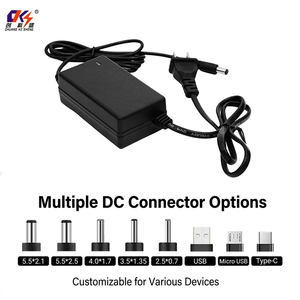
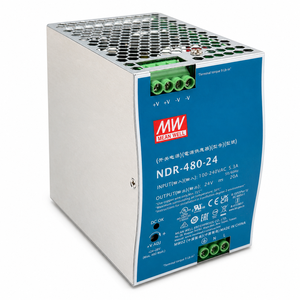
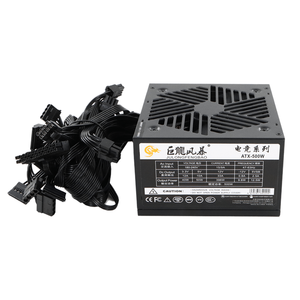
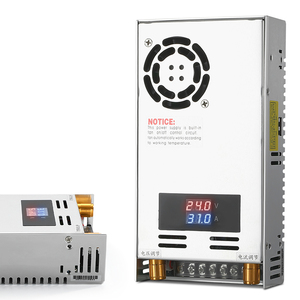
Precision Manufacturing, Rigorous Compliance Auditing, and End-to-End Engineering Acceleration for Telecom Equipment Exporters
Every AC/DC and DC/DC converter series is engineered to satisfy global telecommunication standards including IEC/EN/UL 62368-1, EN 50155 for railway rolling stock, ETSI EN 300 132-2 for 48V power interfaces, and 2xMOPP medical isolation benchmarks.
Modify standard platforms within 2-3 weeks. We offer fully customizable PCB footprints, wire harnesses, potting compounds, conformal coatings for harsh environment operation, output voltage trim parameters, and private labeling for turnkey exporting.
Built with military-grade passive components and active Power Factor Correction (APFC), our converters achieve ripple-noise ratings below 50mVp-p and MTBF exceeding 500,000 hours under Telcordia SR-332 stress testing models.
In the rapidly evolving telecommunications ecosystem—driven by 5G Massive MIMO deployment, edge computing architectures, and micro-DC distribution networks—the demand for reliable, high-density power conversion systems has reached an all-time high. Telecommunications power supplies operate under unique operational conditions. They are subjected to continuous thermal stress, wide AC line fluctuations, strict electromagnetic compatibility (EMC) regulations, and mandatory compliance with international safety protocols.
Selection of the underlying power conversion topology directly dictates system efficiency, thermal dissipation strategy, and component footprint. Below is a comparative overview of key topologies implemented across our OEM/ODM converter portfolio:
| Topology Class | Typical Input Range | Efficiency Rating | Isolation Level | Best Suited Application |
|---|---|---|---|---|
| Resonant LLC Converter | 360 - 400 VDC (Post-PFC) | 94.5% - 96.5% | 3000 VAC / 4200 VDC | 5G Base Station Rectifiers, High-Power Server Rails |
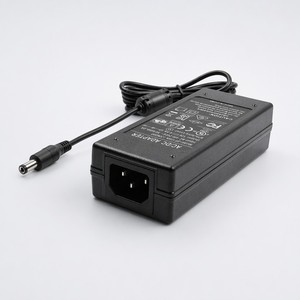
| Active Clamp Flyback (ACF) | 85 - 264 VAC Universal | 90.0% - 92.5% | 3000 VAC / 2xMOPP | Compact Auxiliary Modules, Desktop Adapters (15W-65W) |
| Half-Bridge Forward | 36 - 75 VDC Telecom Bus | 91.0% - 94.0% | 1500 VDC - 2250 VDC | Point-of-Load (POL) Isolated DC/DC Board Modules |
| Buck-Boost Synchronous | 9 - 36 VDC Wide Input | 95.0% - 97.0% | Non-Isolated | Battery Charge-Discharge Controllers & IoT Gateways |
Thermal mitigation is the leading factor in extending power supply longevity. Every 10°C drop in internal electrolytic capacitor operating temperature doubles the operational lifespan of the power converter. As an established OEM/ODM factory, our manufacturing protocol incorporates:
Exporting telecom power converters to North America, the European Union, and Asia-Pacific requires strict adherence to standardized safety frameworks. Our production lines maintain certification compliance with:
As telecom carriers transition toward 5G-Advanced and 6G infrastructure, power system procurement teams face evolving challenges around energy consumption, spatial constraints, and environmental sustainability (ESG). Industry buyers must align procurement strategies with these prominent technological vector shifts:
Gallium Nitride (GaN) and Silicon Carbide (SiC) power switches are rapidly replacing legacy Silicon MOSFETs. WBG devices allow switching speeds up to 1 MHz, dramatically shrinking the physical footprint of inductors and transformers while elevating power density above 30 W/in³.
Modern remote base stations and data centers require real-time system monitoring. Procurement trends lean heavily toward power modules featuring integrated PMBus, I2C, or CANbus interfaces, allowing real-time measurement of input voltage, output current, thermal conditions, and fault diagnostics.
To reduce global stock-keeping unit (SKU) complexity, enterprise buyers are standardizing on ultra-wide input converters (e.g., 85-305 VAC for AC networks or 18-72 VDC for DC networks), enabling a single converter platform to serve diverse global grid standards.
Expert Answers to Common Engineering, Manufacturing, and OEM Export Questions
An isolated DC-DC converter utilizes an internal high-frequency transformer to achieve complete electrical (galvanic) separation between the input ground and output ground circuits (typically rated from 1500 VDC up to 4200 VDC). This protects sensitive telecom processors from high-voltage line surges, breaks noisy ground loops, and prevents common-mode noise propagation. A non-isolated converter shares a common ground between input and output, delivering higher efficiency and power density at a lower cost for point-of-load step-down tasks where galvanic protection is not mandated.
Our engineering team provides comprehensive turnkey ODM modifications on standard qualified platforms. These include modifying output voltage trim ranges, mechanical pinout footprint repositioning, custom wire harness assembly, application of silicone conformal coating or full vacuum potting for severe moisture/dust defense, extended temperature range screening (-40°C to +85°C), and custom private-label silkscreening to meet your brand export specifications while preserving core safety certifications.
Active Power Factor Correction (APFC) shapes the AC input current waveform to remain in phase with the AC mains voltage, boosting power factor (PF) performance up to 0.98 or higher. This significantly reduces harmonic distortion (THD < 10%), lowers reactive power losses on the electrical distribution grid, and ensures compliance with international harmonic current regulations such as IEC/EN 61000-3-2. APFC is essential for high-power telecom rectifiers operating above 75W.
Our ISO 9001 certified production facility enforces a zero-defect quality control framework. Every finished converter undergoes automated optical inspection (AOI), 100% full-load electrical parameter validation, high-potential (Hi-Pot) dielectric voltage withstand testing, and a mandatory thermal burn-in phase inside elevated temperature chambers (4 hours at 50°C minimum under active electrical load cycles) to eliminate early-life component mortality before export dispatch.
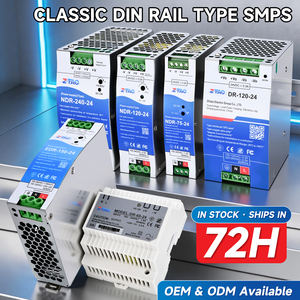
When specifying DIN Rail power supplies for industrial control cabinets, calculate total steady-state DC current consumption and add a 25-30% power margin for dynamic peak loads. Ensure the unit features TS-35/7.5 or TS-35/15 standard mounting compatibility, verifies ambient operating temperature derating curves (e.g., maintaining full output power up to 50°C without forced fan cooling), and includes relay contact "DC OK" signals for remote PLC status telemetry.
Connect directly with our senior application engineers to receive custom schematic evaluations, engineering sample availability, and competitive volume pricing inquiries within 24 hours.