
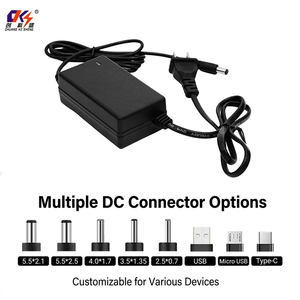
Engineered for high isolation, wide input voltage range, continuous duty stability, and seamless OEM integration.
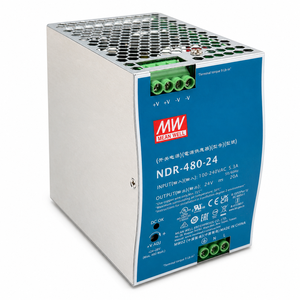
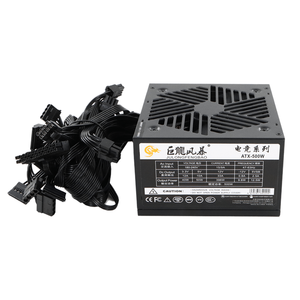
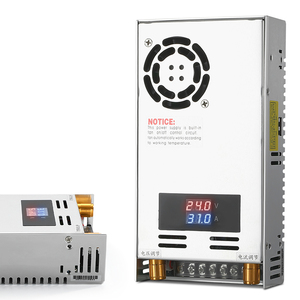
A Comprehensive Industry Report on Next-Generation Photovoltaic Inverter Design, Auxiliary DC-DC Topologies, and OEM Manufacturing Excellence
The global solar energy sector has undergone a massive structural shift from legacy 1000VDC utility layouts to 1500VDC string and central inverter architectures. By elevating system voltages, utility-scale photovoltaic (PV) developers reduce DC cable cross-sections, decrease balance-of-system (BOS) component costs by 15% to 20%, and mitigate copper conduction losses. However, this higher system voltage places extraordinary electrical and thermal stresses on the internal auxiliary power supplies (APS) and gate driver subsystems powering Silicon Carbide (SiC) and Insulated Gate Bipolar Transistors (IGBTs).
As an established OEM/ODM solar inverter supplier, our engineering platform specializes in developing ultra-wide input range DC-DC converters (operating reliably across 200VDC to 1500VDC input windows). These specialized power conversion modules step down high PV array string voltages directly into ultra-stable low-voltage DC rails (such as 12VDC, 24VDC, or ±15VDC) to feed central processing microcontrollers, Maximum Power Point Tracking (MPPT) sensors, safety relays, and active cooling fans.
Commercial and industrial (C&I) as well as utility solar inverters operate under some of the world's most aggressive ambient environments—ranging from desert solar farms enduring +70°C internal enclosure heat to sub-zero alpine installations at -40°C. Standard off-the-shelf power modules fail prematurely under these stress factors due to thermal derating limits, electrolyte dry-out in standard capacitors, and insufficient Common Mode Transient Immunity (CMTI).
Our OEM custom solar inverter manufacturing solutions address these systemic challenges through four core design pillars:
| Performance Parameter | Standard Commercial Power Supply | Aimtec OEM/ODM Solar Auxiliary Module | OEM Impact & Strategic Benefit |
|---|---|---|---|
| Input Voltage Range | 85–264 VAC / 120–370 VDC | 200–1500 VDC Ultra-Wide String Input | Direct connection to PV strings without external transformers. |
| Isolation Rating | 1500 VAC to 3000 VAC | 4000 VAC / 6000 VDC Reinforced | Full compliance with IEC 62109-1 high-voltage safety standard. |
| Operating Temperature | -20°C to +60°C | -40°C to +105°C (with derating) | Guarantees 24/7 continuous operation in sealed NEMA 4X enclosures. |
| Gate Drive CMTI | 15–25 kV/μs | > 100 kV/μs (SiC/GaN optimized) | Eliminates gate driver misfires in high-frequency topologies. |
| Standard Warranty | 1 to 2 Years | 5 Years Long-Lifecycle Commitment | Dramatically reduces OEM warranty reserve allocation costs. |
Key market developments shaping the procurement strategies of global solar inverter OEMs from 2025 to 2030.
The transition from legacy Silicon IGBTs to Silicon Carbide (SiC) and Gallium Nitride (GaN) power switches allows solar inverters to switch at speeds exceeding 100kHz. This shrinks magnetic components by up to 50%. OEM procurement teams must specify auxiliary power modules with minimal parasitic capacitance and extreme CMTI ratings to support WBG driver stages.
Modern PV installations combine solar generation directly with Battery Energy Storage Systems (BESS). Dual-direction DC-DC conversion, multi-port power routing, and bidirectional communication (CANbus, RS485, Modbus) are now standard requirements for OEM solar inverter sourcing.
To avoid supply disruptions, global OEMs are moving away from single-source custom ASICs in favor of qualified modular building blocks. Pre-certified standard DC-DC and AC-DC modules drastically reduce time-to-market while enabling regional assembly flexibility.
With grids integrating higher percentages of intermittent renewables, solar inverters are expected to provide grid-forming services, synthetic inertia, and low-voltage ride-through (LVRT). Auxiliary power supplies must sustain clean control voltages during severe grid dropouts.
Real-time diagnostics are moving down to the auxiliary power layer. Inverters now monitor thermal stress, output ripple degradation, and input surge events remotely via PMBus protocols to perform predictive maintenance before field failures occur.
Tier-1 OEMs now mandate 10 to 15-year availability commitments for critical internal modules. Power supply partners must provide end-of-life (EOL) management, last-time-buy guarantees, and seamless pin-to-pin drop-in replacement options.
Combining world-class engineering expertise with flexible production lines to deliver certified, high-reliability power solutions worldwide.
All standard and modified power converter series are developed from the ground up to comply with internationally recognized safety standards including IEC/EN/UL 62368-1 for IT/AV, IEC 60601-1 (2xMOPP) for medical electronics, EN 50155 for railway systems, and IEC 62109-1/-2 for solar power generation. CB test reports and UL certificates are ready for immediate audit.
Engineers often require specialized pinouts, custom voltage trims, conformal coatings, or custom enclosures. Rather than spending 12–18 months developing a full custom power supply, our modified platform service adapts proven, qualified topology building blocks within weeks—minimizing compliance risk and engineering overhead.
With strategically located distribution hubs across the Americas, Europe, and Asia, we maintain extensive buffer inventory. This robust network ensures lead-time stability, supports just-in-time (JIT) manufacturing schedules, and eliminates supply chain single-point failures for high-volume production runs.
Our dedicated field application engineers (FAEs) partner directly with your circuit designers. We assist with schematic reviews, thermal dissipation modeling, electromagnetic interference (EMI) filter design, and PCB layout verification before you commit to tooling or final production.
Detailed engineering answers to assist procurement managers, component engineers, and system architects.
Connect directly with our senior application engineers for technical datasheets, evaluation samples, thermal modeling reviews, or custom OEM quote proposals.