Featured standard and modified switching power supplies engineered for industrial automation, telecom infrastructure, medical equipment, and renewable energy conversion.
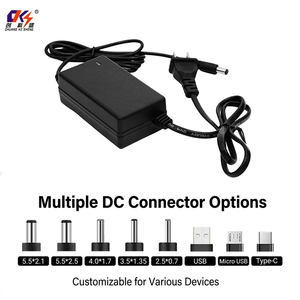
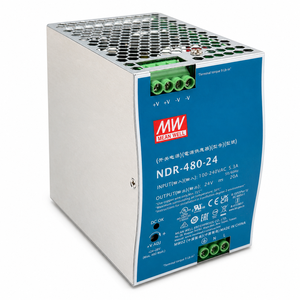
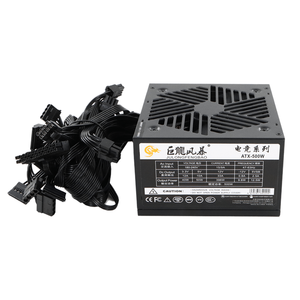
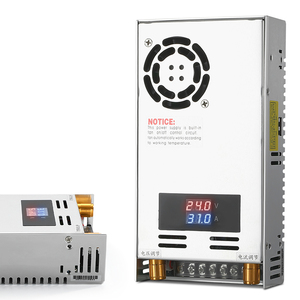
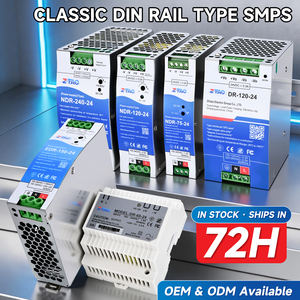
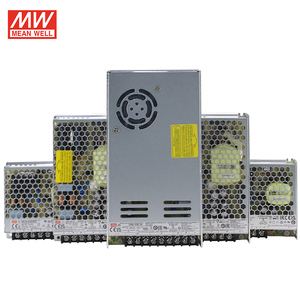
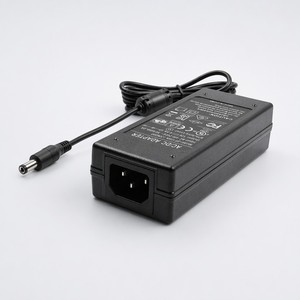
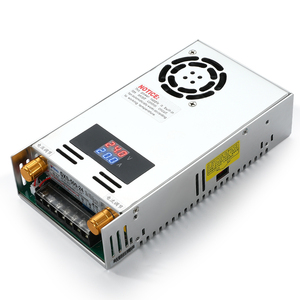
Delivering turn-key OEM/ODM power conversion technologies with global safety approvals, 20+ years of design experience, and rigorous quality control protocols.
We modify existing qualified platforms or build ground-up designs: custom output voltage trimming, tailored PCB footprints, potted enclosures, extended temperature screening (-40°C to +105°C), and integrated wiring harnesses.
Our power supplies and inverters meet stringent international targets including IEC/EN/UL 62368-1 (ITE & AV), IEC/EN/ES 60601-1 3rd Edition (2xMOPP Medical), EN 50155 (Railway), and IEC 61000-4 EMC Immunity standards.
We guarantee long-term availability for medical, industrial, and infrastructure programs. OEM customers receive advance Product Change Notifications (PCN), Last-Time-Buy (LTB) alerts, and pin-compatible replacement paths.
Selecting an OEM/ODM power inverter or switching adapter involves far more than matching input/output parameters. Power conversion systems operate at the critical intersection of thermal management, electromagnetic compatibility (EMC), and galvanic isolation safety. Our engineering team conducts comprehensive Design for Manufacturability (DFM) and Design for Failure Mode and Effects Analysis (DFMEA) prior to tooling authorization.
By leveraging pre-certified building blocks and automated SMT assembly lines, we mitigate risks in low-frequency phase distortion, high-frequency harmonic noise, and parasitic capacitance. Whether your project requires a board-mount DC-DC converter with 6kVDC isolation or a 500W pure sine wave inverter for rolling stock applications, our engineering services streamline your qualification cycle, reducing time-to-market by up to 40%.
An engineering breakdown of inversion methodologies, switching semiconductor choices, and performance trade-offs for B2B system integrators.
| Inverter Architecture | Switching Semiconductor | Typical Efficiency | THD (Total Harmonic Distortion) | Primary Industrial Applications |
|---|---|---|---|---|
| High-Frequency Pure Sine Wave | GaN / SiC MOSFETs | 94.5% - 97.2% | < 2.5% (Linear Load) | Medical Diagnostic Systems, Telecom Base Stations, Solar Energy ESS |
| Low-Frequency Transformer-Based | Silicon IGBTs | 88.0% - 91.5% | < 3.0% (Non-Linear Load) | Heavy Industrial Motor Drives, Railway Rolling Stock, High Surge Loads |
| Bidirectional Micro-Inverter | Wide-Bandgap SiC | 96.0% - 98.1% | < 1.8% (Grid Connected) | V2G (Vehicle-to-Grid), Smart Microgrids, Battery Energy Storage Systems |
| Modified Sine Wave (Square Wave) | Standard Silicon MOSFETs | 85.0% - 89.0% | 15% - 30% | Resistive Heating Elements, Utility Tools, Low-Cost Emergency Power |
The global power electronics landscape is undergoing a monumental transformation as legacy Silicon (Si) MOSFETs and IGBTs are superseded by Wide Bandgap (WBG) materials: Gallium Nitride (GaN) and Silicon Carbide (SiC). For OEM power inverter manufacturers, WBG devices provide transformative technical advantages:
Thermal dissipation is the leading factor governing mean time between failures (MTBF) in enclosed power inverters and switching adapters. Operating an electrolytic capacitor just 10°C above its rated temperature halves its operational lifespan (Arrhenius' Law). OEM/ODM designs must employ advanced thermal mitigation techniques:
Filling high-density modules with silicone or polyurethane potting compound eliminates air pockets, enhancing thermal conductivity ($k > 1.2 \text{ W/m·K}$) while offering IP67 dust/waterproofing and vibration dampening.
Integrating PCMs into high-power density inverters absorbs transient heat spikes during peak surge power phases, delaying thermal shutdown and allowing compact heatsink sizing.
Utilizing high-grade aluminum extruded outer housings as active thermal conductors allows heat dissipation directly into customer system cabinets without forced-air noise.
Key technological innovations reshaping power conversion efficiency, grid interactivity, and digital control paradigms over the next decade.
Analog PWM controllers are rapidly giving way to high-speed Digital Signal Processors (DSP) and ARM Cortex-M microcontrollers. Software-defined control loops enable adaptive dead-time tuning, dynamic impedance matching, and real-time total harmonic distortion (THD) minimization under non-linear loads.
Next-generation OEM inverters feature bidirectional power flow topologies (Dual Active Bridge - DAB and Interleaved Totem-Pole PFC). Energy flows seamlessly from AC grid to DC battery storage during off-peak hours, and back to the grid or load during peak demand, supporting Vehicle-to-Grid (V2G) standards.
Smart inverters are integrating PMBus, CANopen, and Modbus-RTU over wireless telemetry (LoRaWAN, Wi-Fi 6). By continuously monitoring junction temperature, input ripple voltage, and switching noise drift, system algorithms predict component wear and trigger maintenance before physical failure occurs.
How global procurement teams, supply chain directors, and system OEMs are navigating component sourcing, regulatory shifts, and sustainability demands.
Historically, enterprise procurement teams faced a difficult binary choice: buy off-the-shelf standard power supplies that required mechanical design compromises, or invest heavily in full-custom OEM developments with steep NRE (Non-Recurring Engineering) fees, high MOQs, and 12-to-18-month safety qualification cycles.
The modern procurement trend favors Modified Standard Solutions. By starting with a pre-certified base topology (e.g., standard IEC 62368-1 or IEC 60601-1 platform) and customizing final output stages, cable lengths, potting compounds, or connector housings, buyers achieve tailored integration in under 8 weeks while maintaining valid safety files and avoiding heavy upfront engineering capital expense.
Geopolitical volatility and semiconductor shortages have fundamentally reshaped power supply procurement. Tier-1 enterprise buyers now mandate complete Bill of Materials (BOM) transparency down to the silicon wafer and electrolytic capacitor level. Sourcing specifications now require:
Environmental, Social, and Governance (ESG) criteria are no longer optional marketing check-boxes—they are legally enforced procurement metrics. Regulations such as the EU ErP Directive, California Energy Commission (CEC) Tier 2, and US DoE Level VI mandate extreme standby efficiency (no-load power consumption < 0.075W to 0.15W).
Furthermore, leading OEM factories are designing power inverters for recyclability—utilizing halogen-free FR4 PCB materials, lead-free SAC305 solder alloys, easily demountable aluminum chassis, and plastic housings constructed from flame-retardant UL94V-0 recycled resins.
Comprehensive technical and commercial guidance for purchasing agents, design engineers, and quality assurance specialists.
For standard platform modifications (custom cable, voltage trim, specialized connector), typical prototype lead times range from 2 to 3 weeks, with Minimum Order Quantities (MOQs) starting as low as 100 to 500 units. Ground-up full-custom OEM inverter designs usually require 6 to 10 weeks for preliminary sample delivery, followed by safety agency approval cycles (UL, CB, CE), with MOQs negotiated based on enclosure tooling investments.
Isolated converters use an internal high-frequency transformer to physically separate the electrical input and output circuits (galvanic isolation, typically rated from 1,500VDC to 6,000VDC). This setup protects sensitive logic controllers, eliminates ground loops, and satisfies safety isolation mandates for medical (2xMOPP) and industrial equipment. Non-isolated converters (such as buck regulators) share a common ground line, offering smaller physical footprints, lower costs, and higher efficiency (up to 97%), making them ideal for point-of-load step-down conversion within sealed enclosures.
Depending on the series specified, our factory delivers complete test report packages including CB scheme reports, UL/cUL file numbers, CE Declarations of Conformity, TÜV mark certificates, and RoHS/REACH compliance documentation. Standard product lines conform to IEC/EN/UL 62368-1 (IT & Audio-Visual equipment), IEC/EN 60601-1 3rd Edition (Medical electrical safety), and EN 50155 / EN 45545-2 (Railway shock, vibration, and fire safety protocols).
Yes. Our "Modified Standard" program allows system engineers to adjust output voltage trim (e.g., tweaking a standard 24V line to 27.6V for battery charging applications), alter DIP/SIP pin layouts, apply conformal coating against humidity/dust, change wire harness lengths, or brand chassis labels with custom OEM part numbers and logos without invalidating core safety approvals.
Every single power supply and inverter manufactured undergoes a rigorous multi-stage QA testing protocol. This includes 100% full-load thermal burn-in testing under elevated room temperatures (40°C - 50°C) for a minimum of 4 to 24 hours, followed by automated dielectric withstand (Hi-Pot) isolation testing, grounding continuity checks, dynamic load transient response verification, and final automated optical inspection (AOI).
Our engineering division calculates MTBF values in accordance with MIL-HDBK-217F (Notice 2) and Telcordia SR-332 standards at specified reference ambient temperatures (typically +25°C and +40°C). Standard industrial series achieve MTBF ratings exceeding 300,000 to 1,500,000 hours. Empirical thermal stress acceleration testing (HALT/HASS) is conducted during NPI (New Product Introduction) to validate calculation models against real-world degradation profiles.
3-Phase 4-Wire AC-DC power supplies are designed to accept wide line-to-line (up to 528VAC) or line-to-neutral input voltages. Built-in active PFC power stages equalize phase currents, mitigating neutral wire harmonic heating caused by phase unbalance and ensuring stable DC bus voltage even under severe phase loss or brownout utility conditions.
Whether you require rapid-prototype sample evaluation, custom electrical modification, or high-volume automated manufacturing for worldwide distribution, our application engineering team is ready to review your schematics and power envelope.