Explore our certified range of AC/DC switching power supplies, DIN rail units, adjustable laboratory sources, and high-efficiency LED drivers engineered for global OEM applications.
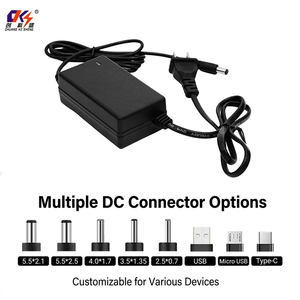
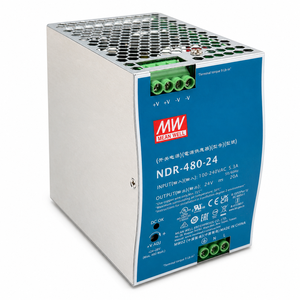
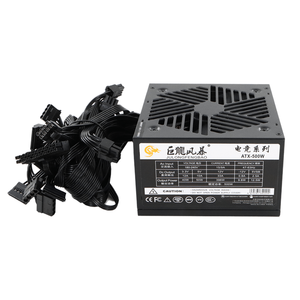
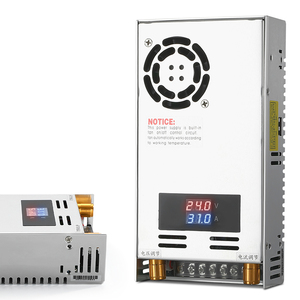
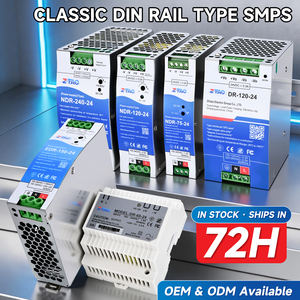
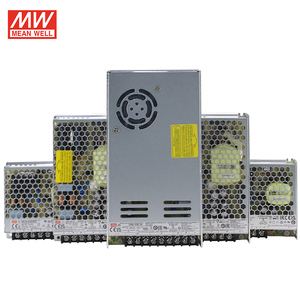
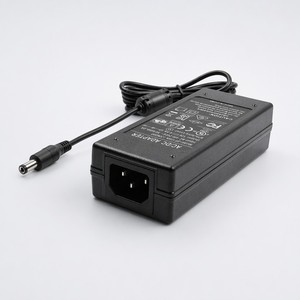
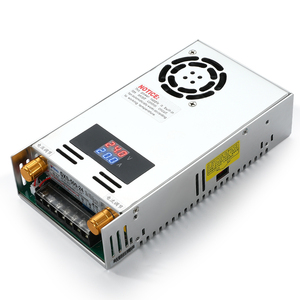
Combining 20+ years of power electronics development, robust thermal design, and rigorous quality control to empower global lighting brands and industrial control equipment builders.
We modify qualified platforms (output voltage trim, pinouts, custom PCB layouts, potting compounds, and specialized connectors) to eliminate standard lead times while preserving compliance credentials.
Every lighting driver and power module is designed to conform to IEC/EN/UL 62368-1, UL 8750, EN 61347-1, and medical 2xMOPP (IEC 60601-1) standards, backed by full CB test reports and CE/RoHS declarations.
To ensure maximum MTBF (>500,000 hours), our factory subjects 100% of production units to full-load automated elevated-temperature burn-in testing, transient surge stress testing, and thermal imaging checks.
A comprehensive analysis of topology choices, power factor metrics, thermal degradation mechanics, and smart dimming protocol integration for commercial & industrial lighting systems.
In modern B2B solid-state lighting (SSL) engineering and industrial automation design, the LED driver power supply is no longer treated as a simple passive component. It acts as the central heart of thermal endurance, energy efficiency, electromagnetic compatibility (EMC), and luminaire control. As high-efficacy LEDs push past 200 lumens per watt, system failures are rarely caused by the LED diodes themselves—over 80% of field failures in commercial, industrial, and street lighting installations originate within the electronic driver due to electrical overstress (EOS), thermal degradation of electrolytic capacitors, or inadequate surge suppression.
Specifying the correct electrical conversion topology is the foundational decision in OEM lighting driver procurement. The choice directly dictates luminaire wiring design, thermal runaway vulnerability, and dynamic dimming response:
| Driver Topology / Category | Typical Output Spec | Power Efficiency | Target Applications | Key Regulatory Standards |
|---|---|---|---|---|
| Constant Current (CC) | 300mA – 2100mA (15V–54V) | 91% – 95% | High-Bay, Street Light, Commercial COB | UL 8750, EN 61347-2-13 |
| Constant Voltage (CV) | 12VDC / 24VDC / 48VDC | 88% – 93% | LED Strips, Architectural Linear, Signage | UL 1310 (Class 2), EN 61347-2-13 |
| Smart DALI-2 / 0-10V CC | Programmable 100mA–1500mA | 90% – 94% | Tunable White, Smart Offices, HCL | IEC 62386 (DALI-2), EN 55015 |
| Industrial DIN Rail SMPS | 24VDC / 48VDC (60W–960W) | 92% – 96% | Control Cabinets, Lighting Controllers | UL 61010-2-201, IEC/EN 62368-1 |
Commercial power networks require strict compliance regarding power quality and harmonic distortion. Low-quality switched-mode power supplies without active power factor correction draw peak currents at the AC voltage crest, injecting harmonic noise back into the grid and overheating neutral conductors in 3-phase distribution systems.
Technical Insight: Our custom OEM drivers integrate 2-stage active PFC circuits (Boost PFC + LLC Resonant Converter). This architectural combination consistently delivers a Power Factor (PF) > 0.97 and Total Harmonic Distortion (THD) < 8% across a wide load range (50% to 100% load) from 100VAC to 277VAC universal inputs.
Furthermore, outdoor luminaire drivers must withstand extreme atmospheric surges caused by nearby lightning strikes and inductive switching transients. Standard OEM configurations feature multi-stage surge protection devices (SPD) integrating Metal Oxide Varistors (MOVs) and Gas Discharge Tubes (GDTs), capable of surviving differential mode surges of 6kV and common mode surges of 10kV in accordance with IEEE C62.41.2 and IEC 61000-4-5 guidelines.
The operational lifespan of a power supply is mathematically constrained by the thermal stress exerted on its internal aluminum electrolytic capacitors. According to the Arrhenius Law of Chemical Reaction Rates, for every 10°C increase in internal operating temperature above the rated specification, the operational life of an electrolytic capacitor is reduced by 50%:
$$L_{actual} = L_{rated} \times 2^{\frac{T_{max} - T_{actual}}{10}}$$
To mitigate thermal stress in compact OEM lighting drivers, our manufacturing facilities utilize high-thermal-conductivity silicone or polyurethane potting compounds ($K > 0.8 \text{ W/m}\cdot\text{K}$). Potting serves three essential engineering functions:
Key technological shifts shaping power converter manufacturing, smart lighting integration, and sustainable supply chains over the next decade.
Gallium Nitride (GaN) switching transistors are replacing traditional Silicon MOSFETs in premium OEM drivers. GaN's extremely low switching losses enable operating frequencies above 500 kHz, allowing transformer size reductions of up to 40% while achieving power densities exceeding 30 W/in³. This enables ultra-slim drivers that fit seamlessly inside narrow linear architectural channels.
Analogue 0-10V dimming is rapidly giving way to bi-directional digital protocols like DALI-2 and D4i (DALI for IoT). D4i drivers store and report real-time energy consumption, thermal telemetry, and diagnostic fault codes directly to Smart City central management software. Additionally, integrated auxiliary 24V power supplies inside the driver allow plug-and-play attachment of wireless Bluetooth Mesh or Zigbee 3.0 sensors.
Commercial interior spaces increasingly mandate circadian rhythm lighting systems. Dual-channel OEM drivers with deep dimming curves (down to 0.1% logarithmic dimming) enable smooth color-temperature tuning without color shift or observable flickering. Drivers must meet IEEE 1789-2015 recommendations for flicker-free operation to prevent eye strain and headache risks.
Global regulations (such as Europe’s EU Ecodesign Directive 2019/2020) mandate minimum full-load energy efficiency thresholds and low standby power consumption (<0.5W in no-load state). Procurement teams are prioritizing factories that utilize lead-free soldering processes, RoHS/REACH compliant halogen-free materials, and modular designs that facilitate end-of-life recycling.
Detailed technical answers addressing common procurement inquiries, custom sampling procedures, and quality assurance standards.
Consult directly with our senior application engineers to review your schematic budget, thermal footprint requirements, and compliance roadmap. Fast-track your project with certified OEM/ODM platforms.
Get a Quote