Explore our engineering-grade standard and customizable switching power supplies, LED drivers, and DIN rail converters certified for global OEM programs.
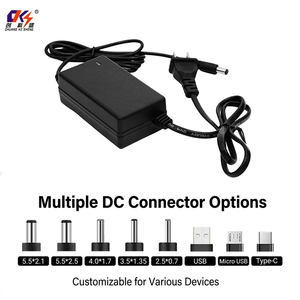
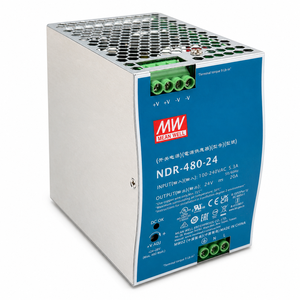
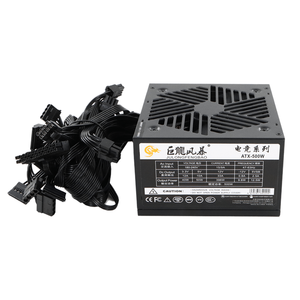
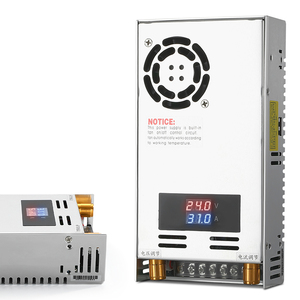
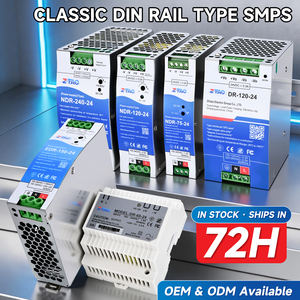
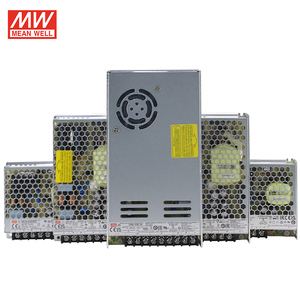
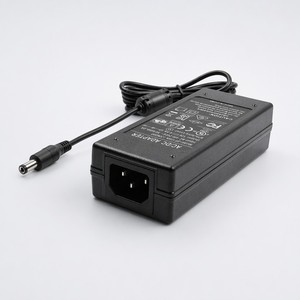
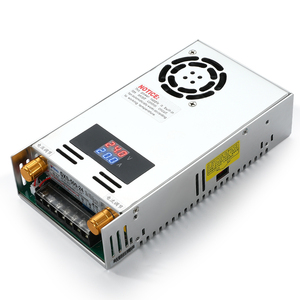
Over 20+ Years of Precision Power Design & Global OEM Supply
As a vertically integrated LED driver manufacturer and global exporter, we specialize in converting complex luminaire challenges into certified, reliable, and energy-efficient power topologies. Operating state-of-the-art automated SMT lines, automated optical inspection (AOI) stations, and full-load high-temperature burn-in chambers, our engineering infrastructure delivers uncompromising quality to Tier-1 lighting brands, industrial OEMs, and smart infrastructure integrators worldwide.
Whether your application demands ultra-slim low-profile drivers for architectural coving, IP67 waterproof outdoor drivers for high-bay floodlights, or DALI-2 addressable lighting controllers for smart commercial facilities, our custom R&D division offers end-to-end design modification and ground-up development.
| Manufacturing Parameter | OEM/ODM Capability Metric |
|---|---|
| Core Topologies | Flyback, LLC Resonant, Buck-Boost, Active PFC |
| Output Power Range | 3W to 1000W+ (Constant Current / Constant Voltage) |
| Global Certifications | UL 8750, IEC/EN 61347-1, 61347-2-13, CE, CB, FCC, EN 50155 |
| Quality Management | ISO 9001:2015, ISO 14001, 100% Full-Load Burn-in |
| Protection Protocols | OVP, OCP, OTP (Over-Temp), 10kV Lightning Surge (IEC 61000-4-5) |
| Dimming Protocols | DALI-2, D4i, 0-10V, 1-10V, PWM, Triac/Phase-Cut, Matter/Zigbee |
| Service Life Commitment | 50,000 to 100,000 Hours @ Tc=85°C (5-Year Standard Warranty) |
As regulatory standards tighten and smart building ecosystems evolve, component buyers and OEM engineering teams must adapt to key shifts shaping the 2025–2030 power electronics procurement landscape.
Wide Bandgap (WBG) semiconductors, particularly Gallium Nitride (GaN) power transistors, are rapidly replacing legacy Silicon MOSFETs in premium LED driver topologies. GaN enables switching frequencies up to 500 kHz, allowing engineers to shrink magnetic transformers and capacitors by 40% while achieving peak conversion efficiencies exceeding 95%.
Procurement Takeaway: Specifying GaN-based drivers lowers total thermal dissipation, enabling ultra-slim luminaire form factors and significantly reducing aluminum heat sink enclosure costs.
Standard analog dimming is giving way to bidirectional digital interfaces. The D4i (DALI for IoT) standard mandates drivers to store operational data, real-time energy consumption, working temperature, and diagnostic fault logs inside embedded non-volatile memory.
Procurement Takeaway: Global buyers must prioritize drivers with D4i and Zhaga Book 18 compliance to support predictive maintenance and seamless integration into smart city asset management platforms.
Optical comfort standards have moved from optional to mandatory. Low-frequency pulse-width modulation (PWM) ripple induces stroboscopic effects and visual fatigue. Modern procurement specifications demand two-stage driver topologies that reduce output current ripple below 1% across the entire dimming range.
Procurement Takeaway: Ensure OEM suppliers provide photometric test reports verifying zero-flicker performance compliant with IEEE 1789 and EU ErP SVM (Stroboscopic Visibility Measure) limits.
Understanding the internal power conversion architecture enables procurement engineers to select optimal topologies for high-reliability applications.
In low-cost commercial lighting, single-stage flyback converters combine Power Factor Correction (PFC) and output voltage regulation into a single controller chip. While cost-effective, single-stage drivers exhibit higher 100Hz/120Hz output ripple and compromised transient response.
For high-bay, medical, and architectural lighting, Two-Stage Architecture is the engineering gold standard:
Two-stage designs extend driver lifespan up to 100,000 hours by reducing thermal stress on electrolytic storage capacitors.
Outdoor luminaires installed in roadway, industrial bay, and architectural floodlight environments face severe electrical surges and ambient temperature extremes. Engineering drivers for rugged environments requires three critical structural protections:
| Topology Architecture | Power Efficiency Range | Power Factor / THD | Output Ripple % | Target Application Fit |
|---|---|---|---|---|
| Single-Stage Flyback (Cost-Optimized) | 84% – 88% | PF > 0.92 / THD < 15% | 15% – 30% (High Ripple) | Standard Indoor Downlights, Office Troffers |
| Two-Stage Active PFC + Buck/Flyback | 88% – 92% | PF > 0.97 / THD < 10% | < 3% (Flicker-Free) | Commercial Retail, Smart Office, DALI-2 Systems |
| Two-Stage PFC + LLC Resonant (GaN Enhanced) | 93% – 96%+ | PF > 0.99 / THD < 5% | < 0.5% (Ultra Smooth) | High-Bay Industrial, Stadium Lighting, Horti-lighting |
| Constant Voltage (CV) Switcher Module | 86% – 92% | PF > 0.95 / THD < 12% | < 2% (Voltage Stable) | LED Flex Strip, Linear Signage, Architectural Accent |
Detailed answers compiled by our chief power electronics engineers to simplify specification, compliance verification, and sample evaluation.
Constant Current (CC) drivers regulate a fixed output electrical current (e.g., 350mA, 700mA, 1050mA) while dynamically varying output voltage based on the forward voltage drop of the LED array. CC drivers are directly connected to LED chips to prevent thermal runaway. Constant Voltage (CV) drivers output a fixed DC voltage (typically 12V, 24V, or 48V) and are designed to power LED systems with built-in current-limiting resistors or secondary step-down regulators, such as LED strip lights and architectural cove systems.
While sounding similar, they refer to fundamentally different safety standards. Class 2 (UL 1310/UL 8750) is an American safety regulation limiting output voltage to <60 VDC and maximum power output to 100W, significantly reducing electric shock and fire hazard risks during field wiring. Class II (IEC 61140) is an international electrical protection rating indicating that the power supply features double or reinforced insulation, requiring no earth ground connection.
We provide rapid engineering turnaround for OEM clients. Minor modifications to qualified base platforms—such as output current tuning, custom wire lengths, terminal block changes, or conformal coating—typically take 7 to 10 business days for engineering prototypes. Full ODM custom projects (including mechanical design, PCB layout, and custom magnetic transformer winding) require 4 to 6 weeks for functional samples, followed by compliance testing (UL/CE/CB) under our witness test laboratory program.
Every 10°C increase in internal case temperature (Tc) cuts electrolytic capacitor life in half (Arrhenius Law). Thermal derating curves provided in our datasheets specify the maximum allowable load as ambient temperature rises. Operating within the rated derating envelope ensures that drivers achieve their specified 50,000 or 100,000-hour MTBF without premature component degradation or thermal shutdown.
Digital dimming via DALI-2 (IEC 62386) and 0-10V/1-10V logarithmic analog dimming provide the smoothest results when coupled with constant current reduction (CCR / Amplitude Dimming) down to 10%. For ultra-deep dimming (0.1% to 1%), high-frequency hybrid dimming—combining amplitude modulation with ultra-high frequency PWM (>2.5 kHz)—eliminates visible stroboscopic effects while maintaining color consistency.
Every export consignment is shipped with complete traceability and quality documentation, including ISO 9001 Certificate of Conformity (CoC), 100% full-load burn-in test logs, CB Test Certificates, CE-EMC declarations, RoHS 3 and REACH compliance declarations, and detailed MTBF thermal calculation reports for audit compliance.
Partner with an established OEM/ODM LED driver factory. Contact our engineering team for custom parametric matching, sample requests, or complete product catalog access.