
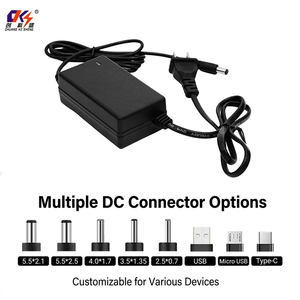
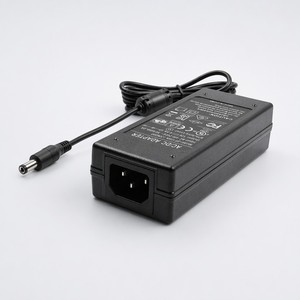
12V 2A 24W Dual Cable Desktop Auxiliary Adapter (US/EU/UK/AR)
- Universal AC Input: 90–264 VAC
- Dual-channel auxiliary isolation output
- Protections: OVP, OCP, SCP Short-Circuit
- Compliance: UL 62368-1, CE, FCC, RoHS
Explore our industrial-grade power supply modules, auxiliary converters, and AC/DC power adapters engineered for EV charging stations, commercial power distribution cabinets, and intelligent edge controllers.
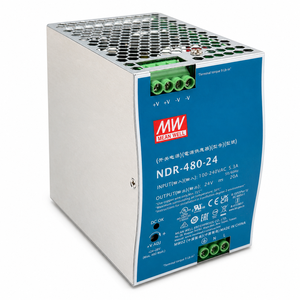
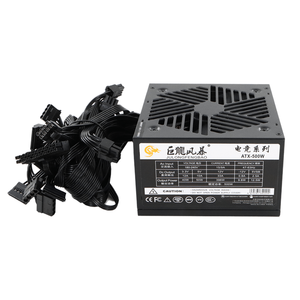
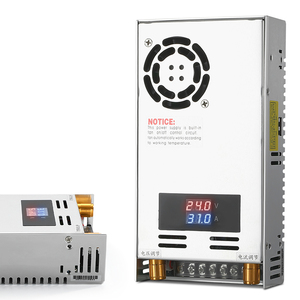
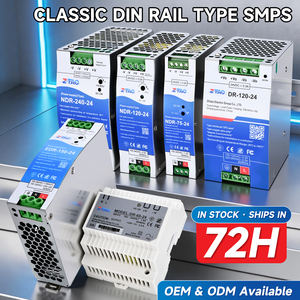
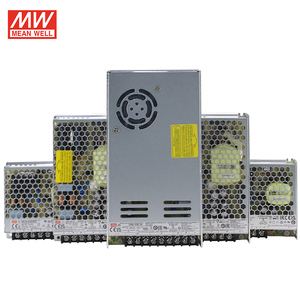
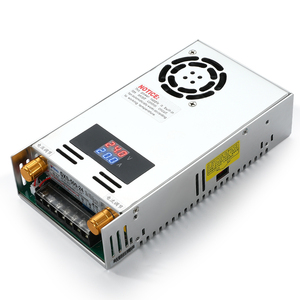
With over two decades of high-reliability power electronics manufacturing, we provide OEM and ODM partners with full-stack engineering support—from custom topology design and thermal management to international safety certification execution.
Every EVSE power module and charging station platform is developed to meet rigorous international standards, including IEC/EN 61851, UL 2202, UL 2594, IEC/EN/UL 62368-1, and IEC 60601-1. We provide turnkey regulatory compliance support, CB test reports, and UL file references to accelerate your regional market deployment.
Avoid expensive ground-up redesigns. We specialize in modifying standard proven power topologies—tailoring output voltage trims, pinouts, custom potting compounds, liquid-cooling cold plates, conformal coatings, and custom enclosure dimensions while retaining existing core safety approvals.
EV charging stations operate under brutal environmental extremes. Our power engineering team conducts 3D computational fluid dynamics (CFD) thermal modeling, extended ambient temperature derating analysis (-40°C to +85°C), and worst-case MTBF calculations to guarantee 10+ years of operational longevity.
The electric vehicle infrastructure landscape is transitioning from fragmented, low-power AC solutions toward high-voltage, modular, and intelligent charging ecosystems. B2B purchasers and CPOs must realign their sourcing models to manage total cost of ownership (TCO) and avoid technology obsolescence.
Procurement directors are rapidly moving away from monolithic EV charger designs. Modern commercial DC Fast Chargers (DCFC) demand modular 20kW, 30kW, or 40kW power converter sub-assemblies stacked inside a single cabinet. This modular approach delivers three main financial advantages:
Charge Point Operators (CPOs), energy utilities, and automotive OEMs are increasingly relinquishing hardware fabrication to specialized ODM suppliers. By leveraging fully qualified, white-label EVSE hardware platforms, brand owners can focus entirely on software management platforms, customer acquisition, and site host acquisition.
"Outsourcing hardware manufacturing to certified OEM suppliers cuts time-to-market by up to 65% while eliminating $2M+ in upfront tooling and regulatory compliance testing expenses."
Key procurement demands now include custom branding options, customized screen interfaces, tailored physical housing paint coatings, and pre-integrated OCPP 2.0.1 connectivity board assemblies.
Regulatory frameworks such as the National Electric Vehicle Infrastructure (NEVI) formula program in the United States and the EU’s Alternative Fuels Infrastructure Regulation (AFIR) are redefining procurement criteria. Purchasing managers must verify that OEM suppliers provide transparent component bill-of-materials (BOM) sourcing, traceability, and localized assembly capability to remain eligible for government subsidies and municipal tenders.
Engineering managers and procurement executives must align with manufacturers who actively integrate advanced semiconductor materials and smart grid protocols into their standard product lines.
Legacy Silicon IGBT topologies are being superseded by Wide Bandgap Silicon Carbide (SiC) MOSFET semiconductors. SiC enables switching frequencies up to 5 times faster, decreasing passive component sizes by 40% while achieving switching efficiencies above 96.5%. This dramatic reduction in thermal dissipation allows smaller, lighter charging cabinets with lower fan noise and extended operating lifespans.
Vehicle-to-Grid (V2G) and Vehicle-to-Home (V2H) functionality are no longer experimental concepts—they are mandatory baseline specifications for future-proofed EVSE tenders. By incorporating ISO 15118-20 protocol stacks and dual-stage bidirectional DC power topologies, chargers enable electric vehicle batteries to feed power back into the grid during peak load demand, turning static assets into revenue-generating energy storage nodes.
Commercial site hosts frequently face electrical grid infrastructure bottlenecks. Advanced OEM chargers integrate real-time Dynamic Load Management algorithms and RS485/Ethernet communication loops. This allows multi-charger networks to intelligently balance total available building power across dozens of active vehicles without tripping main circuit breakers or incurring massive utility demand charges.
Evaluate the optimal manufacturing engagement model based on project timeline, customization requirements, and capital commitment:
| Evaluation Parameter | Off-The-Shelf Hardware | Modified OEM Manufacturing | Turnkey ODM Development |
|---|---|---|---|
| Time-to-Market | Immediate (1-2 Weeks) | Fast (6-10 Weeks) | Standard (6-9 Months) |
| NRE & Tooling Cost | Zero NRE | Low to Moderate | Substantial Initial NRE |
| Branding Flexibility | None / Generic Sticker | Custom Silk-Screen & Paint | Full Custom Enclosure & UI |
| Regulatory Risk | Pre-certified by Vendor | Leverages Existing Core Approvals | Requires Ground-Up Testing |
| Unit Cost (Volume) | Higher Per-Unit Price | Balanced & Optimized | Lowest Cost at Mass Scale |
| IP Ownership | Vendor Owned | Shared / Modified Platform | Full Customer IP Ownership |
Everything you need to know about our OEM/ODM custom manufacturing processes, quality assurance, safety certifications, and commercial supply terms.
Consult directly with our senior power electronics engineers. We provide schematic reviews, thermal budget analysis, custom enclosure mechanical modeling, and prototype sample evaluation for your OEM program.