Certified, industrial-grade power conversion modules engineered for extreme environments, high power density, and global OEM integration.
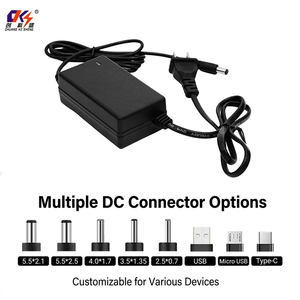
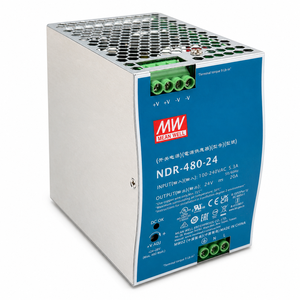
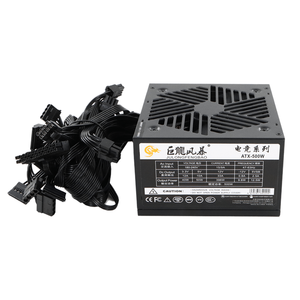
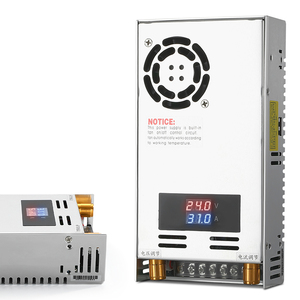
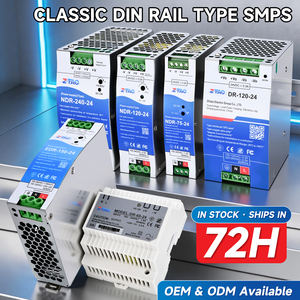
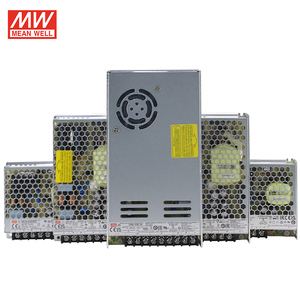
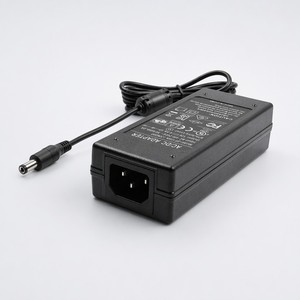
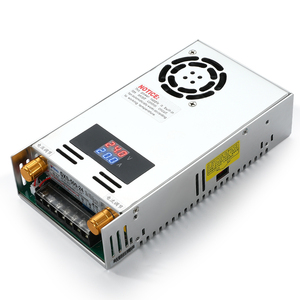
An In-Depth Engineering Overview of Next-Generation Power Electronics, Topology Breakthroughs, and Thermal Efficiency Management.
The global power electronics landscape is undergoing a fundamental structural transition. Driven by the rapid proliferation of artificial intelligence data centers, electric vehicle (EV) charging infrastructure, high-density industrial automation, and medical diagnostics, the demand for modular power supplies has shifted from simple voltage regulation to high-efficiency, ultra-compact, dynamically adaptable power conversion hubs.
Integration of Gallium Nitride (GaN) and Silicon Carbide (SiC) switches enables switching frequencies above 500 kHz, reducing passive component footprints by up to 45% while achieving system efficiencies exceeding 96%.
Migration from analog PWM controllers to 32-bit digital signal processors (DSPs) allows real-time dynamic voltage scaling, telemetry tracking, predictive fault mitigation, and PMBus/CANbus system monitoring.
Transition from forced-air cooling to phase-change conduction plates, liquid cooling cold plates, and direct potting compounds, extending MTBF ratings in harsh -40°C to +85°C environments.
System designers are facing unprecedented space constraints on modern printed circuit boards (PCBs) and in industrial control cabinets. Traditional iron-core power transformers and bulky electrolytic capacitors are being superseded by planar transformers and high-frequency ceramic switching modules. Modern modular AC/DC and DC/DC converters yield power densities exceeding 30 to 50 Watts per cubic inch. This allows OEM manufacturers to integrate sub-systems directly onto local board assemblies without introducing thermal throttling or compromising electrical clearance distances.
With global energy regulations enforcing strict harmonic distortion compliance (such as EN 61000-3-2 Class D), active power factor correction (APFC) has become a mandatory architectural component for power supplies operating above 75W. Modern power units incorporate interleaved PFC stages that maintain a Power Factor (PF) > 0.98 across universal input voltage ranges (85VAC to 305VAC). Furthermore, systems deployed in 3-phase 4-wire industrial grids are engineered to withstand neutral line floating and transient voltage surges up to 4kV without catastrophic breakdown.
Selecting a modular power supply with a 2xMOPP (Means of Patient Protection) isolation barrier and a ultra-wide 4:1 DC input range significantly reduces the inventory footprint for multi-regional product deployments, enabling a single certified base model to service medical, railway, and heavy industrial markets simultaneously.
Navigating Component Lifecycle Management, Total Cost of Ownership (TCO), and Dual-Sourcing Risk Mitigation.
Procurement executives and strategic sourcing directors in global OEM electronics firms are moving away from transactional purchasing based purely on unit cost. Instead, modern procurement framework strategies focus on supply chain resilience, platform modularization, lifecycle longevity, and total cost of ownership (TCO).
Developing a custom power supply from scratch involves high NRE (Non-Recurring Engineering) fees and lengthy safety compliance testing (6 to 12 months). Leading OEMs now adopt Modified Standard Platform programs. By modifying pinouts, thermal potting, or voltage trim on proven standard platforms, qualification cycles are cut down to weeks while fully retaining pre-certified safety files.
Industrial, rail, and medical platforms operate on 10 to 20-year service lifecycles. OEMs require tier-1 power manufacturing partners who guarantee long-term product availability, minimum 5-year warranties, and formalized 12-month Product Change Notifications (PCN) alongside Last-Time-Buy (LTB) support.
Evaluating an OEM power supply factory requires a holistic breakdown of direct unit cost, regulatory compliance costs, failure rates, and logistical overhead. Below is an engineering comparison matrix used by enterprise procurement audits:
| Procurement Metric | Traditional Generic Supplier | Tier-1 OEM Factory Partner (Aimtec / Aimtec Model) | Impact on OEM Operational TCO |
|---|---|---|---|
| Safety Certifications | Self-declared CE / Unverified | UL/EN/IEC 62368-1, 60601-1 (2xMOPP), EN 50155 | Eliminates re-certification risks & legal liability. |
| Quality Control Yield | Sample AQL Inspection | 100% Automatic Optical (AOI) + Full-Load Burn-in | Reduces factory line failure rate to < 100 PPM. |
| Isolation Rating | 1.5kVDC Basic Isolation | Up to 6kVDC Reinforced Isolation | Protects sensitive FPGA/Processor boards from spikes. |
| Thermal Derating | Derates heavily above 40°C | Full Power to +70°C / Operation to +105°C | Prevents expensive system fan integration. |
| Lifecycle Warranty | 1 Year Limited | 5-Year Comprehensive Global Warranty | Protects field warranty liability and brand equity. |
Why Tier-1 Global Enterprises Trust Our Modular Power Conversion Infrastructure.
Dedicated application engineering teams based across North America, Europe, and Asia-Pacific assist with schematic reviews, EMI filter design, thermal mapping, and custom PCB pinout layout before production freeze.
State-of-the-art high-speed Yamaha SMT placement lines coupled with fully automated vacuum potting chambers guarantee void-free thermal encapsulation for IP67/IP68 ruggedized power modules.
Every single power unit undergoes In-Circuit Testing (ICT), Automated Optical Inspection (AOI), high-voltage isolation breakdown testing, and multi-hour dynamic load burn-in screening prior to export shipping.
Our modular power supplies are certified and field-proven across high-reliability mission-critical global industries.
EN 50155 certified DC/DC converters featuring 4:1 wide input ranges (24V, 48V, 72V, 110VDC) with high shock and vibration tolerance.
ANSI/AAMI ES60601-1 3rd Edition compliant modules with leakage current under 10µA for patient-contact medical diagnostic devices.
Ultra-high isolation AC/DC modules operating in solar inverters, energy storage systems (ESS), and EV charging communication nodes.
Authoritative Answers from Our Senior Power Electronics Engineers to Accelerate Your Design & Purchasing Process.
An isolated DC/DC converter uses an internal high-frequency transformer to achieve physical and galvanic separation between the input power source and the output load circuit. Isolation ratings typically range from 1,500 VDC to 6,000 VDC. This galvanic barrier protects sensitive microprocessors, eliminates ground loops, and protects against high-voltage surges. A non-isolated switching regulator shares a common ground plane between input and output, offering significantly higher power conversion efficiency (up to 97%) and superior power density in non-critical point-of-load step-down scenarios.
Our standard and customized power supply platforms carry full international safety agency approvals. Depending on the product series, safety files include IEC/EN/UL 62368-1 for Information Technology and Audio/Video Equipment, IEC/EN/ANSI 60601-1 3rd Edition featuring 2xMOPP (Means of Patient Protection) for medical electrical devices, EN 50155 / EN 45545-2 for railway electronics, and CISPR 32 Class B for radiated and conducted electromagnetic compatibility (EMC). Full CB reports, UL file reference numbers, CE declarations, and RoHS/REACH compliance files are provided upon inquiry.
Yes, absolutely. Over 70% of custom OEM requests are resolved faster and more cost-effectively through our Modified Standard Program. By modifying standard proven power topologies, we can adjust output voltage trimming ratios, customize PCB pinout footprints, apply conformal coating, upgrade thermal potting compounds, integrate custom wire harnesses, and implement extended temperature testing (-40°C to +105°C). This approach preserves established safety agency certifications, eliminates expensive NRE costs, and shortens sample turnaround times to under two weeks.
When selecting an AC/DC supply for a 3-phase 4-wire distribution network, engineers must account for line-to-neutral voltage fluctuations, transient spike withstand, and phase-unbalance risks. You should choose a module engineered for wide input operation (up to 305VAC or 528VAC phase-to-phase) equipped with robust transient surge protection (IEC 61000-4-5 Level 4). Additionally, proper thermal derating curves must be applied to ensure stable operation during high ambient cabinet temperatures without dropping below critical system output thresholds.
All standard OEM power supplies are backed by a comprehensive 5-year global factory warranty. Mean Time Between Failures (MTBF) values are calculated strictly in accordance with MIL-HDBK-217F or Telcordia SR-332 guidelines, with standard series exceeding 500,000 to 2,000,000 hours at 25°C ambient temperature. For long-term industrial projects, we enforce strict 12-month Product Change Notifications (PCN) and guarantee long-term availability with drop-in replacement support for legacy component evolutions.
Partner with a trusted global power supply manufacturer. Contact our application engineering team today to review your schematic, request evaluation samples, or receive a fast competitive volume quotation.