Engineered for extreme operating environments, certified to international safety standards, and tailored for seamless integration into high-demand industrial systems.
In modern industrial engineering, selecting an OEM/ODM manufacturing partner is a strategic compliance, lifecycle, and risk-mitigation decision.
As a globally recognized manufacturer and exporter, our engineering ecosystem resolves complex hardware integration challenges. From modular AC-DC and DC-DC power conversion technologies to high-precision metallurgy, heavy-duty logistics components, and specialized industrial consumables, we furnish international procurement managers with verified building blocks that accelerate time-to-market while reducing total cost of ownership (TCO).
Backed by over two decades of technical expertise, our production architecture supports over 10,000 standard and modified platforms. We eliminate design cycles through pre-certified compliance frameworks (IEC/EN/UL 62368-1, medical 2xMOPP IEC 60601-1, railway EN 50155) paired with rigorous Quality Assurance protocols.
Our standardized platforms allow global buyers to bypass ground-up engineering risks. Review our baseline parametric capabilities engineered for critical industrial applications.
| Industrial Domain | Core Specifications | Compliance & Certifications | OEM Customization Scope |
|---|---|---|---|
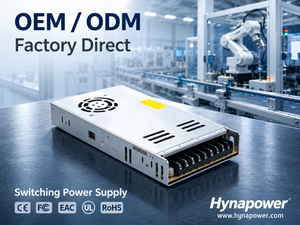
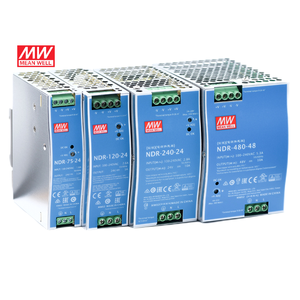
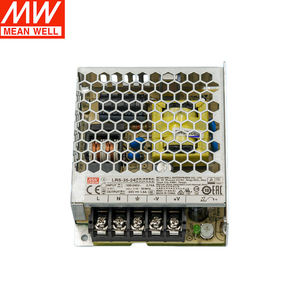
| Industrial Power Conversion | 0.25W – 1000W Output; 85–305 VAC Universal Input; Up to 94% Efficiency | IEC/EN/UL 62368-1, EN 61000-4 Surge Immunity, CE, FCC, UL508 | Custom output trim, conformal coating, custom pinouts, dynamic thermal potting |
| Medical Grade Power Supplies | 2xMOPP Isolation; Isolation Ratings 4000VAC to 6000VDC; Leakage Current < 10 µA | IEC/EN/ES 60601-1 3rd Edition, Risk Management ISO 14971 Compliance | Class I/II configuration, custom wire harnesses, specialized low-noise filtering |
| Railway & Rolling Stock Systems | 4:1 & 2:1 Ultra-Wide DC Input Range (9-36V, 18-75V, 40-160V); Shock & Vibration Proof | EN 50155, EN 45545-2 Fire & Smoke, IEC 60571 compliance | Rugged chassis mount, thermal heatsink integration, extended temp screening (-40 to +105°C) |
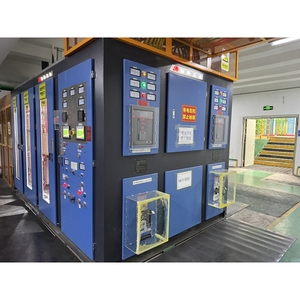
| Induction Heating & Power Modules | 30KHz–150KHz Frequency Range; High-Efficiency Water/Oil Heat Exchange Cooling | Heavy-Duty Industrial EMC Directives, High-Voltage Safety Standard Compliant | Frequency auto-tuning algorithms, custom tank circuits, digital controls |
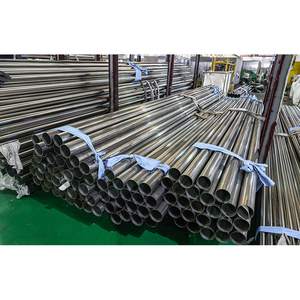
| Precision Stainless Steel Piping | Grades: 201, 304, 304L, 316, 316L, 904L, 2205 Duplex; Seamless & Welded Options | ASTM A312, ASTM A269, ISO 9001 Quality System Verification | Custom outer diameter/wall thickness ratio, bright annealing, precision cut lengths |
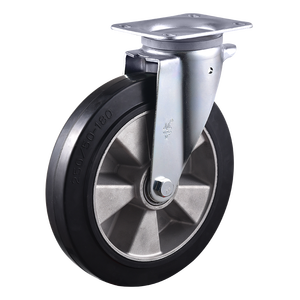
| Heavy-Duty Mobility Components | Load Capacities up to 450kg+ per caster; High-Grade Vulcanized Rubber & Die-Cast Aluminum | DIN EN 12532 Heavy Industrial Caster Standard Certification | Brake system modifications, anti-static treads, custom mounting plate dimensions |
Global supply chain volatility, regulatory shifts, and technical advancements are redefining how multi-national OEMs source critical industrial components. Understanding these micro and macro procurement shifts is vital for continuous operational resilience.
Global OEM design cycles are compressing rapidly. Sourcing engineered-from-scratch components introduces 12 to 18-month lead times and massive regulatory qualification expenses. Enterprise procurement teams are overwhelmingly prioritizing modified-standard modular building blocks. By altering pinouts, voltage trims, or enclosure coatings on pre-certified base platforms, buyers achieve custom performance profiles in weeks while maintaining existing UL, CB, and CE qualification files.
Geopolitical friction and global freight choke-points have rendered single-source models obsolete. Top-tier industrial buyers now enforce a "Dual-Hub" or "Three-Region" manufacturing strategy. Manufacturers with active operational nodes across North America, Europe, and Asia provide essential buffer inventory, localized technical engineering support, and rapid customs clearance pathways—guaranteeing unbroken factory-floor assembly lines.
Regulatory mandates such as the EU Corporate Sustainability Due Diligence Directive (CSDDD) are forcing global OEMs to evaluate suppliers' carbon footprints. Procurement officers now require documented material origin data, REACH/RoHS compliance declarations, and energy-dense components (such as 94%+ efficient power switching units) that actively reduce end-system power loss and operational carbon intensity.
Discover the core technological paradigm shifts reshaping industrial hardware, power conversion topologies, and heavy manufacturing components over the next decade.
The industrial power supply sector is undergoing a revolution driven by Gallium Nitride (GaN) and Silicon Carbide (SiC) semiconductors. Replacing traditional silicon switches with GaN/SiC devices allows power converters to operate at significantly higher switching frequencies (300kHz to 1MHz+) with reduced thermal dissipation. This translates into ultra-compact power supplies with up to 50% higher power density, allowing OEMs to shrink overall equipment cabinet footprints.
Modern industrial equipment demands real-time operational feedback. Today's DIN Rail supplies, heavy IGBT induction units, and automated material handling casters feature integrated sensor arrays and digital communication protocols (PMBus, CANbus, IO-Link). These modules transmit live data regarding temperature profiles, ripple voltage, load currents, and mechanical stress—enabling predictive maintenance algorithms and eliminating catastrophic factory downtime.
Industrial machinery operates under increasingly punishing environmental constraints. Modern raw material processing has elevated standard 304/316 stainless steels to high-purity, low-carbon variants (316L, 904L, Duplex 2205) featuring enhanced pitting resistance equivalent numbers (PREN). Simultaneously, electronic modules utilize military-grade silicone/epoxy potting compounds to withstand 50G mechanical shocks, continuous vibrations, moisture immersion, and thermal cycles ranging from -40°C to +105°C.
Cross-border equipment deployment requires single-BOM universal compliance. Modern industrial components are designed to meet overlapping global standards out of the box. Power conversion technologies now feature ultra-high galvanic isolation barriers (up to 6000VDC / 4000VAC) and dual Means of Patient Protection (2xMOPP) compliance, allowing identical hardware to be specified across heavy automation, railway rolling stock, cleanroom processing, and diagnostic medical equipment.
Procuring custom or semi-custom industrial components carries inherent technical and financial risks. Enterprise sourcing teams must execute a methodical evaluation framework to verify potential manufacturing partners prior to issuing Purchase Orders (PO).
Certified quality control systems governing all assembly lines.
Every electronic module undergoes full-load high-temperature burn-in testing.
Thermal shock and vibration testing simulating extreme transportation and field conditions.
Immediate availability of CB reports, UL certificates, RoHS, REACH, and Conflict Minerals filings.
Expert insights regarding industrial OEM supply capabilities, engineering modifications, warranty coverage, and order logistics.
An isolated DC-DC converter utilizes an internal transformer to galvanically break the electrical ground path between input and output circuits. Galvanic isolation (typically rated from 1500 VDC up to 6000 VDC) protects sensitive control logic (such as microcontrollers or PLCs) from high-voltage transients, noise spikes, and dangerous ground loops common in industrial automation. Conversely, a non-isolated converter (such as a point-of-load switching regulator) shares a common ground between input and output. Non-isolated topologies offer higher efficiency (up to 97%) and higher power density at lower costs, making them ideal for localized step-down conversion when common ground integrity is assured.
Depending on the specific series, our manufacturing platforms are fully certified or compliance-engineered to international benchmarks, including: IEC/EN/UL 62368-1 for Information Technology Equipment (ITE) and industrial controls; IEC/EN/ES 60601-1 3rd Edition (with 2xMOPP) for medical diagnostics and patient-connected devices; EN 50155 and EN 45545-2 for railway electronics, rolling stock, and fire safety; and IEC 61000-4 series for electromagnetic compatibility (EMC) and surge immunity. Full CB Scheme reports, UL File Numbers, and CE/UKCA declarations are provided upon request during design-in qualification.
Standard industrial power conversion series are backed by a comprehensive 5-year warranty. Because industrial, railway, and medical infrastructure projects operate on 10 to 20-year lifecycles, we maintain an aggressive Product Lifecycle Management program. Procurement partners receive early Product Change Notifications (PCN) and Last-Time-Buy (LTB) alerts. In the event of component obsolescence, our application engineering team provides pin-compatible, drop-in replacement modules to ensure zero disruption to long-term OEM manufacturing programs.
Yes. Modifying a qualified base platform is almost always the fastest, most cost-effective route for OEM hardware design. We routinely implement custom modifications—including tailored output voltage trims, customized pinouts and mechanical footprints, specialized conformal coatings (for humid or chemical environments), low-temperature screening down to -40°C or -55°C, integrated cable harnesses/connectors, and custom private-label branding. Modifying a pre-certified base module preserves safety approval files, drastically shortening regulatory timelines from months to days.
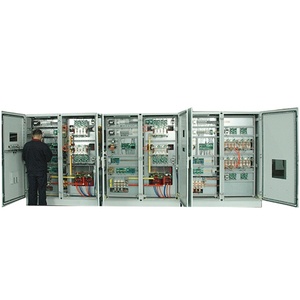
Selecting a power module for 3-phase 4-wire systems requires analyzing maximum line-to-neutral voltages and phase-imbalance transients. Standard universal input modules (85-264 VAC) may fail if neutral wire disconnections cause phase voltages to spike up to 305 VAC or 520 VAC. Engineers should specify AC-DC power supplies rated for ultra-wide input windows (up to 305 VAC continuously) with elevated MOV surge protection. Our field application engineers provide dedicated application notes and schematic reviews to ensure your selected topology survives line-to-neutral voltage surges and industrial harmonic distortion.
To support design engineering prototyping, we maintain sample inventory available for rapid dispatch (typically shipping within 24 to 48 hours for standard catalog items). Minimum Order Quantities (MOQ) for full production runs depend on the level of customization required, but are structured flexibly to accommodate scaling OEMs—ranging from small-batch pilot builds to automated volume runs. Contact our global sales engineering network to request free evaluation samples and volume price breaks.
Connect with our senior application engineers and global sourcing specialists. Receive full datasheets, CAD models, thermal derating curves, and competitive OEM volume pricing within 24 hours.