Explore our production-ready encapsulated power supplies, DIN-rail modules, and custom industrial adapters engineered for maximum dielectric isolation and harsh thermal environments.
Navigating Modern Electrical Isolation, Dielectric Strength, and Thermal Conductivity in Compact Power Conversion Platforms
Since 2002, our continuous investment in power electronics R&D has established our reputation as a trusted custom OEM encapsulated module factory. Modular power conversion components—spanning board-mount AC-DC converters, isolated DC-DC modules, switching regulators, and high-density industrial power blocks—serve as the foundational backbone for critical global infrastructure. In high-reliability sectors such as railway rolling stock, medical diagnostic devices, smart industrial automation, and renewable energy storage, standard open-frame power units often fail due to environmental degradation, moisture ingress, mechanical vibration, and thermal hot-spots. Fully encapsulated (potted) power supply modules resolve these vulnerabilities by physically surrounding delicate printed circuit board assemblies (PCBAs) in high-grade thermally conductive dielectric resins.
As an established original equipment manufacturer (OEM) and original design manufacturer (ODM), our production facility operates under rigorous ISO 9001 and IATF 16949 quality management frameworks. Every encapsulated module series engineered in our factory undergoes rigorous design verification testing (DVT), HALT (Highly Accelerated Life Testing), and full-spectrum electromagnetic compatibility (EMC) compliance auditing to ensure drop-in reliability for engineering directors globally.
Material Sciences, Planar Magnetics, and Wide-Bandgap Semiconductor Integration
The transition from legacy wire-wound transformers and open-frame topologies to ultra-compact encapsulated modules represents a quantum leap in volumetric power density ($W/in^3$). System integrators require maximum power output within minimal board real estate without sacrificing safety clearances or thermal dissipation capabilities. Our manufacturing facility leverages three core engineering breakthroughs to push the boundaries of modular power conversion:
Custom-blended thermosetting polymers (Epoxy, Polyurethane, Silicone) formulated with microscopic ceramic fillers (Alumina, Boron Nitride) achieve thermal conductivities exceeding 1.5 to 3.0 W/m·K while maintaining dielectric breakdown strengths >20 kV/mm.
Integrating Gallium Nitride (GaN) and Silicon Carbide (SiC) power switches dramatically cuts switching losses ($E_{oss}$), enabling operating frequencies upwards of 500 kHz to 1 MHz. This drastically reduces the physical footprint of magnetic components.
Replacing traditional wire-wound bobbins with multi-layer PCB planar transformers yields ultra-repeatable parasitic inductance, superior heat dissipation directly into the module casing, and exceptional resistance to mechanical shock and vibration.
Selecting the optimal compound is critical for long-term module reliability under thermal cycling (-40°C to +105°C). The table below outlines the parametric trade-offs evaluated in our engineering laboratory during custom OEM module prototyping:
| Compound Material Base | Thermal Conductivity (W/m·K) | Operating Temp Range | Mechanical Stress Reduction | Dielectric Strength | Primary Industrial Application |
|---|---|---|---|---|---|
| Addition-Cure Silicone | 1.2 – 2.8 | -55°C to +200°C | Excellent (Flexible/Soft) | > 22 kV/mm | Aerospace, High-Temp Automotive, Railway Rolling Stock |
| Structural Epoxy Resins | 0.8 – 1.8 | -40°C to +130°C | Rigid (High Impact Defense) | > 25 kV/mm | Explosion-Proof (ATEX), Subsea Electronics, Mining |
| Two-Part Polyurethane (PU) | 0.6 – 1.2 | -40°C to +105°C | Moderate (Elastic Cushioning) | > 18 kV/mm | Smart Home Automation, Commercial LED Drivers, Telecom |
| Thermally Conductive Gels | 2.0 – 4.5 | -50°C to +180°C | Ultra-Low Strain (Sensitive ICs) | > 20 kV/mm | Medical 2xMOPP Devices, High-Density Server Point-of-Load |
Strategic Strategic Supply Chain Adaptation for Procurement Directors and Technical Buyers
As global supply chains shift toward localized resilient sourcing, modular standardized designs, and stringent decarbonization mandates, procurement directors must look beyond component price-per-unit. The global market for encapsulated power supply modules is undergoing structural shifts driven by four macro trends:
Legacy power modules typically relied on narrow 2:1 input voltage ranges (e.g., 18-36 VDC). Modern industrial and railway procurement guidelines demand 4:1 (9-36 VDC, 18-75 VDC) and 12:1 ultra-wide input windows (14-160 VDC continuous). Sourcing single-part-number ultra-wide input encapsulated modules allows OEMs to consolidate their bill of materials (BOM), streamline inventory management across worldwide equipment SKUs, and lower qualification testing budgets.
Developing a fully custom power supply module from scratch requires 12 to 18 months, significant NRE (Non-Recurring Engineering) fees, and complex safety agency recertifications (UL, CB, CE, TUV). Procurement teams are increasingly adopting the Modified Standard Model. By leveraging pre-certified base converter platforms and modifying key parameters—such as output voltage trimming, custom pinout footprints, specialized wire harnesses, or custom potting formulations—OEMs shorten time-to-market by up to 70% while keeping safety file compliance intact.
Regulatory frameworks such as the EU ErP Directive, California Energy Commission (CEC) Title 20, and Energy Star Level VI dictate strict no-load standby power consumption (< 0.1W or < 0.75W depending on class) and minimum active efficiency thresholds. Next-generation encapsulated AC-DC modules integrate intelligent burst-mode controllers and active power factor correction (PFC) stages to ensure compliance with emerging global environmental standards.
Tier-1 industrial equipment manufacturers require comprehensive quality documentation before approving new factory sourcing channels. Modern OEM encapsulated module suppliers must provide full Production Part Approval Process (PPAP) Level 3 documentation, automated optical inspection (AOI) data, X-ray inspection for void-free potting analysis, and 100% full-load burn-in testing records linked to serialized QR codes on each casing.
Field-Proven Power Conversion Architecture Implemented Across Demanding Global Operating Environments

EN 50155 & EN 45545-2 fire/smoke compliant isolated DC-DC converters built to withstand severe shock, vibration, and supply transients.
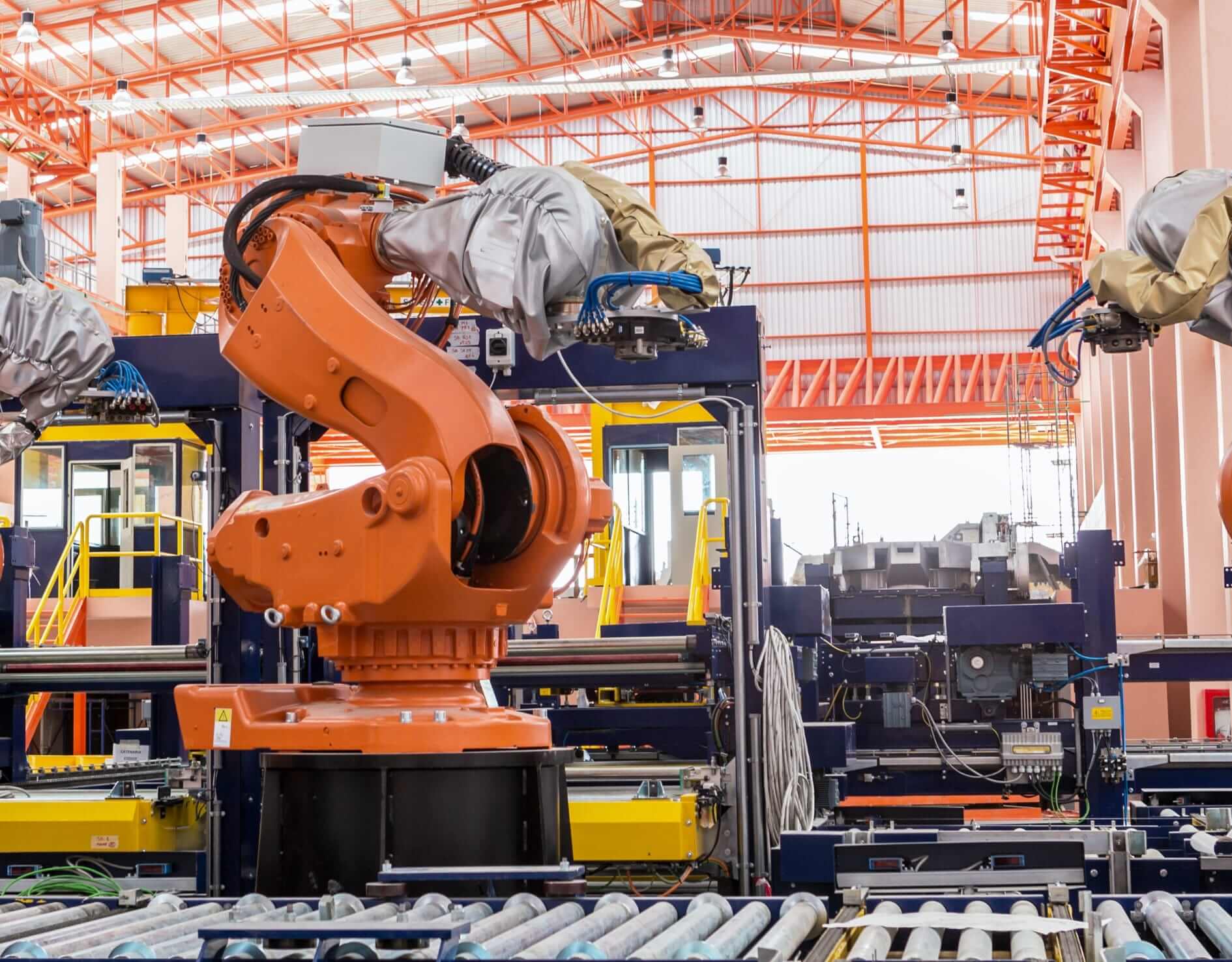
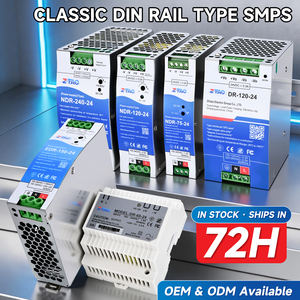
High-surge DIN-rail and PCB-mount switching supplies engineered for cabinet PLCs, motor control drives, and industrial IoT sensors.

IEC/EN 60601-1 3rd Edition medical-grade power modules featuring 2xMOPP insulation, 4000 VAC isolation, and ultra-low leakage current (<5 µA).

High-isolation auxiliary converters designed for 1000V/1500V DC solar inverters, battery storage management (BMS), and EV fast chargers.

Compact, low-standby AC-DC encapsulated bricks fitting directly inside standard flush-mount wall junction boxes and KNX control units.
IP67 fully potted constant-current and constant-voltage drivers featuring high power factor correction (>0.95) and thermal dimming protection.
How Our Design and Manufacturing Facilities Deliver End-to-End Quality Assurance
Partnering with an experienced custom OEM encapsulated module factory grants engineering teams direct access to specialized power conversion expertise throughout the design cycle. Our factory integration pipeline follows a structured five-stage methodology:
Before layout initiation, our senior application engineers evaluate your input transient envelope, worst-case ambient temperatures, target MTBF, and EMC emissions budgets.
Rapid 3D modeling and custom plastic/aluminum enclosure tooling enable custom pinout arrangements, specialized wire harnesses, and dedicated heatsink mounting fins.
Potting compounds are mixed, metered, and dispensed under ultra-low vacuum conditions to eliminate microscopic air voids, preventing internal corona discharge and high-voltage breakdown.
Detailed Solutions to Common Technical, Compliance, and Sourcing Challenges in Encapsulated Module Procurement