Explore our certified wholesale portfolio featuring enclosed chassis-mount switching power supplies, DIN-rail modules, high-voltage drivers, and desktop adapters tailored for enterprise OEM deployment.
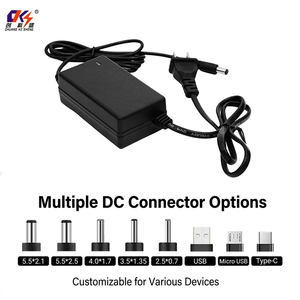
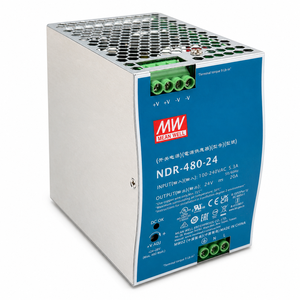
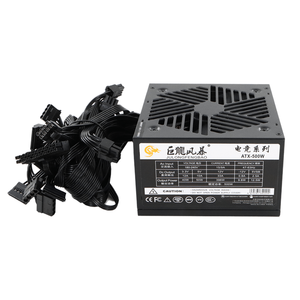
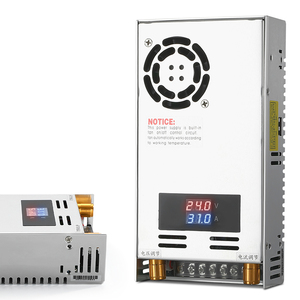
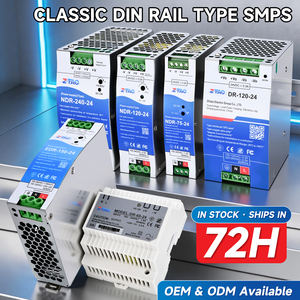
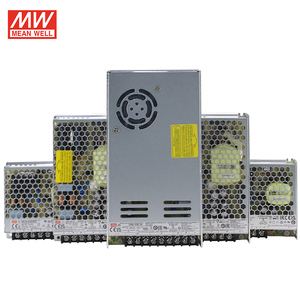
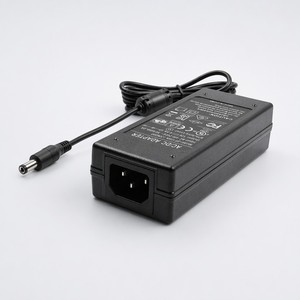
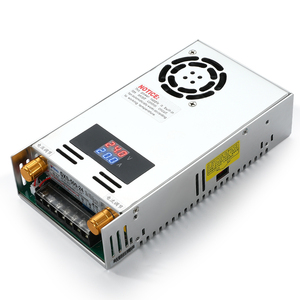
In modern industrial electronics, smart automation, telecommunications, and medical infrastructure, the chassis mount power supply (SMPS) serves as the core heart of system reliability. Over the past decade, China wholesale chassis mount manufacturers have transitioned from basic contract assemblers into sophisticated research-driven ODM/OEM power engineering houses. Modern chassis mount systems are no longer passive metal boxes; they represent intricate thermal-electrical assemblies designed to convert alternating current (AC) or high-voltage direct current (DC) into stable, low-noise DC outputs under extreme environmental stress.
As global OEM procurement teams navigate supply chain diversification, understanding the engineering benchmarks that define high-gain chassis mount converters is critical. Key technological drivers such as Gallium Nitride (GaN) switching, active power factor correction (APFC), digital PMBus integration, and modular thermal conduction are restructuring wholesale purchasing specifications worldwide.
Information Gain Insight: Modern chassis-mounted AC-DC and DC-DC converters eliminate mechanical vibration failures by utilizing potted aluminum enclosures, high-grade silicon thermal pads, and direct surface-conduction pathways. This raises systemic MTBF (Mean Time Between Failures) beyond 500,000 hours in demanding 24/7 operating environments.
Procurement directors and design engineering leads must account for four macro trends when sourcing chassis mount converters from Chinese OEMs:
By blending robust platform design with modified-standard manufacturing workflows, our facility bridge the gap between off-the-shelf simplicity and custom power optimization.
Full compliance with international standards including IEC/EN/UL 62368-1 for ITE/AV, IEC/EN 60601-1 for medical, and EN 50155 / EN 45545-2 for railway rolling stock.
Modify voltage trims, pinout footprints, potting compounds, conformal coatings, and wiring harnesses on existing certified platforms—cutting development time by up to 70%.
Engineered for extended operating temperatures from -40 °C to +105 °C, utilizing high-grade 105°C long-life electrolytic capacitors and heat-dissipating metallic chassis.
Built-in over-voltage protection, continuous short-circuit auto-recovery, surge immunity (IEC 61000-4-5 Class 4), and over-temperature cutoff mechanisms.
Standard 5-year warranty backed by strict Product Change Notification (PCN) and last-time-buy protocols to protect 10-to-20 year industrial equipment life cycles.
Advanced topology designs reaching up to 94% peak conversion efficiency with ultra-low no-load power consumption (<0.1W to 0.3W) complying with ErP Lot 6 guidelines.
When engineering an electronic platform, specifying the optimal power supply mounting topology directly influences enclosure volume, thermal dissipation efficiency, EMI shielding performance, and mechanical strain tolerance. Below is a comprehensive engineering comparison evaluated by our senior power design team:
| Architecture Parameter | Chassis Mount SMPS | DIN Rail Mount | PCB Mount Encapsulated | Open Frame AC-DC |
|---|---|---|---|---|
| Primary Power Density | High (up to 25 W/in³) | Medium (10–15 W/in³) | Very High (up to 30 W/in³) | High (15–22 W/in³) |
| Thermal Dissipation Method | Direct conduction via metal frame + ambient convection | Vertical convection airflow | Conduction through PCB pins & module body | Convection / Forced Airflow |
| Vibration & Shock Resistance | Superior (Direct screw-chassis fastening) | Moderate (Depends on DIN latch mechanism) | High (Soldered pin connections) | Moderate (Stand-off mounting) |
| Isolation Voltage Range | 3,000 VAC to 4,000 VAC | 3,000 VAC to 4,000 VAC | 1,500 VDC to 6,000 VDC | 3,000 VAC |
| EMC / EMI Shielding | Fully enclosed metal case provides Faraday shield | Vented plastic or metal enclosure | Potting compound shielding | Requires external metal enclosure shield |
| Typical Power Output Spectrum | 15W to 1500W+ | 15W to 960W | 1W to 100W | 5W to 500W |
| Ideal Application Sectors | Heavy Machinery, CNC, Telecommunications, Outdoor Cabinets | Industrial Automation Panels, PLCs, Control Cabinets | Compact Sensor Nodes, IoT Gateways, Medical Instrumentation | Embedded Commercial Systems, Display Kiosks, Medical Devices |
Procuring chassis mount power converters from Chinese wholesale suppliers requires a strict technical audit framework to safeguard against component counterfeiting, thermal derating inflation, and safety certificate fraud. To maintain E-E-A-T (Experience, Expertise, Authoritativeness, and Trustworthiness) compliance, enterprise procurement teams should verify three core domains:
A power supply's rated life is fundamentally bound to its weakest internal component. Leading China manufacturers uphold transparent Bill of Materials (BOM) policies, sourcing primary electrolytic capacitors from top-tier brands (e.g., Nippon Chemi-Con, Nichicon, Rubycon), switching MOSFETs from Infineon or STMicroelectronics, and magnetic cores from TDK or Ferroxcube. Requesting a verified BOM breakdown ensures the power module can sustain continuous 24/7 full-load operation without premature capacitor drying or thermal runaway.
Switching power supplies inherently generate high-frequency electromagnetic interference (EMI). High-quality chassis mount power converters incorporate comprehensive two-stage input Pi (π) filters, differential and common-mode chokes, and Safety Y-capacitors to satisfy EN 55032 / CISPR32 Class B radiated and conducted emission standards. Furthermore, verify surge immunity compliance against IEC 61000-4-5 (typically 2kV Line-to-Line, 4kV Line-to-Ground for harsh industrial environments).
Beware of unverified power rating claims. Reputable manufacturers publish clear output derating curves indicating power delivery limits above 50 °C ambient. Prior to dispatch, 100% of manufactured units should undergo high-temperature full-load dynamic burn-in testing (e.g., 4 hours at 50 °C with cyclic load switching) accompanied by Automatic Test Equipment (ATE) report generation.
Addressing the technical, regulatory, and logistics queries encountered during OEM power module specification.
A chassis mount power supply is housed within a rigid metallic enclosure (often perforated aluminum or stainless steel) with integrated mounting tabs or threaded blind holes. This design facilitates direct mechanical fastening to an equipment frame, acts as an integrated heatsink for thermal conduction, and provides Faraday shielding against EMI. In contrast, an open-frame supply consists of an exposed PCB mounted via standoffs, requiring an external enclosure to meet electrical safety touch standards.
Thermal derating calculations require assessing the maximum internal ambient temperature ($T_{amb}$) of your cabinet under worst-case load conditions. Consult the manufacturer’s derating curve—typically, power output drops by 2.5% to 3.3% per degree Celsius above 50 °C. To prevent thermal shutdown, ensure the metallic chassis of the power supply is flush-mounted to the enclosure wall using high thermal conductivity interface material (TIM) to maximize heat conduction outward.
For global distribution, ensure the manufacturer provides valid CB Scheme test certificates, UL/cUL recognized mark reports under IEC/UL 62368-1 (for industrial/IT gear), and CE/UKCA declarations covering EMC Directives (EN 55032 Class B, EN 61000-3-2 PFC). For specialized sectors, request IEC 60601-1 3rd Edition (Medical 2xMOPP) or EN 50155 (Railway Rolling Stock) certifications.
Yes. OEM/ODM manufacturers specialize in "Modified Standard" programs. Rather than re-engineering a converter from scratch, engineering teams adjust feedback resistor networks to yield non-standard output voltages (e.g., 13.8V, 28V, 54V), install custom terminal blocks or Molex/JST wire harnesses, apply conformal coating for humid environments, or alter potting compounds without invalidating primary safety approvals.
Active Power Factor Correction utilizes an active switching stage to shape the input current waveform so it mimics the AC voltage phase, driving the power factor (PF) close to 0.98–0.99. Under international standards such as EN 61000-3-2 Class D, power supplies exceeding 75W connected to public utility grids must incorporate APFC to reduce harmonic distortion, prevent phase imbalances, and lower reactive power losses.
An isolated DC-DC chassis mount converter incorporates a high-frequency isolation transformer between its input and output circuitry, breaking continuous galvanic paths. This galvanic isolation (typically 1,500 VDC to 3,000 VDC) prevents stray ground currents and common-mode noise from propagating across long sensor lines, programmable logic controllers (PLCs), and communication buses.
Whether you require standard off-the-shelf industrial SMPS units, specialized DIN-rail modules, or customized high-isolation chassis converters, our engineering team is ready to evaluate your schematic, thermal budget, and compliance needs.