Explore our high-reliability, certified power conversion portfolio engineered with ultra-wide input voltage tolerances, active PFC, and robust surge protection.
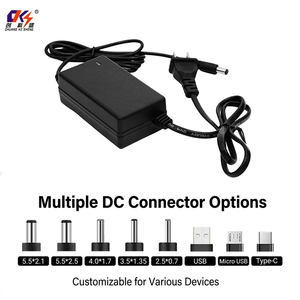
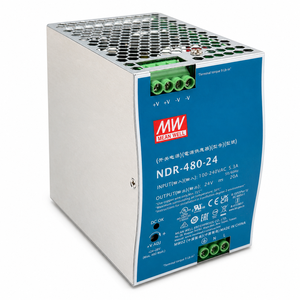
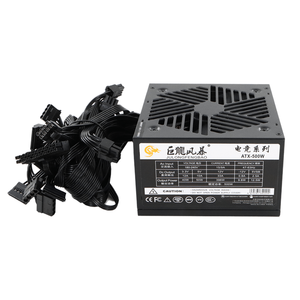
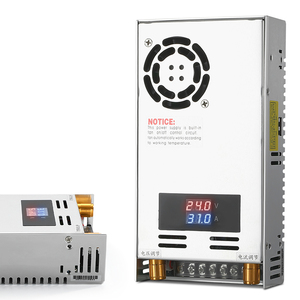
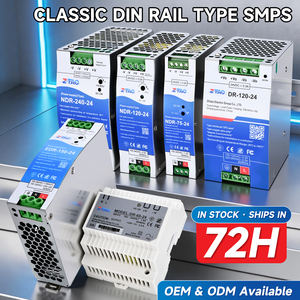
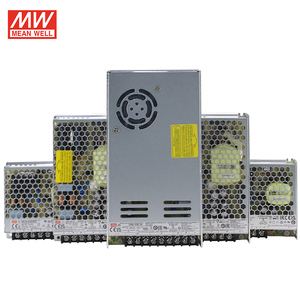
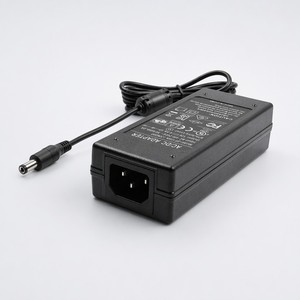
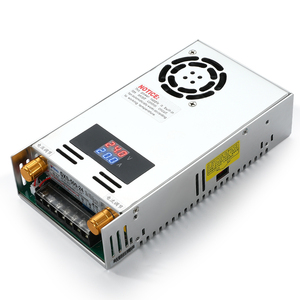
As a global pioneer in modular AC-DC power supply units (PSUs) and DC-DC converter technology established in 2002, our manufacturing facility stands at the forefront of power electronics design. Designed to eliminate the vulnerabilities associated with volatile regional power grids, our wide input power converters (spanning 85–305 VAC universal AC inputs and up to 4:1 wide DC inputs ranging from 4.5 VDC to 160 VDC) deliver exceptional signal stability, low thermal dissipation, and ultra-long MTBF parameters exceeding 500,000 hours.
With over two decades of experience serving OEM system integrators across North America, Europe, and the Asia-Pacific region, our engineering teams bridge the gap between custom electrical requirements and standardized modular components. We provide parametric power solutions engineered specifically for harsh operating conditions—including high-altitude derating, extreme ambient thermal envelopes (-40°C to +105°C), and high-vibration industrial applications.
Information Gain Insight: Unlike conventional power converters designed for tight nominal voltage bandwidths, our wide-input architecture utilizes multi-resonant LLC topologies and wide-bandgap (GaN/SiC) semiconductors, maintaining over 94% peak efficiency even during brownout fluctuations and line voltage surges up to 305 VAC.
Full compliance files including IEC/EN/UL 62368-1 for ITE equipment, IEC/EN 60601-1 3rd edition (2xMOPP) for medical grade devices, and EN 50155 / EN 45545-2 for railway rolling stock.
Rapid turnarounds for tailored pinouts, custom voltage trims, potting compounds, conformal coatings, and specialized wire harnesses without losing core safety certification approvals.
Guaranteed 10+ year product lifecycle commitment with proactive PCN (Product Change Notification) protocols and drop-in replacement roadmaps to secure long-term OEM program continuity.
Parametric performance matrix matching wide input voltage top-tier power supplies with demanding industry environments.
| Product Category | Input Voltage Bandwidth | Isolation Rating | Efficiency Peak | Primary Application Segment | Compliance Standards |
|---|---|---|---|---|---|
| Industrial DIN Rail PSUs | 85 – 305 VAC (Universal) / 120 – 370 VDC | 3,000 VAC Isolation | Up to 94.5% | Factory Automation, PLC Cabinets, Robotics | UL 62368-1 CE |
| Medical Grade Modules | 80 – 264 VAC Universal | 4,000 VAC (2xMOPP) | Up to 93.0% | Patient Diagnostics, Surgical Devices, Imaging | IEC 60601-1 3rd |
| Wide-Input DC-DC Converters | 4:1 Wide Range (9-36 VDC / 18-75 VDC) | 1,500 – 6,000 VDC | Up to 92.0% | Railway Rolling Stock, EV Chargers, Solar Telecom | EN 50155 EN 45545-2 |
| Enclosed & Adjustable SMPS | 90 – 264 VAC / Manual Switchable | 3,000 VAC Isolation | Up to 90.0% | CNC Machinery, Adjustable DC Drivers, 3D Printers | CB Approved |
| Constant Current LED Drivers | 90 – 305 VAC High Voltage Range | 3,750 VAC Isolation | Up to 95.0% | Outdoor Architectural & Smart Highway Lighting | IP67 Waterproof |
As global industries shift toward decentralized smart grids, electrification of transport, and automated industrial infrastructure, procurement managers must evaluate power supplies based on long-term sustainability and technological scalability rather than initial unit cost alone. Here are the core sourcing trends shaping the B2B power conversion landscape:
Gallium Nitride (GaN) and Silicon Carbide (SiC) power switching elements are rapidly replacing silicon MOSFETs. This transition allows wide-input power modules to operate at substantially higher switching frequencies, shrinking form factors by 40% while achieving lower thermal dissipation footprints in tightly sealed enclosures.
Global equipment exporters are shifting away from standard 85–264 VAC inputs to 85–305 VAC wide-input tolerances. This higher limit protects equipment operating on 277 VAC nominal utility lines in North America or unstable grid grids prone to high voltage swells in emerging industrial hubs.
Modern power supplies are evolving into intelligent nodes within industrial IoT networks. Modern procurement briefs increasingly specify integrated digital communication interfaces (PMBus, I2C, CANopen) for real-time monitoring of output current, thermal stress, and predictive maintenance alerts before power supply failures occur.
Power conversion architecture is under continuous pressure to deliver higher power density ($W/in^3$) while adhering to strict electromagnetic compatibility (EMC) regulations. Leading Chinese export manufacturers are driving innovation across several technical domains:
A. Advanced Thermal Management in Encapsulated Modules: Modern power modules employ thermally conductive silicon poting resins rated for UL 94V-0 flame resistance. This construction allows convection-cooled PSUs to operate efficiently across extended temperature ranges (-40°C to +85°C ambient) without requiring heavy active cooling fans that lower total system reliability.
B. Active Power Factor Correction (APFC) Integration: With stringent energy regulations enforced by the European Union (EcoDesign Directive) and US DOE, power factor values exceeding 0.98 under full load are becoming standard across wide input power supplies over 75 Watts. APFC minimizes line current harmonics, ensuring full compliance with EN 61000-3-2 Class D standards.
C. 3-Phase 4-Wire Distribution Immunity: Industrial infrastructure running on 3-phase 4-wire systems requires auxiliary switching power supplies capable of handling extreme phase imbalances and neutral line voltage floating. Dedicated 3-phase wide input modules (operating line-to-line up to 528 VAC) eliminate the need for step-down control transformers, significantly reducing installation weight and system bill-of-materials (BOM) cost.
Direct technical guidance from our senior application engineering team for B2B buyers and hardware designers.