Direct from our ISO 9001:2015 & ISO 14001 certified manufacturing facilities in China. Built to pass rigorous IEC/EN/UL 62368-1 and Medical 2xMOPP safety standards.
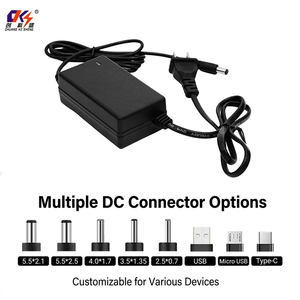
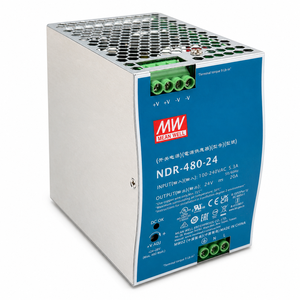
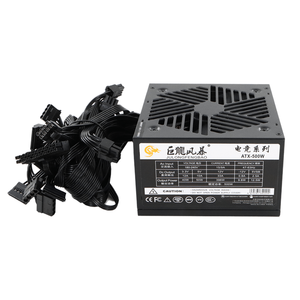
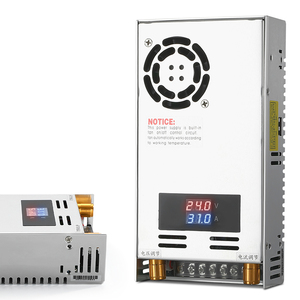
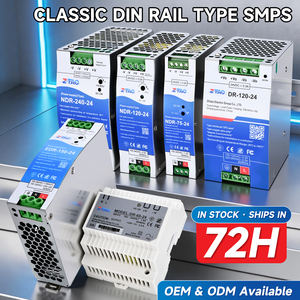
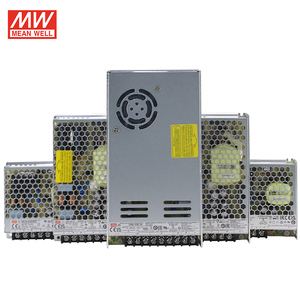
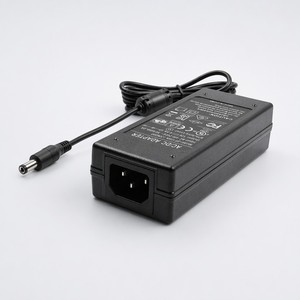
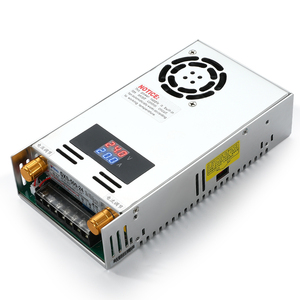
In modern industrial electronics, high-voltage renewable energy systems, railway rolling stock, and medical diagnostic equipment, galvanic isolation serves as the critical line of defense protecting sensitive logic circuits and human operators from catastrophic high-voltage surges, ground loops, and electrical noise. China has evolved from a high-volume manufacturing hub into the epicentre of advanced power electronics engineering, mastering high-density planar transformer design, Wide Bandgap (WBG) semiconductor integration, and automated magnetic winding.
Selecting the right isolated AC-DC or DC-DC converter factory in China requires an in-depth understanding of power topologies, thermal dissipation budgets, regulatory compliance (including IEC/EN/UL 62368-1 for IT/AV and IEC 60601-1 3rd Edition for medical 2xMOPP applications), and total cost of ownership (TCO). This comprehensive report provides design engineers, procurement specialists, and global OEMs with actionable technical data, industry procurement benchmarks, and strategic technology roadmaps.
As a leading Chinese designer and original manufacturer of modular AC-DC power supplies, isolated DC-DC converters, DIN rail systems, and specialized LED drivers, our production facilities are structured around zero-defect quality management and rigorous parametric verification.
Equipped with high-speed Yamaha and Fuji Surface Mount Technology (SMT) lines alongside automated planar transformer winding machinery. Our fully automated process eliminates manual assembly variance, guaranteeing consistent leakage inductance and inter-winding capacitance specs.
Every single power converter undergoes automatic optical inspection (AOI), in-circuit testing (ICT), and 100% full-load dynamic thermal burn-in testing under elevated temperatures before shipment. All designs comply with RoHS 3, REACH, and ISO 9001 quality audits.
Avoid expensive ground-up custom developments. We offer rapid modification on proven platform topologies—including custom output voltage trimming, pinout re-mapping, potting compound changes for harsh environments, conformal coating, and custom wire harness integration.
When specifying isolated power modules for industrial automation, rail transit, or medical systems, system designers must evaluate isolation barrier breakdown ratings, transient surge withstand capabilities, and MTBF figures under thermal stress.
| Performance Parameter | Standard Commercial Grade | Industrial High-Isolation Grade | Medical 2xMOPP & Railway Grade |
|---|---|---|---|
| Galvanic Isolation Rating | 1,500 VDC to 2,000 VDC | 3,000 VDC to 4,200 VAC | 5,000 VDC to 6,000 VDC (Reinforced) |
| Input Voltage Window | ±10% Fixed or 2:1 Wide Input | 4:1 Ultra-Wide (9-36V, 18-75V) | Up to 8:1 / 12:1 Ultra-Wide Input Range |
| Operating Temperature | -20°C to +70°C | -40°C to +85°C (with derating) | -40°C to +105°C (Extended Thermal Screening) |
| Safety Compliance | CE, IEC 62368-1 Standard | UL 62368-1, EN 61000 Industrial EMC | IEC 60601-1 3rd Ed, EN 50155, EN 45545-2 |
| Leakage Current | < 0.75 mA | < 0.25 mA | < 2 µA to 10 µA (Ultra-low patient leakage) |
| Target Applications | CCTV, Consumer Electronics, Adapters | PLC Cabinets, Motors, DIN Rail, Robotics | Medical Devices, Railway Rolling Stock, Smart Grid |
As the global power electronics market shifts toward higher efficiency and decentralized electrification, procurement managers and engineering teams face evolving supply chain dynamics. Sourcing isolated converters from China requires alignment with five strategic trends over the next five years:
The technical architecture of DC-DC and AC-DC isolated conversion is undergoing rapid innovation. Key engineering vectors include:
Achieving 3000 VAC or 6000 VDC isolation inside ultra-compact SIP (Single In-line Package) or DIP (Dual In-line Package) modules requires advanced encapsulation techniques. Utilizing high-thermal-conductivity epoxy potting compounds ensures void-free dielectric barriers, excellent flame retardancy (UL 94V-0 certified), and enhanced immunity against severe vibration and mechanical shock.
Legacy converters relied on tight 2:1 input ranges (e.g., 18-36 VDC). Modern industrial power architectures demand 4:1 (9-36 VDC, 18-75 VDC) and even 8:1 ultra-wide input windows. This allows a single isolated module to accept power from standard 12V, 24V, or 48V battery systems, simplifying inventory management and lowering bill-of-materials (BOM) complexity for equipment manufacturers.
Isolated switching power supplies naturally generate common-mode noise across the isolation transformer's parasitic capacitance. Chinese top-tier manufacturers are employing integrated primary-to-secondary Y-capacitance, internal shield windings, and spread-spectrum clocking controllers to ensure compliance with EN 55032 / CISPR32 Class B radiated and conducted emission thresholds without requiring bulky external filter networks.
An isolated DC-DC converter utilizes an internal high-frequency transformer to galvanically separate the input ground circuit from the output ground circuit. This complete electrical isolation prevents ground loops, suppresses electrical noise in sensitive analog circuitry, and protects operators from high voltage inputs (e.g., converting 400V battery voltage down to 12V low-voltage logic). A non-isolated converter (such as a buck switching regulator) shares a common ground between input and output, offering high power density but zero galvanic isolation protection.
Reliable manufacturers provide verifiable certificate registration numbers from recognized testing bodies (UL, TUV, Intertek, SGS, CB Scheme). You should request the UL File Number or CB Test Certificate and verify it directly on the online directory of the certifying agency. Ensure the certificate covers the specific model series, input voltage range, insulation class, and manufacturing factory location.
Medical equipment power supplies must comply with IEC 60601-1 3rd Edition standards. The key parameter is Means of Patient Protection (MOPP). Medical isolated converters requiring patient contact must achieve 2xMOPP (Two Means of Patient Protection), which mandates a minimum isolation voltage of 4,000 VAC, double or reinforced insulation, a creepage distance of at least 8mm, and ultra-low patient leakage current (typically < 10 µA).
Yes. Modifying a qualified platform is significantly faster and more cost-effective than a custom design. Common OEM modifications include customizing output voltage trims (e.g., non-standard 13.8V or 52V outputs), altering pin lengths or package form-factors, applying conformal coatings for high-humidity environments, adding wire harnesses and terminal blocks, and custom branding/labeling.
Mean Time Between Failures (MTBF) measures expected operating reliability, typically calculated according to MIL-HDBK-217F or Telcordia SR-332 standards (often exceeding 1,000,000 hours at 25°C). However, operating temperature heavily impacts component longevity. Manufacturers provide thermal derating curves showing maximum load capacity at elevated ambient temperatures (e.g., 100% load up to +60°C, linear derating to 50% load at +85°C). Adhering to these thermal guidelines prevents premature electrolytic capacitor degradation.
The recommended procurement path involves: 1) Technical requirement freeze & parametric specification matching, 2) First-Article Inspection (FAI) sample evaluation and bench testing under transient loads, 3) Small-batch pilot run for EMC pre-compliance verification, 4) On-site or third-party factory audit (evaluating SMT automation, IQC/OQC processes, and traceability), and 5) Long-term SLA contracting with guaranteed lead times and product lifecycle notification guarantees.
Need custom output voltage, 6000VDC isolation, or rapid sample delivery for your OEM project? Talk directly with our senior application engineers.