Explore certified industrial, medical, rail, and desktop power conversion modules manufactured to rigorous international safety and EMC standards.
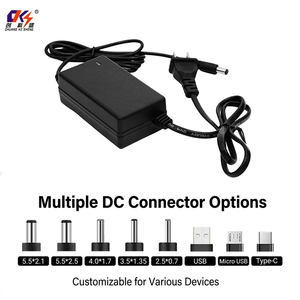
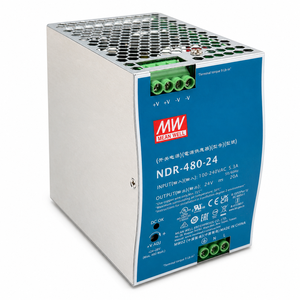
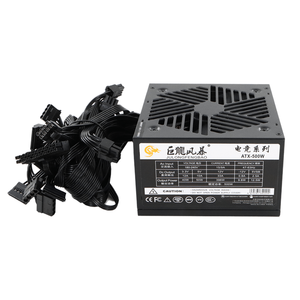
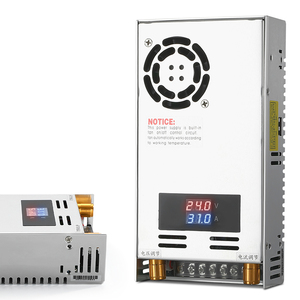
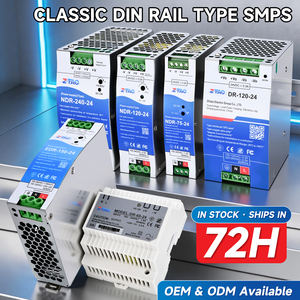
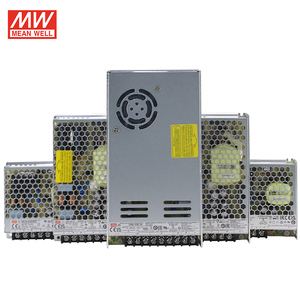
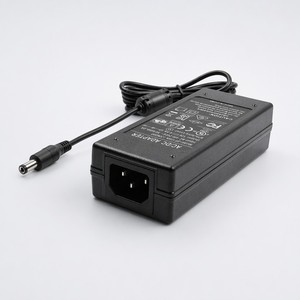
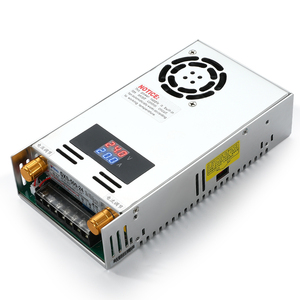
In modern industrial automation, medical diagnostic instrumentation, telecommunications infrastructure, and robotics, power distribution rarely relies on a single voltage rail. Electronic control units (ECUs) require mixed-signal power architectures: typically a primary high-power rail (such as +12VDC or +24VDC) for inductive loads, motors, and relays; a secondary regulated voltage (+5VDC) for digital logic, microcontrollers, and communication transceivers; and a negative or secondary auxiliary rail (-12VDC, -5VDC, or +3.3VDC) for operational amplifiers, analog-to-digital converters (ADCs), and sensitive sensor interfaces.
Sourcing from a qualified China Best Triple Output Manufacturer & Supplier allows OEM design teams to consolidate multiple discrete power supplies into a single, space-saving board-mount or chassis-mount enclosure. However, engineering a reliable triple output AC-DC or DC-DC converter presents intricate technical challenges—specifically cross-regulation control, galvanic isolation coordination, magnetic coupling optimization, and dynamic load response balancing.
When load current on the main output channel fluctuates rapidly, magnetic coupling in a standard multi-winding transformer can cause cross-regulation drift on secondary and tertiary outputs. Our advanced triple output topologies utilize independent secondary buck post-regulators or magnetic amplifiers (Mag-Amps) to guarantee tight voltage regulation (±1.5% to ±3%) across all channels, even under 100% unbalanced load conditions.
At the core of an isolated triple output switching power supply (SMPS) is the high-frequency transformer. Standard flyback or forward topologies split the secondary transformer bobbin into separate windings. To ensure tight coupling and minimize leakage inductance—which causes voltage spikes and electromagnetic interference (EMC)—our manufacturing lines employ interleaved winding techniques. Primary windings are split and sandwiched between secondary layers, reducing parasitic inductance to less than 1.5% of total primary inductance.
Depending on the efficiency targets and ripple/noise requirements of your OEM project, two distinct post-regulation architectures are deployed across our triple output manufacturing portfolio:
Comprehensive technical matrix comparing primary topology choices for multi-rail OEM system integrations.
| Topology Architecture | Primary Applications | Efficiency Range | Cross Regulation | Isolation Level | EMC Compliance |
|---|---|---|---|---|---|
| Triple Flyback with LDOs | Medical Sensors, IoT Gateways | 78% – 84% | Tight (±1.0%) | 4000VAC / 2xMOPP | CISPR 32 Class B |
| LLC Resonant + Sync Buck | Industrial Automation, Robotics | 88% – 94% | Ultra-Tight (±0.5%) | 3000VAC / Reinforced | EN 55032 Class B |
| Forward Converter + Mag-Amp | Telecom Infrastructure, Server PSU | 85% – 90% | Moderate (±2.0%) | 1500VAC / Basic | EN 61000-6-3 |
| Quad-Rail Modular ATX APFC | IPC, High-End Workstations | 82% – 88% | Tight (±1.5%) | 1500VAC / Grounded | FCC Part 15 Class B |
Why leading global original equipment manufacturers choose our China manufacturing hub for custom and standardized triple output power conversion.
Fully compliant with international safety standards including IEC/EN/UL 62368-1 for ITE equipment, IEC/EN/ES 60601-1 (3rd Edition 2xMOPP) for medical diagnostics, and EN 50155 / EN 45545-2 for railway rolling stock applications.
Accelerate time-to-market without full custom design costs. We offer output voltage trimming, pinout re-configuration, custom conformal coating, wiring harness assembly, and extended temperature screening (-40°C to +85°C).
With state-of-the-art SMT facilities in China and localized customer support centers in North America, Europe, and Asia-Pacific, we guarantee seamless buffer stock management, low lead times, and lifetime PCN/EOL notifications.
The power supply manufacturing industry in China is undergoing a massive technological shift driven by automation, green energy mandates, and miniaturization requirements. When evaluating a China Best Triple Output Manufacturer & Supplier, OEM procurement executives must align with suppliers adopting next-generation power topologies. key design vectors shaping the future of triple output converters include:
Gallium Nitride (GaN) power transistors and Silicon Carbide (SiC) diodes are rapidly replacing silicon MOSFETs in multi-rail AC-DC converters. Operating at switching frequencies exceeding 500 kHz to 1 MHz, GaN-based triple output power supplies reduce magnetic component volumes by up to 40% while raising energy efficiency above 93%. This power density breakthrough enables compact board-mount triple output modules to deliver 60W to 150W in footprints previously limited to 30W.
Analog PWM control loops are giving way to digital signal processors (DSPs) and microcontrollers in high-reliability triple output power systems. Real-time digital telemetry via PMBus or standard I2C allows host system controller boards to monitor individual channel output voltages, load currents, internal hot-spot temperatures, and remaining operational lifespan. Dynamic voltage scaling (DVS) can also be programmed per channel to optimize system standby power during idle modes.
Global regulatory bodies are enforcing stricter zero-load standby power rules (EU CoC Tier 2 and US DoE Level VI) requiring no-load power consumption to drop below 0.075W to 0.15W. Modern triple output designs incorporate intelligent burst-mode controllers that disable auxiliary post-regulators when secondary loads fall below defined thresholds, fulfilling ecological design requirements for smart grid, building automation, and EV infrastructure systems.
Navigating global electronics procurement requires more than comparing unit costs. Experienced engineering buyers evaluate long-term total cost of ownership (TCO), supplier manufacturing transparency, risk mitigation, and compliance agility. As China consolidates its leadership in advanced power electronics manufacturing, strategic procurement teams are adopting the following practices:
Developing fully custom triple output ASICs or transformers can incur substantial tooling costs ($15,000–$50,000) and qualification delays (6–9 months). Top-tier OEMs prioritize "Modified Standard" modular platforms—leveraging pre-certified base designs with customizable pinouts, voltages, and enclosures to trim qualification lead times by up to 70%.
Industrial and medical OEM product lifecycles span 10 to 20 years. Partnering with a manufacturer that provides clear Product Change Notifications (PCN), Minimum 5-Year standard warranties, and guaranteed 2-year EOL component buffer management is vital to preventing premature hardware redesigns.
Detailed technical answers to common questions asked by system integrators, design engineers, and global buyers.
An isolated triple output converter uses a high-frequency transformer to provide galvanic isolation (typically 1500VDC to 4000VAC) between the input source and all output rails, as well as isolation between output channels. This prevents ground loops, shields sensitive digital circuitry from high-voltage transients, and ensures compliance with medical (2xMOPP) and industrial safety codes. A non-isolated triple output converter shares a common ground across all outputs, offering higher power density and efficiency at lower cost, making it ideal for point-of-load (POL) step-down applications where input-to-output isolation is already handled by a primary power stage.
Cross-regulation instability occurs when one rail draws maximum current while auxiliary rails operate near zero load, causing auxiliary voltages to rise or collapse. Our engineering designs prevent this through three methods: (1) Coupled-inductor design on secondary outputs to tightly link magnetic flux; (2) Adding independent DC-DC buck regulators or linear regulators (LDOs) on channels 2 and 3; and (3) Pre-loading auxiliary outputs with internal low-power precision active loads. This maintains regulation within ±1.5% to ±3% across all load profiles.
Depending on the product family, our power supplies carry full CB Scheme reports, UL/cUL recognized mark (UL 62368-1 for Audio/Video and ITE), CE Marking (LVD 2014/35/EU and EMC Directive 2014/30/EU), and IEC/EN 60601-1 (3rd Edition) certification for medical equipment with 2xMOPP rating. Compliance files, UL file numbers, RoHS 3 (Directive 2015/863/EU), and REACH declarations are available upon request for qualification dossiers.
Yes. Over 40% of our OEM manufacturing volume involves modified standard units. We can adjust transformer winding turns and feedback resistor networks to deliver custom output combinations (e.g., +24V, +5V, -5V or +15V, +5V, +3.3V), fit custom mechanical chassis or DIN-rail housings, apply conformal coating for high-humidity environments, or attach custom cable harnesses and terminal blocks.
Most standard encapsulated or open-frame triple output supplies deliver full rated output power up to +50°C or +60°C ambient temperature under natural convection. Above this threshold, power derates linearly by 2.5% to 3.3% per °C up to +85°C. For fanless sealed enclosures, we recommend conduction cooling through an integrated aluminum baseplate or specifying high-temperature component grades (-40°C to +105°C operating ambient).
Engineering evaluation samples for standard and catalog models are typically dispatched within 3 to 5 business days. Mass production lead times range from 4 to 6 weeks following approval of sample qualification test reports. For high-volume strategic OEM clients, we establish dedicated safety stock buffers and Kanban replenishment agreements at regional distribution warehouses.
Request engineering datasheets, 3D CAD models, or consult with our Senior Power Engineers for your custom or standard multi-rail power requirements.
Get a Quote