Engineered for high reliability, tight voltage regulation, and rugged operational stability across communications, automation, server architectures, and heavy industrial systems.
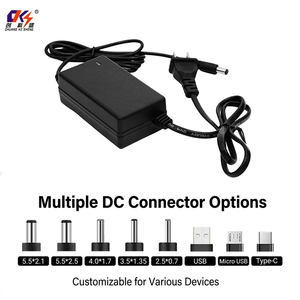
Dual-cable reinforced power adapter engineered for high-noise isolation, surveillance systems, and rack chassis auxiliary power inputs.
Contact Us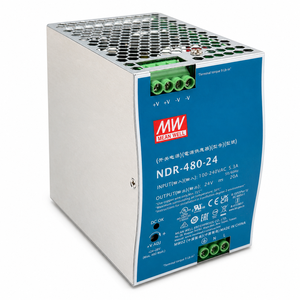
Slimline metal enclosure designed for control cabinets and server rack enclosures with active PFC and high peak load capability.
Contact Us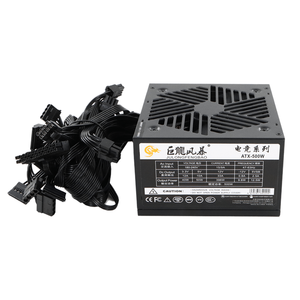
Built for 2U/4U industrial rackmount PCs, edge servers, and computing nodes requiring active power factor correction and ultra-quiet cooling.
Contact Us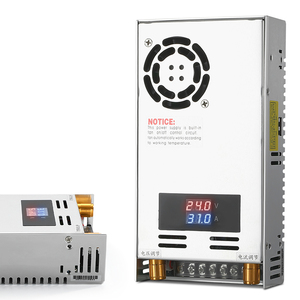
High-wattage regulated transformer module suitable for lab rack integration, burn-in test benches, and automated testing equipment.
Contact Us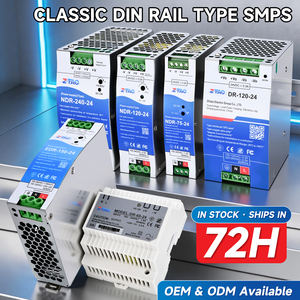
Wide universal AC input ranges (100-240VAC) designed for industrial automation systems mounted inside standardized 19-inch rack sub-racks.
Contact Us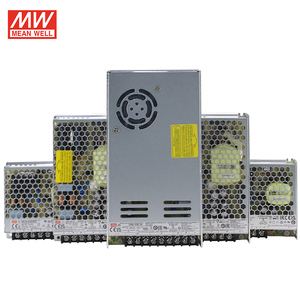
Proven industry standard low-profile enclosed switching supplies engineered for 1U server racks, medical sub-systems, and LED walls.
Contact Us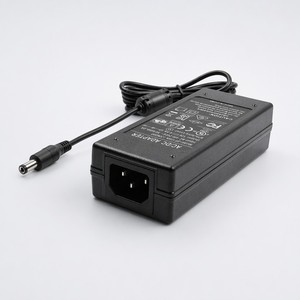
Fully certified external power supply line designed for edge compute nodes, telecom terminal gear, and network router racks.
Contact Us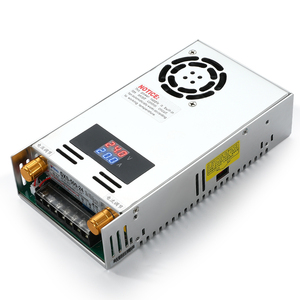
Features digital readout integration, continuous voltage trimming, and high thermal efficiency for smart city lighting control racks.
Contact UsCombining over two decades of power electronics engineering with state-of-the-art automated assembly. We bridge raw component manufacturing with rigorous international safety compliance for OEM and ODM programs globally.
Every rack mount chassis, DIN module, and open-frame board is developed against rigid international safety matrices including IEC/EN/UL 62368-1 for IT gear, IEC 60601-1 (2xMOPP) for medical racks, and EN 50155 for heavy rail rolling stock.
Avoid expensive ground-up engineering costs. We rapidly modify pre-certified base topology platforms: adjusting output voltage trim, pinouts, conformal coatings, thermal potting, wiring harnesses, and custom sheet metal enclosure dimensions.
Engineered for high-reliability long-term deployments. We provide transparent engineering change notifications (ECN), direct drop-in replacement roadmaps, and extended last-time-buy buffers critical for industrial infrastructure.
As data processing density increases across edge data centers, industrial IoT networks, telecommunication nodes, and automated factory floors, the technical demand placed on rack mount power supply manufacturers in China has evolved dramatically. Modern power delivery is no longer just about voltage step-down conversion; it requires complex thermal control systems, wide input tolerance, high efficiency, and real-time digital communication interface support.
The primary engineering constraint in rack mount power design is heat dissipation within enclosed horizontal standard spaces (1.75 inches or 1U height multiples). Modern manufacturing leverages Wide Bandgap (WBG) semiconductors—specifically Gallium Nitride (GaN) and Silicon Carbide (SiC) MOSFETs. By operating at significantly higher switching frequencies (200 kHz to >500 kHz), internal magnetic components (transformers and inductors) can be reduced in physical volume by up to 40%.
Furthermore, thermal management must account for both forced air conduction and heat-sink surface optimization. Advanced OEM factories utilize 3D thermal modeling software to map hot-spots prior to PCB layout, establishing optimized internal air channels that prevent component degradation under ambient continuous operation temperatures ranging from -40°C to +85°C.
To satisfy international eco-design guidelines (such as 80 PLUS Titanium efficiency standards exceeding 96% efficiency at 50% load), elite Chinese power supply manufacturers have migrated from traditional hard-switched forward topologies to interleaved Boost PFC combined with LLC Resonant Zero Voltage Switching (ZVS) half-bridge/full-bridge DC-DC converters.
LLC resonant topologies mitigate switching losses by ensuring that power switches turn on only when the voltage across them is zero. This drastic reduction in electromagnetic interference (EMI) simplifies internal LC filter networks, lowering overall module weight while extending overall Mean Time Between Failures (MTBF) beyond 300,000 hours under Telcordia SR-332 testing standards.
For telecommunication central offices and industrial server racks, downtime is unacceptable. Manufacturing high-reliability rack mount units involves integrating OR-ing MOSFET controllers and active analog/digital current sharing buses.
Unlike legacy passive diode OR-ing—which introduced significant conduction thermal losses—active OR-ing uses low RDS(on) N-channel MOSFETs controlled by high-speed logic to isolate failing power modules within microseconds without causing voltage transients on the main DC output bus. This enables true N+1 hot-swappable redundancy, allowing facility technicians to replace faulty power modules live without disrupting critical rack loads.
Sourcing guidelines for enterprise procurement directors, hardware specification engineers, and supply chain specialists evaluating Chinese manufacturing partners.
Procurement teams are shifting away from passive power supplies toward smart, addressable power modules. Modern rack-mount chassis must integrate PMBus 1.3 or CANBus 2.0B microcontrollers to report real-time voltage, current draw, internal temperature, and fan operational speed back to central Data Center Infrastructure Management (DCIM) software.
Global equipment deployments require power flexibility. Leading OEM manufacturers now standardize on ultra-wide AC inputs (85–305 VAC) that tolerate fluctuating industrial grid voltages, alongside dual-input high-voltage DC (120–370 VDC or 180–400 VDC) for direct integration with renewable micro-grids and centralized battery storage infrastructure.
Enterprise buyers are eliminating single-purpose bespoke power designs in favor of building-block modular architectures. By utilizing standardized internal AC-DC and DC-DC power modules across different chassis enclosure sizes (1U, 2U, 4U, DIN Rail), companies cut qualification costs and simplify component stocking strategies.
| Selection Metric | Standard 1U/2U Rack Mount Power | DIN Rail Industrial Sub-Rack | Adjustable Digital Lab Power |
|---|---|---|---|
| Target Application | Data Centers, Telecom Nodes, IPC Workstations | Factory Automation, PLC, Control Cabinets | R&D Testing, Battery Charging, Custom Loads |
| Primary Mounting Style | 19-Inch EIA Standard Horizontal Chassis | 35mm TS-35 Rail or Sub-Rack Frame | Bench-top or Integrated Test Frame |
| Output Efficiency Range | 92% – 96.5% (80+ Gold / Titanium) | 88% – 94% Standard Peak | 85% – 91% Regulated Switching |
| Cooling Topology | Internal Forced Air / Smart Speed Fans | Natural Convection / Passive Heatsink | Forced Air Cooling with Thermal Cut-off |
| Digital Monitoring | PMBus, CANBus, I2C, SNMP Optional | Relay Contact (DC OK Signal) | Digital LED/LCD Front Display & RS485 |
Comprehensive responses to key engineering, compliance, and procurement queries regarding Chinese rack mount power supply manufacturing.
When selecting a manufacturing partner, evaluate: 1) Engineering safety certifications (CB reports, UL file references, CE, RoHS/REACH declarations); 2) In-house testing capabilities (burn-in chambers, EMI/EMC compliance labs, vibration test rigs); 3) Component vendor transparency (use of premium Japanese 105°C capacitors like Nippon Chemi-Con or Rubycon); and 4) OEM customisation options (voltage trimming, modified wiring, custom enclosures).
N+1 redundancy involves using one extra power supply module than the minimum required to support the load (e.g., three 1000W modules supporting a 2000W continuous load). If one module fails, active internal OR-ing MOSFETs instantly isolate the faulty unit without interrupting load power, while remaining modules adjust current output seamlessly via an internal bus.
Yes. Utilizing standardized DIN Rail chassis mounting kits or sub-rack adapters, slimline DIN Rail power supplies (such as the NDR-480-24 series) can be mounted within 19-inch racks. This provides modular flexibility for industrial control systems requiring multi-channel DC distribution within standard telecom frames.
While ground-up custom designs require 6 to 12 months for prototype tooling and safety certification, a modified-standard design—adjusting output voltages, harness connectors, or mounting brackets on an already certified base platform—typically takes 2 to 4 weeks for samples and 6 to 8 weeks for volume production.
Active PFC aligns the phase of current draw with mains AC voltage, reducing reactive power losses and harmonic distortion on facility electrical lines. This ensures compliance with EN 61000-3-2 standards, allowing facility engineers to pack more equipment into a single power circuit without tripping upstream circuit breakers.
Power supplies generate internal heat during operation. Thermal derating curves dictate the maximum output power a module can safely deliver as ambient temperatures rise (for instance, 100% load up to 50°C, linear derating down to 50% load at 70°C). Operating power supplies within recommended derating envelopes extends capacitor lifespan and maintains high system MTBF.
Connect directly with our senior power electronics engineering team. Whether you require standard product datasheets, thermal simulation support, custom modifications, or enterprise volume quotes—we deliver certified power solutions tailored to your operational environment.