Precision-engineered switching power adapters, encapsulated board-mount converters, DIN-rail modules, and medical-grade power supplies manufactured in China for global exporters.
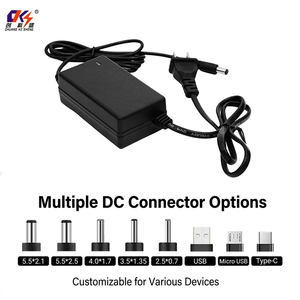
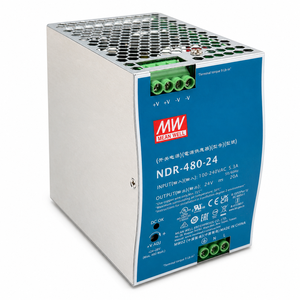
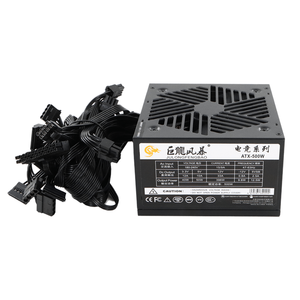
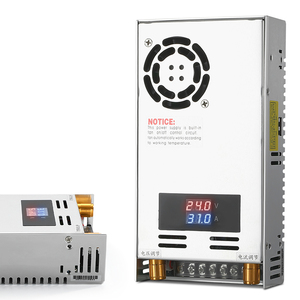
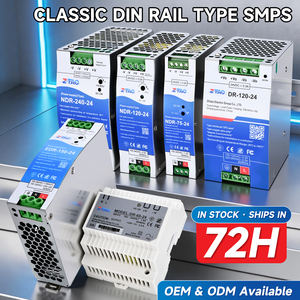
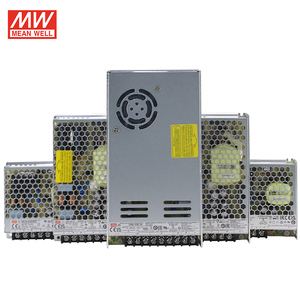
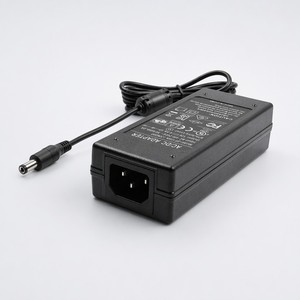
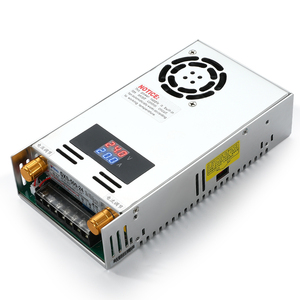
Since 2002, our engineering ecosystem has specialized in designing, qualifying, and mass-producing modular AC-DC power supplies, isolated DC-DC converters, and switching regulators for critical OEM programs.
Fully compliant with IEC/EN/ES 60601-1 3rd Edition (2xMOPP) for medical diagnostics and IEC/EN/UL 62368-1 for telecom and industrial electronics. Ultra-low leakage currents (<10 µA) ensure complete safety compliance.
Engineered for erratic power networks, offering 85–305 VAC universal AC input and 2:1, 4:1, and 8:1 wide DC inputs (4.5 VDC to 160 VDC). Designed to withstand severe surge transients per EN 61000-4-5 standards.
Rapid custom modifications on proven standard topologies. We modify pinouts, voltage trims, conformal coatings, custom potting compounds, and extended operating temperatures (-40°C to +105°C) within weeks.
Ruggedized PCB mount DC-DC converters rated for heavy shock, severe mechanical vibration, and wide operational temperature swings. Ideal for train control, signaling, and trackside monitoring infrastructure.
Every module undergoes extensive finite element thermal modeling and pre-compliance EMC testing (Class B CISPR32/EN55032) to ensure seamless system design-in without additional external filtering.
Utilizing high-frequency Planar Transformers and advanced SIP/DIP/SMD encapsulated housing topologies to shrink board space footprint by up to 45% compared to legacy linear design components.
As industrial automation, medical robotics, smart grid distribution, and electric vehicle charging infrastructure become increasingly compact, the electrical and thermal demands placed on printed circuit board (PCB) mounted power converters have undergone a fundamental shift.
In modern power electronic design, the power module is no longer merely a passive component selected at the tail-end of a project layout. It represents a foundational building block that directly determines system isolation safety, thermal dissipation profile, electromagnetic compatibility (EMC), overall MTBF (Mean Time Between Failures), and total cost of ownership (TCO).
| Specification Category | Standard Commercial Grade | Industrial High-Density Grade | China Best OEM Custom Grade |
|---|---|---|---|
| Input Voltage Range | 100-240 VAC (±10%) | 85-305 VAC / 4:1 DC (9-36V) | Ultra-Wide 8:1 DC (9-75V / 14-160V) |
| Isolation Rating | 1500 VDC / 1000 VAC | 3000 VAC / 4200 VDC | Up to 6000 VDC (2xMOPP Medical) |
| Operating Temperature | -20°C to +60°C | -40°C to +85°C | -40°C to +105°C Full Load Derating |
| Power Density (W/in³) | 15 - 25 W/in³ | 45 - 65 W/in³ | 90+ W/in³ (GaN/SiC Integrated) |
| Safety Compliance | Basic CE / RoHS | UL62368-1 / EN55032 Class B | IEC/EN 60601-1 3rd, EN 50155, CB |
| Lifecycle Support | 2 - 3 Years | 5 Years Standard | 10-15+ Year Guaranteed Lifecycle |
Understanding emerging technology trajectories is paramount for global OEM procurement directors and lead hardware engineers who seek long-term component lifecycle stability and superior information gain during supplier evaluation.
The integration of Gallium Nitride (GaN) switches and Silicon Carbide (SiC) diodes into encapsulated board-mount AC-DC and DC-DC modules has enabled switching frequencies to push beyond 500 kHz to 1 MHz. This drastic frequency increase reduces the required physical size of magnetic cores (transformers and inductors) and filter capacitors, boosting power density beyond 90 W/in³ while lowering internal thermal resistance.
Industrial sub-metering, renewable energy microgrids, and EV charging station auxiliary power supplies require AC-DC conversion capable of direct operation across line-to-neutral or line-to-line 3-phase systems. Modern Chinese OEM manufacturers are standardizing ultra-wide input AC-DC modules that handle steady-state inputs up to 305 VAC and withstand 5-second transient surges up to 550 VAC without damage.
With patient safety regulations tightening under IEC 60601-1 3rd Edition, board-mount DC-DC converters used in surgical tools, patient monitors, and imaging devices must guarantee Two Means of Patient Protection (2xMOPP). This requires a minimum creepage distance of 8mm, clearance of 5mm, and isolation withstand of 4000 VAC to 6000 VDC, keeping leakage currents below 2 µA.
Thermal management in fan-less sealed housings requires high thermal conductivity silicone or epoxy potting compounds (thermal conductivity >1.5 W/m-K). State-of-the-art Chinese exporting facilities utilize multi-stage vacuum degassing potting lines to ensure zero air micro-voids, preventing internal corona discharge and enhancing shock resistance for rail and automotive environments.
Sourcing PCB-mounted power converters from Chinese exporters requires a structured evaluation process going beyond initial unit FOB pricing. Leading global enterprises evaluate suppliers through a comprehensive Total Cost of Ownership (TCO) matrix, incorporating qualification testing, failure rate guarantees, regulatory change management, and modified-standard flexibility.
1. Evaluating Technical Documentation Integrity: Qualified manufacturers provide exhaustive datasheet specs, including MTBF calculations according to MIL-HDBK-217F or Telcordia SR-332, full-temperature derating curves (ambient vs. case temperature), complete radiated and conducted EMI test plots, and CB scheme test reports accessible via certified laboratory databases.
2. Modified Standard Platforms vs. Ground-Up Custom Design: Developing a custom power supply from scratch often incurs substantial NRE (Non-Recurring Engineering) fees, long tooling cycles (6–9 months), and complex safety compliance re-certifications. Chinese manufacturing leaders solve this through modified standard programs—adjusting output voltage trims, terminal pin lengths, potting compounds, or wire harnesses on already-certified base platforms, cutting time-to-market by up to 75%.
3. Long Lifecycle and Change Notification (PCN) Policies: In industrial infrastructure, railway signaling, and medical diagnostic equipment, product lifecycles span 10 to 20 years. Tier-1 PCB mount exporters issue formal Product Change Notifications (PCN) and End-of-Life (EOL) notices at least 12 months in advance, providing drop-in replacement pin-to-pin compatible alternatives to preserve OEM system continuity.
Direct answers from our senior power electronics design team regarding PCB mount sourcing, safety standards, customization, and thermal integration.
An isolated PCB mount converter utilizes an internal high-frequency transformer to achieve galvanic isolation between input and output circuits (typically rated from 1500 VDC up to 6000 VDC). This protects sensitive microcontroller logic from ground loops, high voltage spikes, and common-mode noise. A non-isolated converter (such as a point-of-load switching regulator) shares a common electrical ground between input and output, yielding higher efficiency (up to 97%) and higher power density in smaller SIP/DIP packages where galvanic isolation is not required.
For standard industrial and ITE (Information Technology Equipment) applications, modules must carry IEC/EN/UL 62368-1 certification with complete CB scheme reports. For medical equipment, compliance with IEC/EN/ES 60601-1 3rd Edition with 2xMOPP isolation is necessary. Railway applications require EN 50155 and EN 45545-2 (fire and smoke safety compliance). Furthermore, CE, RoHS, and REACH declarations are mandatory for all European Union markets.
Thermally conductive encapsulation (using industrial epoxy or silicone potting materials) effectively conducts heat away from internal semiconductors, transformers, and ICs to the outer case. This eliminates thermal hot spots, lowers operating junction temperatures, and significantly extends component MTBF (often exceeding 1,000,000 hours). In addition, potting provides robust protection against humidity, dust, conductive airborne contaminants, and mechanical shock/vibration.
Yes. Chinese manufacturing partners offer robust "Modified Standard" programs. Rather than re-engineering a power converter from ground zero, engineering teams can adjust output voltage trims (e.g., non-standard 3.3V, 9V, 15V, or 48V outputs), alter pin pitch configurations, apply conformal coating, or alter terminal connection styles while preserving the core certified safety approval files and minimizing development lead times.
When selecting AC-DC PCB mount supplies for 3-phase 4-wire systems, design engineers must calculate maximum line-to-neutral swell voltages and transient surge behavior. It is critical to choose AC-DC power modules featuring universal input ranges up to 305 VAC or ultra-wide ranges up to 528 VAC, rated with Class 4 surge immunity (EN 61000-4-5) and overvoltage category III (OVC III) protection.
Connect with our senior application engineers for custom electrical schematics, thermal evaluations, evaluation samples, and competitive OEM volume factory quotes.
Inquire Now