Featured Industrial Automation Modules
Explore top-tier, field-proven automation hardware designed for extreme industrial reliability, seamless fieldbus connectivity, and rapid design-in qualification.
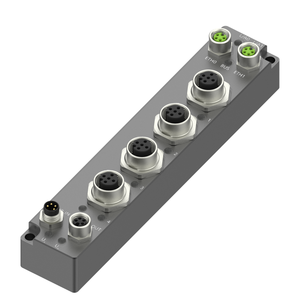
PLC Input & EtherCAT Analog I/O Sensor Module
Rugged IP67 active output voltage sensor module designed for harsh industrial environments and real-time EtherCAT PLC automation control.
- 8 Channel Independent I/O Bus
- Industrial IP67 Sealed Housing
- Ultra-Low Latency EtherCAT Protocol
- AC Active Voltage Acquisition
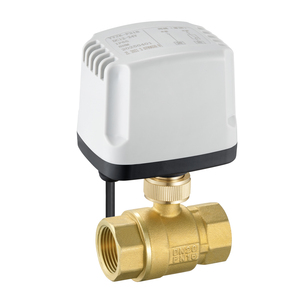
Brass Motorized Ball Valve (DN20/DN25)
Precision-engineered 2-way electric motorized valve optimized for HVAC, solar thermal networks, and intelligent fluid management systems.
- Solid Forged Brass Body Construction
- High Torque Motorized Actuator
- Zero Leakage Tight Seal Design
- HVAC & Solar System Ready
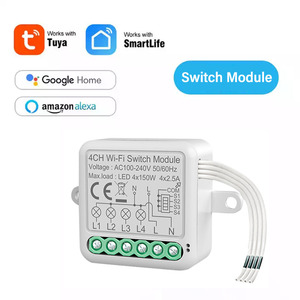
Tuya WiFi/Zigbee Smart Relay Switch Module
Compact 1/2/3/4 Gang DIY smart switch module for home automation, providing seamless integration with Alexa, Google Home, and Zigbee 3.0.
- Dual-Mode WiFi & Zigbee Wireless
- 1-4 Gang Flexible Output Relay
- Voice Control & App Automation
- Flame-Retardant Mini Enclosure
Autonomous Truck Loading & Cargo Automation System
Heavy-duty robotic logistics automation module designed for autonomous container loading, warehouse storage, and high-throughput cargo transfer.
- High Load Payload Capacity
- Multi-Sensor Obstacle Guidance
- AGV & AMR Fleet Interoperability
- 24/7 Continuous Heavy Duty Operations
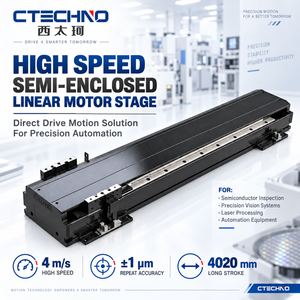
Semi-Enclosed Linear Motor Stage (4m/s)
Direct-drive linear motion module featuring 4m/s ultra-high speed and sub-micron accuracy for semiconductor inspection and precision manufacturing.
- 4m/s Max Velocity Acceleration
- Direct Drive Linear Motor Core
- Sub-Micron Encoder Feedback
- Semiconductor Grade Dust Protection
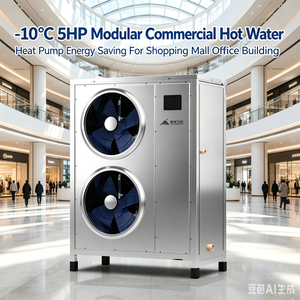
Smart Water Heat Pump Controller Module
Advanced HVAC energy-saving controller featuring intelligent thermal algorithms, mobile app remote telemetry, and automated fault diagnostics.
- Cloud Remote Telemetry & Control
- PID Temperature Regulation
- Automated Compressor Diagnostics
- Modbus RTU / RS485 Interface
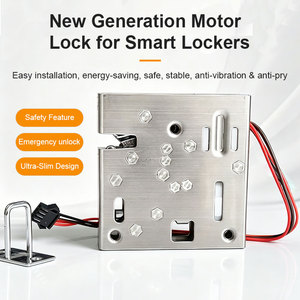
NB-IoT / LoRaWAN Smart Cabinet Lock Module
Multi-protocol electronic access lock module integrating RFID, biometric fingerprint, 4G/5G, and LoRaWAN for intelligent logistics cabinets.
- Multi-Protocol Network Connectivity
- Biometric Fingerprint + RFID Sensor
- Ultra-Low Standby Power Usage
- Anti-Pry Solid Electric Deadbolt
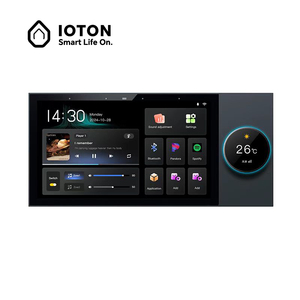
7-Inch IPS Touch Control Panel & Gateway
All-in-one Android smart control terminal featuring integrated Zigbee gateway, KNX, Modbus, and multi-zone audio management for building automation.
- 7-Inch HD IPS Capacitive Touch Panel
- Built-In KNX & Modbus Protocol Stack
- Integrated Zigbee 3.0 Master Hub
- 8-Channel Audio & HVAC Control
20+
Years Industry Expertise
10,000+
Standard & Custom Modules
5-Year
Standard Equipment Warranty
100%
Full Traceability & Testing
Why Source Automation Modules from Leading Chinese Manufacturers
Combining advanced microelectronics engineering, complete supply chain integration, and rigorous international certification standards to deliver unmatched price-to-performance value.
End-to-End Modular Customization
From modified-standard PCB layouts to custom firmware stacks, our engineering teams adapt pinouts, bus protocols (EtherCAT, KNX, Modbus), and mechanical enclosures without incurring ground-up development costs.
Global Safety & Quality Approvals
All automation platforms are designed and certified to comply with global standards, including IEC/EN/UL 62368-1 for industrial computing, IEC 60601-1 2xMOPP for medical electronics, and EN 50155 for railway transit.
Thermal & EMC Optimization
Every board-mount module and industrial controller undergoes comprehensive thermal modeling, 100% full-load burn-in testing, and EMC immunity screening to ensure uninterrupted 24/7 operation under extreme ambient temperatures (-40°C to +85°C).
| Module Category |
Fieldbus / Connectivity |
Protection Rating |
Operating Temp Range |
Primary Application Scope |
| PLC I/O Analog Modules |
EtherCAT / Modbus RTU |
IP67 Sealed / Heavy Duty |
-40°C to +85°C |
Robotics, CNC Machinery, Industrial Sensing |
| Precision Motion Stages |
Direct Drive / Quadrature Encoder |
Semi-Enclosed Cleanroom |
-10°C to +60°C |
Semiconductor Inspection, PCB Assembly |
| Smart Building Gateways |
Zigbee 3.0, KNX, WiFi, 4G/5G |
IP30 Flush Mount |
-20°C to +70°C |
Commercial Building Control, Smart Homes |
| Autonomous Cargo Systems |
CANopen / Industrial Wireless |
IP65 Heavy Industrial |
-25°C to +65°C |
Logistics Hubs, Warehouse AGVs, Truck Loading |
| Wireless Lock Actuator Modules |
NB-IoT, LoRaWAN, RFID |
IP66 Vandal Proof |
-30°C to +75°C |
Smart Logistics Lockers, Security Enclosures |
The Evolution of Modern Automation Modules: Technological Trends (2025–2030)
The global industrial ecosystem is undergoing a radical transformation driven by Industry 4.0, edge computing, and artificial intelligence integration. Automation modules—once simple, single-function relay boards or passive sensor interfaces—have matured into highly sophisticated cyber-physical building blocks. Modern procurement directors and systems integrators no longer look for isolated component suppliers; they demand strategic automation engineering partners capable of delivering intelligent, compact, and field-tested module sub-systems.
1. Seamless Fieldbus Integration & Real-Time Determinism
One of the most critical trends in industrial automation is the convergence of legacy serial communications into high-speed, deterministic Ethernet protocols. EtherCAT, PROFINET, and TSN (Time-Sensitive Networking) are rapidly replacing traditional analog signaling. Modern fieldbus input modules—such as multi-channel active voltage sensor blocks—integrate embedded microcontrollers directly at the sensing node. This decentralization enables microsecond-level sampling rates and localized signal filtering before data reaches the central Programmable Logic Controller (PLC). As a result, machine bandwidth is preserved, noise immunity is elevated, and predictive maintenance algorithms can analyze voltage anomalies in real time.
2. Miniaturization, High Density, and Thermal Efficiency
As industrial cabinets shrink and mobile robotic platforms (AGVs/AMRs) proliferate, spatial constraints have become a paramount design challenge. Manufacturers in China are leading the charge in high-density PCB packaging, utilizing advanced multi-layer substrates, direct-bonded copper thermal planes, and high-efficiency switching regulators. High-power density modules now incorporate custom encapsulation potting compounds that protect delicate surface-mount components against severe shock, vibration, and thermal stress while simultaneously aiding heat dissipation without requiring external cooling fans.
3. Edge AI and Cyber-Physical Autonomy
Automation modules are increasingly equipped with low-power microcontroller units (MCUs) capable of running tiny machine learning (TinyML) inference models at the device level. For example, autonomous cargo handling modules and linear motor stages no longer rely solely on remote server commands. They actively process multi-sensor telemetry—including acceleration profiles, acoustic signatures, and encoder feedback—to detect mechanical wear, adjust motion trajectories, and prevent collision risks autonomously.
4. Unified Wireless Interoperability in Smart Infrastructure
In smart building automation, HVAC controller networks, and access security systems, the boundaries between wired industrial buses and short-range wireless protocols have blurred. Contemporary smart switch panels and locker control modules natively support hybrid protocol stacks—enabling KNX or Modbus wired backbones to interface seamlessly with Zigbee 3.0, LoRaWAN, and NB-IoT wireless networks. This multi-protocol versatility drastically reduces installation cabling costs and installation downtime for large-scale enterprise deployments.
Strategic Sourcing Guide: Procurement Trends for Industrial OEMs & System Integrators
Navigating the global supply chain for automation modules requires a balance between cost optimization, quality assurance, risk mitigation, and long-term product lifecycle support. China’s automation manufacturing sector has evolved beyond high-volume contract assembly into a world-class hub for complex OEM/ODM engineering. International buyers who establish structured procurement frameworks can unlock massive strategic advantages.
Moving from Off-the-Shelf Components to Modified-Standard Platforms
Developing a fully customized automation module from scratch often involves prohibitive engineering expenses (NRE), protracted qualification timelines, and complex safety re-certifications. Conversely, standard off-the-shelf modules may not precisely match an OEM's unique enclosure footprint, pinout configuration, or voltage tolerances.
Leading Chinese suppliers mitigate this conflict by offering "Modified-Standard Programs." By utilizing pre-certified base platforms—incorporating tested safety insulation barriers, approved power converters, and proven microcontroller circuits—engineers can rapidly modify output trims, connector types, potting materials, and firmware interfaces. This hybrid approach slashes time-to-market by up to 60% while maintaining absolute compliance with UL, CE, and RoHS standards.
Key Evaluation Criteria for Supplier Qualification
When auditing potential automation module suppliers and manufacturers in China, international procurement engineering teams should rigorously evaluate four foundational pillars:
- Quality System Rigor & Traceability: Ensure the manufacturer operates ISO 9001:2015 certified facilities with automated SMT production lines, automated optical inspection (AOI), 100% in-line functional testing, and full component batch traceability.
- Design for Electromagnetic Compatibility (EMC): Industrial automation operates in harsh electrical environments surrounded by heavy inductive loads, variable frequency drives (VFDs), and fast electrical transients. Supplier designs must integrate robust surge protection, TVS diodes, common-mode chokes, and proper ground plane isolation (minimum 1500VDC to 4000VDC isolation ratings).
- Long Lifecycle & Product Change Notification (PCN): Industrial machinery typically maintains an operational lifespan of 10 to 20 years. Strategic suppliers provide formal PCN policies (minimum 6 to 12 months advance notice) and drop-in replacement roadmaps to safeguard OEMs against component obsolescence.
- Global Engineering & Application Support: Technical responsiveness is vital during the design-in phase. Top-tier manufacturers provide direct access to application engineers who review customer schematics, evaluate thermal budgets, and verify bus topology layouts prior to mass production commitments.
Procurement & Technical FAQ
Direct, authoritative answers to common engineering and sourcing questions regarding China automation module manufacturing.
What are the primary advantages of sourcing PLC input and sensor modules from Chinese manufacturers?
China’s robust industrial ecosystem provides unprecedented component availability, rapid prototyping capabilities, and highly competitive unit costs. Leading manufacturers combine state-of-the-art SMT lines with deep fieldbus protocol expertise (EtherCAT, Modbus, PROFINET), enabling international OEMs to acquire high-reliability, IP67-rated automation modules at a fraction of Western production costs while adhering strictly to global CE and UL standards.
How do IP67-rated automation modules handle harsh industrial outdoor environments?
IP67 automation modules are completely dust-tight and fully protected against immersion in water up to 1 meter depth. They utilize high-grade polyurethane or epoxy potting compounds, O-ring sealed aluminum or polycarbonate enclosures, and M12/M8 industrial circular connectors. This construction prevents moisture ingress, protects internal microcontrollers against severe vibration, and allows direct mounting on factory machinery or outdoor HVAC units without secondary protective cabinets.
Can standard automation modules be modified for custom voltage ranges or custom pinouts?
Yes. Most qualified manufacturers offer modified-standard services. Engineering teams can customize input/output voltage trims, modify PCB connector footprints, apply conformal coatings for corrosive environments, or preload proprietary firmware onto the embedded microcontrollers. This strategy maintains pre-tested platform safety compliance while catering to your precise hardware requirements.
What isolation ratings are required for industrial I/O and motor control modules?
For industrial environments subject to high voltage spikes and ground loops, galvanic isolation between the low-voltage control logic (e.g., MCU/PLC bus) and high-voltage power lines is critical. Standard industrial modules typically offer 1500VDC to 3000VDC isolation. For specialized medical applications (IEC 60601-1) or heavy railway rolling stock (EN 50155), isolation ratings up to 4000VAC / 6000VDC with 2xMOPP (Means of Patient Protection) are routinely implemented.
How do linear motor stages achieve 4m/s speeds with sub-micron accuracy?
High-precision linear motor stages eliminate intermediate mechanical transmission components like ball screws or timing belts, removing backlash and mechanical hysteresis entirely. Powered by direct-drive ironless or iron-core linear brushless motors and guided by high-rigidity linear air bearings or recirculating ball slides, these stages utilize high-resolution optical or absolute magnetic encoders to provide real-time position feedback to motion controllers at high update frequencies.
What fieldbus interfaces are standard in modern smart home and building control modules?
Modern building automation panels seamlessly bridge wired and wireless protocols. Wired interfaces include KNX bus and RS485 Modbus RTU/ASCII for HVAC and lighting control. Wireless integration typically incorporates Zigbee 3.0, Wi-Fi (2.4GHz/5GHz), and Bluetooth Mesh, allowing smart control centers to act as centralized edge gateways for local touchscreens, voice control systems, and mobile applications.
What is the standard warranty and component lifecycle policy for OEM procurement?
Tier-1 Chinese suppliers provide standard warranties ranging from 3 to 5 years across industrial automation module lineups. To support long-life OEM equipment (which often remains operational in factories for 10-20 years), manufacturers issue formal Product Change Notifications (PCNs) at least 6 to 12 months prior to any major component revision or end-of-life (EOL) event, accompanied by drop-in replacement guarantees.
How does the inquiry and custom catalog request process work?
Buyers can click the "Get Catalog" button on any product listing to launch direct communication with our technical sales team. Once your project specifications—such as target fieldbus, I/O count, operating voltage, environmental rating, and estimated annual volume—are provided, an application engineer will supply detailed datasheets, 3D CAD step files, pricing structures, and evaluation samples for engineering verification.
Accelerate Your Automation Development Today
Partner with China’s premier engineering teams to source certified, high-performance automation modules tailored to your exact operational specifications. Request complete product catalogs, 3D step files, and sample units.