Explore our certified, high-reliability AC-DC power supplies designed for global industrial, medical, lighting, and desktop applications.
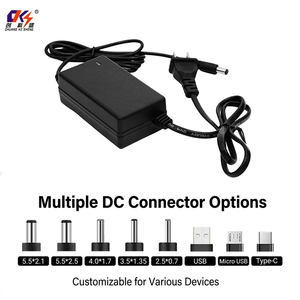
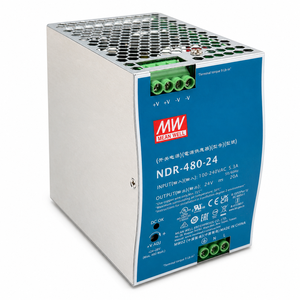
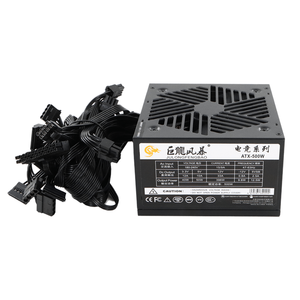
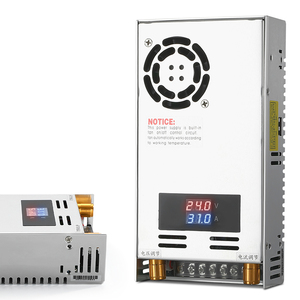
An authoritative analysis of topology selection, compliance standards, total cost of ownership (TCO), and manufacturing innovation for global OEM/ODM system design engineers.
In the modern electrical engineering landscape, selecting a tier-one China AC Converter Manufacturer & Exporter is no longer merely a commercial supply chain decision—it is a core architectural requirement for system reliability, thermal optimization, and regulatory readiness. Modern power electronics require unprecedented power density, active factor correction (APFC), broad universal input voltage ranges (from 85VAC up to 305VAC), and rigorous safety isolation up to 6000 VDC or 2xMOPP for medical electronics.
As industrial automation, smart building infrastructure, electric vehicle charging, and high-efficiency LED arrays scale globally, power supply topologies have evolved. Advanced switching architectures—such as LLC resonant converters, interleaved Flyback regulators, and wide-bandgap (GaN/SiC) semiconductors—are replacing legacy linear transformer designs. This whitepaper details how top-tier manufacturing infrastructure, combined with rigorous compliance testing to IEC/EN/UL 62368-1, EN 50155, and ES 60601-1 standards, guarantees reliable operating lifespans exceeding 100,000 hours MTBF (Mean Time Between Failures) under harsh ambient conditions.
Combining world-class R&D with ISO 9001 certified automated production to deliver defect-free power conversion products.
Every product platform is designed and pre-tested to meet global regulatory frameworks including IEC/EN/UL 62368-1 for IT/AV, IEC 60601-1 3rd Edition (2xMOPP) for medical environments, and EN 50155 for heavy railway rolling stock.
Shorten your time-to-market using our modified standard service. We quickly adjust output voltage trimming, PCB pinouts, potting compounds, conformal coatings, wiring harnesses, and thermal heatsinks on certified platforms.
With multi-region logistics hubs and inventory buffering across North America, Europe, and Asia, we ensure continuous component supply, long lifecycle availability notifications, and minimal lead times.
Our topologies achieve up to 96.5% conversion efficiency, featuring low no-load standby power consumption (<0.075W) compliant with DoE Level VI and EU CoC Version 5 Tier 2 eco-design requirements.
To eliminate infant mortality rates, 100% of manufactured power units undergo rigorous automated optical inspection (AOI), thermal cycling, and high-temperature full-load burn-in screening prior to shipment.
We guarantee minimum 10-to-15 year production continuity for infrastructure, rail, and medical projects, supported by formal PCN (Product Change Notification) and drop-in alternative support.
| Engineering Metric | Standard Commodity Supplies | Aimtec Industrial-Grade AC Converters | System Design Advantage |
|---|---|---|---|
| Input Voltage Tolerance | 90 - 240 VAC ±5% | 85 - 305 VAC Universal Range | Prevents brownout shutdowns & handles grid fluctuations |
| Galvanic Isolation Rating | 1,500 VAC / 2,121 VDC | 3,000 VAC to 6,000 VDC (2xMOPP) | Protects control circuitry & ensures patient safety |
| Operating Temperature | -10°C to +50°C (Unregulated) | -40°C to +85°C / +105°C Baseplate | Reliable outdoor & sealed enclosure operation |
| EMC Conducted / Radiated | CISPR 32 Class A (Barely compliant) | CISPR 32 / EN 55032 Class B (Margin >6dB) | Eliminates interference with microprocessors & sensors |
| Standby Consumption | > 0.3W - 0.5W | < 0.075W (ErP Lot 6 Ready) | Passes green energy certification & saves power |
| Warranty & Lifecycle | 1 Year / Discontinued quickly | 5-Year Standard Warranty / 15-Yr Support | Dramatically lowers Total Cost of Ownership (TCO) |
Key technological shifts and supply chain dynamics influencing global procurement strategies for AC-DC converters.
Procurement teams are shifting toward Gallium Nitride (GaN) and Silicon Carbide (SiC) based power converters. WBG semiconductors allow switching frequencies above 500 kHz, reducing passive component sizes, shrinking magnetics by up to 50%, and driving volumetric power density beyond 30 Watts per cubic inch.
Global grid instability and 480VAC industrial distribution systems require power supplies capable of sustaining 305VAC continuous input without derating. Sourcing strategies prioritize ultra-wide input ranges to streamline SKUs across North America, Europe, and emerging markets.
Smart factory control and data centers demand real-time diagnostics. Future AC-DC converters feature digital communication buses (PMBus, I2C, CANbus) enabling remote current monitoring, dynamic voltage scaling, predictive failure alerts, and thermal tracking directly from central PLCs.
Global ESG mandates require supply chain managers to evaluate component lifecycle emissions. Power supply procurement now weighs embodied carbon, lead-free soldering processes, RoHS/REACH compliance, and full recyclable packaging solutions.
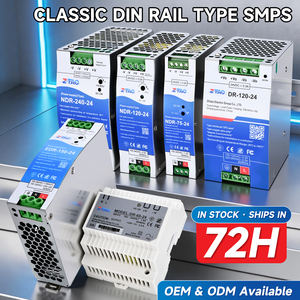
Cabinet assembly costs are driving demand for tool-less push-in terminal connectors, slim DIN rail form factors (down to 22.5mm width), and integrated DC-OK relay contacts. Modularization speeds cabinet wiring and simplifies field maintenance.
To mitigate high NRE (Non-Recurring Engineering) fees and long safety certification lead times, OEMs are turning to modified standard converters. Reusing pre-approved internal schematics while customizing outer dimensions or wire harnesses saves up to 70% in development time.
Discover how modern power electronics engineers overcome thermal, isolation, and efficiency challenges.
Legacy hard-switching Flyback circuits suffer high switching losses at elevated frequencies. Modern AC-DC modules employ LLC resonant soft-switching techniques that eliminate voltage stress across primary MOSFETs. This yields higher peak efficiency (>95%) while dramatically lowering electromagnetic radiation (EMI) at the source.
High power density causes localized hot spots. Next-gen converters utilize thermally conductive silicone/epoxy potting compounds (up to 1.5 W/m-K thermal conductivity) combined with aluminum baseplates. This allows fanless operation in sealed IP67 enclosures while maintaining low component thermal resistance.
With stringent IEC 61000-3-2 Class D harmonic limits, supplies over 75W require active PFC. Advanced controller ICs now integrate continuous conduction mode (CCM) PFC into single-stage combined controllers, delivering a power factor >0.98 while maintaining a compact board footprint.
Medical devices connected to patients require two Means of Patient Protection (2xMOPP). Innovations in planar transformer design and triple-insulated wiring allow 4000VAC isolation voltage with creepage distances >8mm and ultra-low leakage currents (<10µA), ensuring compliance with ES/EN 60601-1.
Expert answers to common engineering, compliance, and procurement questions encountered during power supply selection.
An isolated AC-DC converter uses an internal transformer to galvanically separate the high-voltage primary AC input circuit from the low-voltage secondary DC output circuit. This isolation (typically rated from 3,000VAC to 6,000VDC) protects sensitive downstream microprocessors and operators from dangerous high-voltage line surges, breaks ground loops, and is mandatory for medical (IEC 60601-1) and industrial safety (IEC 62368-1). A non-isolated converter shares a common electrical ground between input and output, offering smaller size and slightly higher efficiency, but is restricted to enclosed point-of-load applications where primary mains isolation is already provided elsewhere.
When sourcing AC power supplies for global export, verify that the manufacturer provides audited safety test reports and UL file numbers. Key standards include:
• IEC/EN/UL 62368-1: Standard safety standard for Audio/Video, Information, and Communication Technology Equipment (replacing legacy 60950-1 and 60065).
• IEC/EN 60601-1 (3rd Edition): Medical electrical equipment safety, requiring 2xMOPP (Means of Patient Protection) isolation and ultra-low leakage current.
• EN 50155 / EN 45545-2: Railway applications covering shock, vibration, thermal cycle, and fire protection.
• CE, FCC, RoHS, & REACH: Mandatory compliance markings for European and North American commercial distribution.
Power supplies generate internal heat during conversion. Most industrial AC converters deliver 100% of their rated output power across an ambient temperature range of -40°C to +50°C or +60°C. Above this threshold, power output must be derated (typically 2.5% to 3.3% per degree Celsius) to prevent internal components like electrolytic capacitors and MOSFETs from exceeding their maximum junction temperatures. Top-tier manufacturers publish detailed thermal derating curves and offer convection-cooled, conduction-cooled baseplate, or forced-air cooling options.
Yes. Utilizing a manufacturer's Modified Standard Program is the most cost-effective solution for OEM applications. Manufacturers can modify output voltage trim ranges, alter pin lengths or connector types, apply conformal coatings for humid or corrosive environments, adjust thermal heatsink geometry, or change potting materials on a pre-certified base platform. This retains the safety certifications and baseline EMC testing of the standard model, reducing NRE costs and cutting qualification lead time from months to weeks.
In 3-phase 4-wire industrial power distribution systems (e.g., 480VAC line-to-line / 277VAC line-to-neutral), neutral floating or line voltage spikes can expose phase-to-neutral power supplies to severe overvoltage. You should select an AC-DC module rated for an ultra-wide universal input range up to 305VAC continuous with a high surge withstand rating (IEC 61000-4-5 Level 4, 2kV line-to-line, 4kV line-to-ground). For higher power cabinets, 3-phase AC input switching supplies (340–550VAC) are recommended to ensure phase balance and prevent harmonic distortion.
Standard catalog modules are typically maintained in buffer stock and can be dispatched within 1 to 2 weeks. Custom or modified OEM orders generally have a production lead time of 4 to 6 weeks, depending on component procurement and safety testing requirements. Minimum Order Quantities (MOQ) for standard modules start at low quantities (20–50 units), while full custom tooling or proprietary pinout designs may carry an MOQ of 500 to 1,000 units.
Partner with China's leading AC converter manufacturer. Speak with our application engineers for custom sample evaluation, schematic reviews, and competitive volume quotes.