Precision-engineered AC-DC, DC-DC, and rack-mount programmable supplies built for continuous industrial duty, automated testing (ATE), and high-reliability systems.
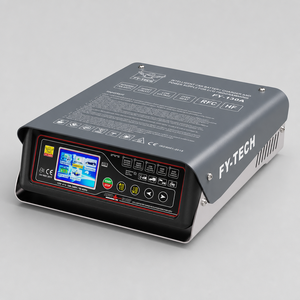
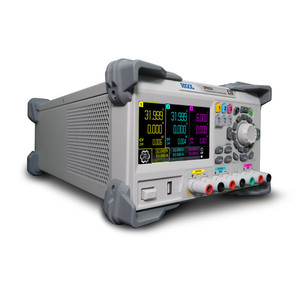
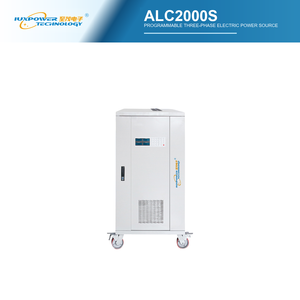
In modern industrial engineering, automated test equipment (ATE), medical technology, and smart grid automation, a switch-mode or linear programmable power supply is far more than a basic voltage source. It functions as the central control loop node responsible for providing stabilized electrical power while gathering system telemetry, handling transient loads, and shielding delicate microelectronics from power quality anomalies.
To achieve compliance for global markets, especially within the European Economic Area (EEA), high-caliber manufacturers must strictly adhere to the CE Marking Compliance Framework. This regulatory foundation mandates full alignment with two primary European Directives:
Procurement teams and electronics design engineers must evaluate the fundamental trade-offs between linear regulation and switch-mode topologies depending on their application requirements:
| Performance Criteria | Programmable Linear Power Supplies | Programmable Switching (SMPS) Supplies |
|---|---|---|
| Power Efficiency | Moderate (30% to 55%) | Ultra-High (88% to 96%) |
| Ripple & Noise Voltage | Ultra-Low (< 350 μVrms / 2 mVp-p) | Standard (< 10 mVrms / 50 mVp-p) |
| Transient Recovery Time | Fast (< 50 microseconds) | Moderate (100 to 500 microseconds) |
| Power Density & Weight | Heavy / Large Form Factor | Compact / Lightweight Module Design |
| Galvanic Isolation Rating | Up to 3000 VAC | 1500 VDC up to 6000 VDC (2xMOPP available) |
| Optimal Application Space | Precision Calibration, RF Testing, Medical Diagnostics | Factory Automation, PLC Backplanes, EV Testing, ATE Solutions |
As industrial systems transition toward Industry 5.0 and energy storage ecosystems expand globally, the architecture of programmable power equipment is undergoing major structural shifts. Procurement directors and engineering leads must align their sourcing strategies with three primary technological vectors:
Replacing traditional Silicon MOSFETs with Silicon Carbide (SiC) and Gallium Nitride (GaN) switches allows switching frequencies to surpass 500 kHz. This reduces magnetics size by 40% while boosting overall operating efficiency above 96%.
Modern programmable power modules utilize high-speed DSP cores and FPGA logic. Control interfaces have expanded from legacy analog trimming to advanced **SCPI via Ethernet/LXI, RS485 Modbus RTU, CANbus**, and EtherCAT protocols.
For battery module testing, electric vehicle (EV) charging simulation, and solar inverter validation, future supplies act as both source and regenerative load, returning up to 94% of absorbed power back to the AC grid.
Integrated telemetry streams real-time operational data including internal hotspot temperatures, electrolytic capacitor health, and total ripple history. This enables predictive maintenance prior to hardware failure.
From a global procurement perspective, buyers are systematically shifting away from single-source custom developments. Instead, leading organizations are standardizing on certified, modular, off-the-shelf platforms that offer flexible programmable firmware options. This approach minimizes compliance risk, reduces inventory overhead, and speeds up time-to-market for new OEM equipment launches.
CE certified programmable power units are deployed across mission-critical sectors where power instability or regulatory non-compliance can cause significant financial and operational impact.




With over two decades of dedicated power engineering expertise, our production facilities combine advanced automated surface-mount technology (SMT) with 100% full-load burn-in validation. We support global original equipment manufacturers (OEMs) and system integrators with dependable standard and customized power solutions.
Every manufactured power unit undergoes automated elevated-temperature burn-in testing under peak load conditions to eliminate infant mortality failures.
Comprehensive compliance packages provided for engineering qualification, including full CB scheme test reports, UL file references, and REACH/RoHS compliance declarations.
Rapid custom pinouts, specialized conformal coating, modified output voltage trims, and ruggedized housing adjustments executed on proven certified architecture.
All standard series are backed by a long-term commitment featuring formal Product Change Notifications (PCN) and guaranteed last-time-buy (LTB) windows.
Answers to common technical, regulatory, and procurement questions compiled by our senior field application engineering team.
A legitimate CE mark must be supported by an official EU Declaration of Conformity (DoC) issued by the manufacturer or importer. This document details the exact harmonized standards evaluated, such as EN 62368-1 for electrical safety and EN 55032/EN 61000 for EMC performance. Additionally, reputable suppliers can provide complete CB Test Certificates and accredited laboratory reports detailing EMI scan results, insulation breakdown limits, and thermal stress measurements.
Remote sensing utilizes a secondary pair of high-impedance feedback wires connected directly to the load terminals. As current flows through the primary power leads, a voltage drop naturally occurs across the cable resistance. The programmable supply senses the actual voltage arriving at the load and automatically increases its output terminal voltage to compensate, ensuring high regulation precision at the device under test (DUT).
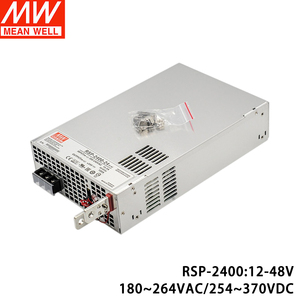
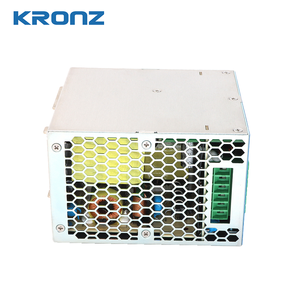
Yes, provided the power modules support an active current sharing bus (such as our RSP-2400 series or KRONZ 480W models). Simple parallel wiring of standard supplies without active load sharing can cause one module to carry the entire load, triggering over-current protection. Active current sharing ensures balanced output current distribution across all units, enhancing overall system reliability and thermal management.
In Constant Voltage (CV) mode, the supply maintains a fixed output voltage while current varies based on the load impedance. In Constant Current (CC) mode, the supply limits current to a set value by adjusting output voltage. In advanced Constant Power (CP) mode, the internal digital controller continuously adjusts voltage and current dynamically to deliver a fixed wattage, providing a broader operational envelope for battery testing and motor drive evaluation.
Our modified-standard program builds upon pre-certified power architectures to minimize both development risk and qualification lead times. Engineering teams can request custom mechanical mounting brackets, specialized wiring harnesses, environmental conformal coating, output voltage trim ranges, or modified firmware parameters. Design modifications undergo thorough validation testing while retaining the foundational safety certifications of the base platform.
Standard product references are maintained in buffer inventory across regional distribution centers, allowing sample units to ship within 24 to 48 hours. Production orders typically feature flexible lead times ranging from 4 to 8 weeks depending on component volumes and specific custom options. Flexible MOQ arrangements are available to support initial pilot prototyping and production rollouts.
Connect with our field application engineers to evaluate schematic requirements, request test samples, or obtain custom volume quotes for your upcoming production schedule.
Send an Inquiry