High-efficiency switching regulators, DIN rail supplies, and step-down modules engineered for critical OEM applications.
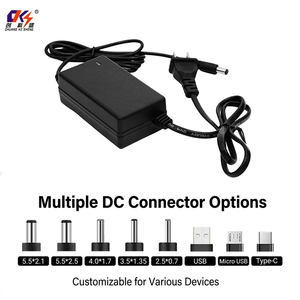
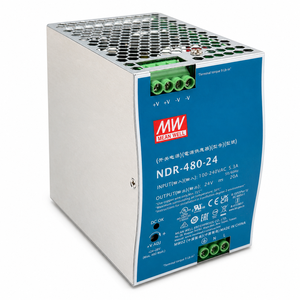
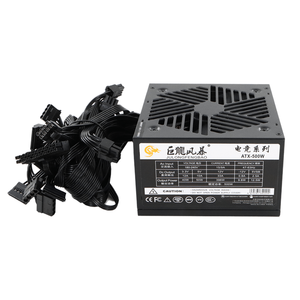
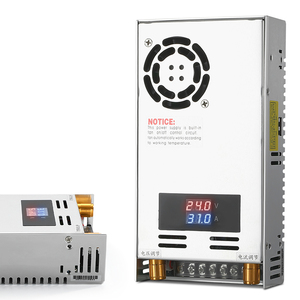
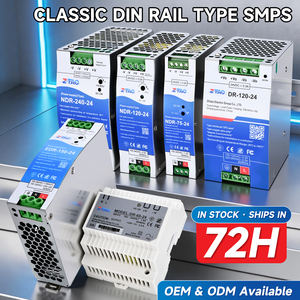
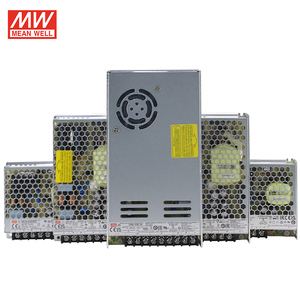
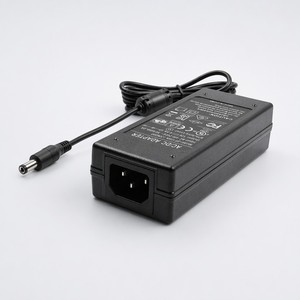
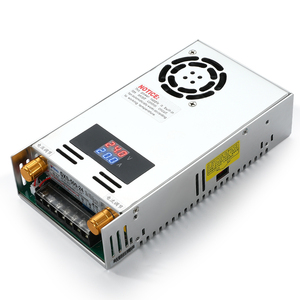
In modern industrial electronics, telecom infrastructure, medical equipment, and automotive sub-systems, buck converters (DC-DC step-down switching regulators) serve as vital power management components. When selecting a reliable partner, identifying a qualified CE certified buck converter supplier goes far beyond confirming a basic label. It demands a rigorous evaluation of the manufacturer's thermal architecture, electromagnetic compatibility (EMC) design, internal protection topologies, component quality standards, and long-term supply chain durability.
As power densities escalate and systemic space constraints intensify, original equipment manufacturers (OEMs) require step-down regulators capable of efficient power conversion while remaining fully compliant with European Union safety and interference standards (including EN 62368-1 for audio/video/ITE and EN 55032 Class B for conducted and radiated emissions). Partnering with a specialist supplier who integrates certified compliance directly into basic design modules mitigates costly redesign cycles and accelerates your system's overall time-to-market.
Pre-tested and certified against IEC/EN/UL 62368-1 and EN 50155 requirements to ensure hassle-free final-system certification.
Utilizing low-$R_{DS(on)}$ MOSFETs instead of passive diodes to achieve conversion efficiencies up to 97%, dramatically lowering thermal overhead.
Ultra-wide input voltage ratios (up to 4:1 and 8:1) withstand line transients, inductive kickbacks, and unstable supply grids.
A buck converter reduces a higher continuous DC input voltage to a regulated lower DC output voltage through precise high-frequency switching pulse-width modulation (PWM) or pulse-frequency modulation (PFM). Unlike linear regulators, which burn off excess voltage as heat, switching buck converters store energy dynamically in an integrated inductor and output capacitor array.
Conventional non-synchronous buck converters utilize a Schottky catch diode for freewheel current flow. However, the diode's forward voltage drop ($V_f \approx 0.4\text{V} - 0.7\text{V}$) introduces substantial power loss, especially when driving low-voltage high-current loads (e.g., converting 24V down to 3.3V at 10A). Premium suppliers prioritize synchronous rectification topologies, replacing the passive diode with an actively controlled, ultra-low resistance N-channel MOSFET. This switch lowers internal power dissipation by up to 60%, removing the requirement for bulky external heatsinks and expanding operating ambient ranges up to +85°C or +105°C without forced-air cooling.
Industrial applications frequently demand continuous full-load operation under severe ambient conditions. Qualified step-down power modules utilize high-thermal-conductivity potting compounds (silicone or epoxy formulations) encased in flame-retardant UL 94V-0 plastic housings or aluminum chassis enclosures. Heat generated by power switches, magnetic cores, and control ICs is efficiently transferred out to the board pins or cooling plates, minimizing internal hotspots and extending component Mean Time Between Failures (MTBF) beyond 1,500,000 hours under Telcordia SR-332 standards.
| Performance Parameter | Commercial Grade (Uncertified) | CE Certified Industrial Buck Converter |
|---|---|---|
| Efficiency (Full Load) | 78% – 85% | 92% – 97.5% (Synchronous Rectification) |
| EMC Performance | Requires external LC filtering network | Integrated multi-stage EMI filter (EN 55032 Class B) |
| Operating Temperature | -10°C to +50°C (Unencapsulated) | -40°C to +105°C (Industrial Grade, Encapsulated) |
| Protection Features | Basic Over-Current Protection | Auto-recovery OCP, OVP, Short-Circuit, Thermal Shutdown |
| Isolation Rating | Non-isolated (Common Ground) | Non-isolated & High-Isolation Options (up to 3000VDC) |
| Warranty & Lifecycle | 1 Year (High EOL Risk) | 5 Years Guarantee (10+ Year Lifecycle Commitment) |
Securing authentic CE certification on DC-DC converters and switching regulators requires adhering to comprehensive safety and electromagnetic compatibility directives dictated by European regulation:
The global power electronics landscape is undergoing a fast-paced transformation driven by industrial automation, vehicle electrification, renewable microgrids, and edge AI compute systems. Procurement specialists and design leads must align with suppliers capable of navigating these structural trends:
Gallium Nitride (GaN) and Silicon Carbide (SiC) FETs are steadily replacing legacy silicon MOSFETs within modern switching power modules. Operating at switching frequencies in excess of 1 MHz to 3 MHz, GaN-based buck regulators drastically shrink the physical footprint of inductors and capacitors. This allows suppliers to manufacture micro-sized point-of-load (POL) step-down converters delivering up to 3x higher power density without compromising thermal margins.
To reduce $I^2R$ distribution copper losses in high-power racks, robotics, and telecom cabinets, systems are shifting from traditional 12V backplanes to 48V DC distribution networks. Consequently, demand for direct wide-input 48V to 12V / 5V / 3.3V high-current step-down buck modules is surging. Leading suppliers provide high-ratio step-down regulation while maintaining continuous output voltage stability during severe input rail sag or surge spikes.
Developing fully custom power supplies introduces prolonged engineering cycles, high NRE costs, and extended certification delays. Modern B2B procurement strategies favor **Modified Standard Units**. By selecting a field-proven, CE-certified base converter platform, buyers can quickly request customized pinouts, specific output voltage trims (e.g., 5.1V, 13.8V), specialized wire harnesses, or conformal coating treatments—securing a tailor-made solution within weeks while retaining underlying safety test records.
Delivering stable step-down power to PLCs, sensor hubs, human-machine interfaces (HMIs), and fieldbus couplers from noisy 24V DC factory supply lines.
High-isolation auxiliary modules conforming to IEC 60601-1 3rd Edition (2xMOPP) featuring ultra-low leakage current for patient-adjacent monitoring systems.
EN 50155-compliant DC-DC converters engineered to endure violent mechanical shock, continuous vibration, and extreme input voltage fluctuations typical of rail environments.
Expert technical insights from our application engineering team regarding buck converter selection, compliance, and supply chain customization.
Partner with an experienced power conversion supplier. Request sample units, custom output voltage tuning, full compliance test reports, or direct engineering support for your volume production programs.