China’s clean-energy sector is expanding across solar, wind, battery storage, and electric mobility. Behind these systems, Renewable Energy DC-DC Converters manage voltage between panels, batteries, and power-control equipment. Their performance affects energy yield, heat, reliability, and maintenance needs. Small components matter.
Professor Frede Blaabjerg, a power-electronics researcher, has highlighted the role of power electronics in enabling renewable energy systems. A practical paraphrase of his work is: “Evaluate conversion performance within the complete energy system, not in isolation.” This perspective helps buyers look beyond headline efficiency. A converter operating in a bright laboratory may behave differently inside a hot cabinet, under variable input voltage, or through repeated load changes.
This article examines leading Chinese manufacturers of Renewable Energy DC-DC Converters and the factors that distinguish them. It considers product range, efficiency data, thermal design, protection features, customization, production capability, and technical support. Readers should verify specifications, certifications, and test conditions directly with each supplier. Rankings can be useful, but they are never the whole story. A datasheet may omit details that matter in the field. Even a well-reviewed product can be a poor fit for a particular system. The comparison therefore offers a starting point, not a substitute for careful engineering review.
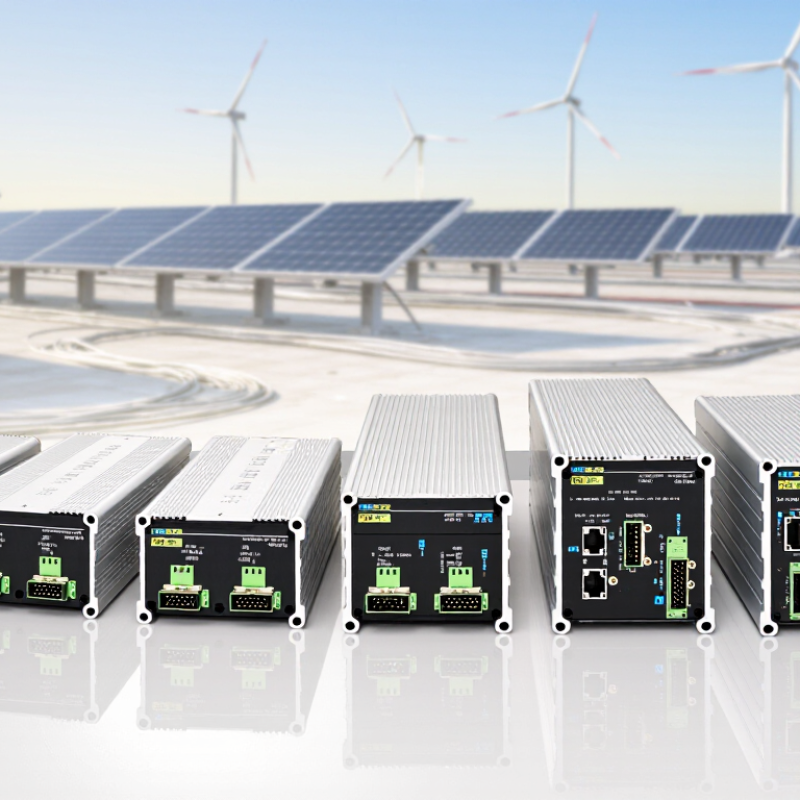
A renewable energy DC-DC converter changes one direct-current voltage into another. It helps connect sources such as solar panels, batteries, and fuel cells to a shared DC bus or an energy-storage system. In simple terms, it keeps power at a useful voltage. Some converters also provide electrical isolation, while others use buck or boost circuits to lower or raise voltage.
In solar systems, a converter can adjust the panel’s operating point to capture more available energy as sunlight changes. It may also regulate battery charging and limit current. The IEA’s Renewables 2024 report projects nearly 5,500 GW of renewable capacity additions worldwide from 2024 to 2030, with solar PV accounting for almost 80% of the increase. That expansion makes efficient power conversion increasingly important.
Efficiency is only part of the job. Engineers also check heat, switching noise, protection functions, and performance across changing loads. A converter installed beside a hot inverter cabinet faces different conditions from one in a cool equipment room. Small details matter. A datasheet rating alone cannot predict every field result, and that limitation deserves attention. Testing under the intended voltage range, ambient temperature, and load profile gives a more realistic view of performance.
DC-DC converters help solar, wind, and storage equipment use power at different voltage levels. In a solar array, a converter can adjust changing panel output to suit a battery or inverter. This is useful when clouds pass and sunlight shifts quickly. The control system must respond smoothly, not chase every brief fluctuation.
Wind systems face a different challenge. Turbine output varies with rotor speed and weather, so converters help regulate the electrical supply before it reaches storage or grid-connected equipment. In battery systems, bidirectional converters can support both charging and discharging. Their settings should match the battery’s voltage range, current limits, and thermal conditions. A tidy specification sheet is helpful, but it cannot replace testing under real operating loads.
Tips: Check conversion efficiency across the expected load range, not only at peak output. Review isolation, cooling, fault protection, and communication requirements. Leave margin for temperature and voltage variation. Small losses matter. Also, avoid assuming one converter design suits every site; cable length, dust, and uneven sunlight can change performance. That detail is easy to miss.
DC–DC converters regulate voltage between system components: they can boost or step down power from solar PV strings, rectified wind-generator outputs, and battery packs. The voltage values shown are representative design examples, not universal system ratings; actual values depend on equipment and system design.
China’s renewable-energy converter landscape is expanding alongside solar and storage deployment. Manufacturers develop DC-DC converters for battery systems, photovoltaic equipment, and power-control assemblies. Their work involves more than compact circuit boards: thermal design, electrical isolation, vibration resistance, and stable performance under changing loads all matter. The picture is uneven. Product specifications and testing practices can vary, so buyers should compare documented operating limits rather than rely on headline efficiency alone.
IRENA’s Renewable Capacity Statistics 2024 reports that China added about 297.6 GW of renewable capacity in 2023. The IEA’s Renewables 2023 forecast projected China would contribute nearly 60% of global renewable capacity growth through 2028. These figures indicate substantial equipment demand, but they do not measure DC-DC converter output directly. That distinction is easy to miss. Manufacturing capacity, field reliability, and qualification for a specific battery voltage range remain separate questions.
Tips: Ask for efficiency curves across the operating range, not one peak figure. For a storage cabinet, check isolation ratings, temperature-rise data, and fault-protection behavior. Request test records tied to the exact model. A polished datasheet helps, but it cannot replace application-level validation.
Leading Renewable Energy DC-DC Converter Manufacturers in China
China’s renewable-energy converter sector includes manufacturers serving solar, battery-storage, and wind-power applications. Strong suppliers typically offer more than a compact power module: they provide clear electrical specifications, thermal design data, and engineering support for integration. In a workshop, details such as terminal spacing, cooling airflow, and connector access can affect installation time. Small details matter.
When comparing manufacturers, check input-voltage range, isolation requirements, conversion efficiency, and performance under changing loads. Ask for test reports covering temperature rise, electromagnetic compatibility, and protection behavior. A supplier should explain how its converter responds to startup surges or a battery’s low-voltage condition. Factory audits and sample testing can help verify production consistency, though one successful sample does not guarantee every batch will match. I would not judge a manufacturer by headline efficiency alone; real operating conditions can expose trade-offs.
Tips: Share your system voltage, load profile, and cooling limits before requesting a quote. Test samples under realistic conditions, not just at room temperature. Confirm documentation and after-sales support in writing. Even a well-designed unit may need adjustment when the enclosure or wiring changes.
| Top Renewable Energy DC-DC Converter Manufacturers in China? – Leading Renewable Energy DC-DC Converter Manufacturers in China | |||
|---|---|---|---|
| Technical supplier-comparison framework. Values and requirements are model-specific; this table does not rank or identify individual manufacturers. | |||
| Comparison Dimension | Relevant Data or Technical Fact | What to Verify | Why It Matters for Renewable Energy |
| Input voltage range | There is no single standard input range for all renewable-energy DC-DC converters. The permitted minimum and maximum input voltages are specified for each model. | Check the datasheet’s continuous input range, start-up voltage, and any derating at voltage extremes. | PV strings, batteries, and DC buses can operate at different voltages and may vary during operation. |
| Output voltage | Output voltage is application-dependent. Common nominal battery-system voltages include 12 V, 24 V, and 48 V; these are nominal values, not fixed operating voltages. | Confirm the adjustable output range, regulation accuracy, and compatibility with the connected battery or DC bus. | Correct voltage regulation supports reliable charging and stable operation of downstream equipment. |
| Rated power and current | Power and current ratings are product-specific. Output power is related to voltage and current by P = V × I. | Compare continuous ratings with short-term peak ratings, ambient-temperature derating, and cooling conditions. | Undersized converters may overheat or limit system output during periods of high generation or load. |
| Conversion efficiency | Efficiency varies with input voltage, output load, temperature, and converter design. A single peak-efficiency figure does not describe performance at every operating point. | Request efficiency curves across the expected load range and clarify whether figures are typical or maximum. | Conversion losses affect usable energy and thermal-management requirements. |
| Converter topology | DC-DC converters may use isolated or non-isolated topologies. Neither type is universally appropriate for every system. | Confirm the topology and whether galvanic isolation is required by the system design or applicable safety requirements. | Topology affects system grounding, safety design, size, and integration with other power equipment. |
| MPPT functionality | Maximum power point tracking (MPPT) is a control function; it is not inherent in every DC-DC converter. | Check whether MPPT is integrated, the supported PV input range, and the specified tracking behavior. | PV systems need suitable tracking controls to operate the array near its available maximum power point. |
| Electrical protection | Protection features are model-specific and may include overvoltage, overcurrent, overtemperature, and short-circuit protection. | Review protection thresholds, response behavior, reset method, and fault indications in the datasheet. | Appropriate protection helps limit damage during faults and abnormal operating conditions. |
| Thermal and environmental limits | Operating temperature, cooling method, enclosure rating, and altitude limits vary by product. | Verify the full operating-temperature range, derating curves, cooling requirements, and applicable IP rating. | Outdoor and industrial renewable-energy installations can expose equipment to heat, dust, moisture, and restricted airflow. |
| Electromagnetic compatibility | IEC 61000-6-2 covers immunity for industrial environments; IEC 61000-6-4 covers emission requirements for industrial environments. Applicability depends on the product and installation. | Request test reports or declarations that identify the tested product configuration and applicable standards. | EMC performance helps reduce interference with nearby control, monitoring, and communication equipment. |
| Power-converter safety | IEC 62109-1 specifies general safety requirements for power converters used in photovoltaic systems. | Check which safety standards apply to the intended application and request relevant conformity documentation. | Safety evaluation should account for the converter’s role and the complete system configuration. |
| Quality-system evidence | ISO 9001 specifies requirements for a quality management system; certification alone does not establish a converter’s electrical performance. | Verify certificate scope, validity, issuing body, and whether product-level test records are available separately. | Quality-system evidence can support supplier-process evaluation but should be considered alongside technical test data. |
| Documentation and traceability | Datasheets, installation manuals, test records, and production traceability are supplier- and product-specific. | Request revision-controlled documents, serial or batch traceability details, and warranty terms before qualification. | Complete documentation supports system integration, maintenance, and consistent product verification. |
Compare Chinese DC-DC converter manufacturers on verified performance, not headline price. The IEA’s Renewables 2024 report projects nearly 5,500 GW of new renewable power capacity worldwide between 2024 and 2030. More installations mean greater value in stable supply, consistent production, and responsive technical support. Ask for test reports tied to the exact model, not just a similar product family.
Tips: Compare the input-voltage range, isolation rating, ripple, and efficiency at several loads. A unit’s peak efficiency may look impressive, but performance at partial load and high temperature matters too. Check thermal derating curves and protection behavior. Request a sample and test it under your real operating conditions.
Also assess how the manufacturer handles engineering questions, replacement parts, and failure analysis. Ask who provides support and what information they need to diagnose a fault. Clear answers matter. One easy mistake is treating a long warranty as proof of reliability; it is not. Review warranty terms, production traceability, and quality-control records, then confirm that promised specifications appear on the delivered unit. For outdoor installations, check connector sealing, vibration tolerance, and operation across the site’s expected temperatures. Support can be uneven, so document response times during evaluation.
Compare input-voltage range, isolation rating, ripple, and efficiency at several loads. Peak efficiency alone can hide weak performance at partial load.
Heat can reduce performance or trigger thermal derating. Check temperature-rise data and derating curves, especially for a crowded storage cabinet.
Request reports for the exact model, including temperature rise, electromagnetic compatibility, and protection behavior. Similar product-family results are not quite enough.
Share the system voltage, load profile, and cooling limits with the supplier. Then test a sample under realistic site conditions, not only at room temperature.
Terminal spacing, connector access, and cooling airflow can change installation time. Small details matter.
No. One sample cannot guarantee every batch will match. Check production traceability and quality-control records too.
Ask who handles faults, what diagnostic information they need, and how quickly they respond. Put support commitments in writing; I would not rely on a friendly call alone.
No. China added about 297.6 GW of renewable capacity in 2023, according to IRENA. That figure indicates equipment demand, not DC-DC converter production or field reliability.
Renewable Energy DC-DC Converters help manage the flow of electrical power between sources, storage systems, and equipment that requires a different voltage. In solar and wind installations, they can adjust variable output to suit batteries, inverters, or other system components. In energy storage applications, they support controlled charging and discharging, helping systems operate more efficiently and reliably.
China’s manufacturing landscape includes suppliers with different product ranges, engineering capabilities, and levels of technical support. When comparing manufacturers, buyers can consider input and output voltage ranges, power capacity, conversion efficiency, protection features, operating conditions, certifications, customization options, and product testing. It is also useful to evaluate documentation, delivery and warranty terms, and the availability of responsive technical assistance. A careful comparison of these factors can help identify a converter solution suited to a project’s renewable energy system and long-term operating needs.