Choosing Home Automation Power Modules in 2026 is no longer a simple wattage decision. These compact devices feed sensors, hubs, cameras, lighting controls, and connected appliances. A weak module can create voltage drops, heat, resets, and confusing network faults.
Tom Kerber, Director of Research at Parks Associates, has stressed, “Interoperability is critical to the smart home.” That principle matters when comparing Home Automation Power Modules. A reliable module should match the system’s voltage, current, wiring method, load type, and communication environment. It should also provide documented protection against overload, short circuits, and excessive temperature. Look for credible testing and recognized safety standards, rather than attractive packaging alone.
Real installations reveal the difference. A power module mounted inside a warm cabinet may behave differently from one installed in an open utility space. Long cable runs can also reduce delivered voltage. Measure carefully. Do not guess.
Compatibility deserves equal attention. A module may support a popular protocol but still perform poorly with a specific controller or dimmer. Check manufacturer documentation, firmware support, standby consumption, and replacement availability. Independent reviews can help, but they are not perfect.
The most expensive option is not automatically the safest. Nor is the smallest. Homeowners, integrators, and facility managers should balance electrical capacity, thermal performance, serviceability, and future expansion. That balance can feel tedious. It is still where dependable automation begins.
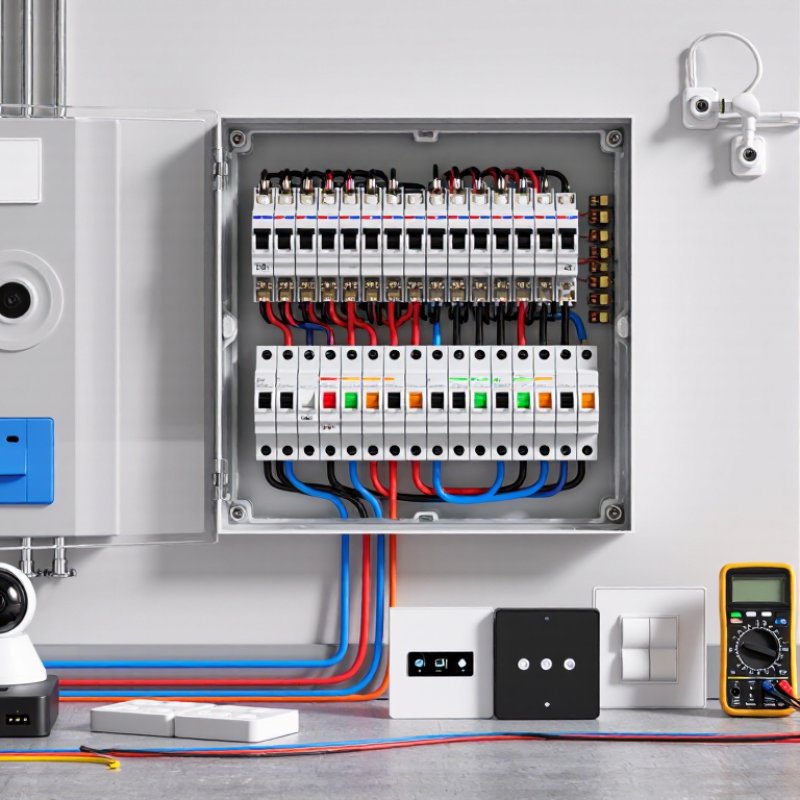
How to Choose Home Automation Power Modules in 2026?
Home automation power modules convert mains electricity into stable, usable power for sensors, controllers, locks, and wireless hubs. They also regulate voltage, limit current, reduce heat, and protect circuits from surges. Without this quiet hardware, a smart thermostat may reboot when a relay closes. Annoying, but avoidable.
The International Energy Agency reported that buildings consumed about 30% of global final energy in 2022. Its Energy Efficiency 2023 report also highlights the need for better control systems and efficient equipment. Therefore, efficiency at low loads matters. A module should remain efficient while powering a sleeping sensor, not only during peak demand. Check standby consumption, output stability, thermal performance, and electromagnetic compatibility. Short wires help.
Safety comes before compact size. Look for appropriate isolation, overload protection, surge resistance, and documented testing against relevant electrical standards. In a wall box, measure clearance carefully. A module that fits on paper may overheat beside a dimmer or transformer. The U.S. Department of Energy has noted that standby power can represent roughly 5% to 10% of household electricity use, depending on equipment and usage patterns. That figure makes tiny losses worth examining.
I have seen projects focus too much on wattage. That is a mistake. Future expansion needs headroom, yet excessive capacity can waste space and money. Recheck the load after installation. Habits change.
A practical comparison of power-module types, operating characteristics, safety features, and selection criteria for residential automation systems.
| Power Module Type | Primary Function | Typical Input | Typical Output | Typical Efficiency | Typical Load Range | Best-Fit Applications | Key Selection Considerations |
|---|---|---|---|---|---|---|---|
| AC-DC Enclosed Power Supply | Converts household alternating current into regulated direct current for automation equipment. | 100–240 V AC, 50/60 Hz | 5 V, 12 V, or 24 V DC | Typically 80–92% | 15–480 W | Control cabinets, security systems, lighting controllers, access systems | Output voltage, continuous current, ventilation, enclosure rating, overload protection, and installation clearance |
| DIN-Rail Power Module | Provides compact, cabinet-mounted DC power for modular automation components. | 85–264 V AC or a specified DC input | 12 V or 24 V DC | Typically 85–94% | 30–240 W | Electrical panels, smart-home hubs, relay modules, sensors, and actuators | DIN-rail compatibility, width, heat dissipation, output derating, and terminal accessibility |
| Plug-In AC Adapter | Supplies low-voltage DC to individual hubs, gateways, cameras, or control devices. | 100–240 V AC, 50/60 Hz | 5 V, 9 V, 12 V, or 24 V DC | Typically 75–90% | 5–60 W | Standalone hubs, gateways, indoor cameras, displays, and small controllers | Correct connector polarity, regulated output, plug geometry, cable length, and no-load power consumption |
| USB-C Power Module | Delivers standardized low-voltage power to compatible smart devices and embedded controllers. | 100–240 V AC through an adapter, or 5–20 V DC through a power-delivery source | 5–20 V DC, depending on negotiated power mode | Typically 80–93% | 5–100 W | Touch panels, compact gateways, edge computers, sensors, and portable control devices | Power-delivery compatibility, cable rating, thermal management, voltage negotiation, and connector durability |
| PoE Power Module | Combines Ethernet data connectivity with DC power over a single network cable. | 100–240 V AC or DC input, depending on design | Approximately 44–57 V DC on the network side | Typically 85–95% | 15–90 W per powered port | Networked cameras, intercoms, wireless access points, touch panels, and distributed sensors | Power class, cable length, network compatibility, port budget, surge protection, and heat generation |
| Constant-Current LED Driver | Maintains a controlled current for dimmable LED lighting and prevents excessive LED stress. | 100–240 V AC or a low-voltage DC source | Commonly 250–1,400 mA, application-dependent | Typically 85–93% | 10–150 W | Smart downlights, architectural lighting, cabinet lighting, and tunable-white fixtures | LED current range, dimming protocol, minimum load, flicker performance, thermal limits, and enclosure space |
| Battery Backup Power Module | Keeps selected automation devices operating during short utility interruptions. | AC mains and rechargeable battery input | Typically 5 V, 12 V, or 24 V DC | Typically 75–92% in backup operation | 10–300 W | Security panels, access control, network equipment, alarms, and critical sensors | Battery chemistry, runtime, recharge time, switchover behavior, low-battery protection, and maintenance requirements |
| DC-DC Converter | Changes one DC voltage level into another while maintaining regulated output power. | Usually 9–36 V DC or 18–75 V DC | 5 V, 12 V, or 24 V DC | Typically 85–96% | 5–250 W | Battery-powered systems, vehicle-linked equipment, solar storage, and distributed control nodes | Input range, isolation requirement, ripple, transient response, current limit, and electromagnetic compatibility |
Note: Performance figures are typical industry ranges for comparison purposes. Actual values vary by topology, rated load, ambient temperature, installation method, and operating conditions.
Start with the electrical load, not the mobile app. Relay modules suit lights, pumps, and simple on-off circuits. Choose dimming modules only for compatible lamps and stable minimum loads. Dry-contact modules suit gates, boilers, and low-voltage controls.
DIN-rail modules fit distribution boards and provide cleaner wiring. They also make inspection and replacement easier. Leave spare space. Crowded boards can complicate future maintenance.
Check voltage, continuous current, inrush current, and operating temperature. Motors may draw three times their running current during startup. Resistive heaters behave differently from motors. A 16-amp rating alone proves little.
Wi-Fi is convenient, but crowded networks may create delays. Thread and Zigbee support low-power mesh networks. Wired Ethernet usually offers more predictable performance. Matter may simplify compatible systems, but support remains uneven.
Look for certified insulation, overload protection, and clear installation limits. Match the enclosure to heat, moisture, and available space. Keep power modules away from damp surfaces. No module is perfect.
Read the circuit diagram, voltage range, neutral requirement, and enclosure rating. Confirm support for motors, heaters, or dimmable lamps. Check continuous current, surge tolerance, and operating temperature. Use a multimeter. Do not trust an app reading alone.
Switch off the breaker and test for zero voltage first. A qualified electrician should inspect grounding, terminal spacing, wiring, and box depth. After energizing, measure enclosure temperature during normal operation for thirty minutes. Warmth is not automatically dangerous, but unexplained heating needs investigation.
Record the installation date, connected load, firmware version, unusual noise, and heat. Inspect terminals every six to twelve months where local practice permits. Replace damaged insulation immediately. Compare idle energy use before and after automation. Small faults can remain hidden.
Choosing the right Home Automation Power Modules is essential for building a smart home system that is safe, stable, and easy to manage. These modules regulate and distribute electrical power while supporting communication between sensors, controllers, lighting, appliances, and other connected devices. Start by identifying your system’s voltage, current, load type, control method, expansion plans, and installation environment. This information will help determine whether you need a compact relay module, a dimming unit, a power supply, or a more specialized control interface.
When comparing options, examine electrical ratings, protection features, wiring requirements, communication protocols, device compatibility, and expected service life. Prioritize modules with clear technical documentation, dependable insulation, overload protection, and suitable certification for your region. Before installation, verify the wiring diagram, terminal capacity, and control signals, and have qualified assistance when required. After installation, test each function, check for abnormal heat or noise, keep connections secure, and follow a regular maintenance schedule to ensure long-term reliability and safe performance.