Choosing reliable 3-Phase 4-Wire Power Supplies in 2026 requires more than comparing wattage and price. Industrial sites, commercial buildings, workshops, and data rooms often face different electrical demands. A supply that performs well in a controlled showroom may struggle beside dusty machines, long cable runs, or uneven phase loads.
This buying guide examines three leading options for practical use. It considers rated voltage, current capacity, phase balance, neutral performance, efficiency, thermal control, protection features, and installation flexibility. It also reviews enclosure quality, monitoring functions, maintenance access, and manufacturer support. These details matter when a power supply operates continuously beside humming motors and warm distribution panels.
Real-world experience shows that specifications can be incomplete. A high efficiency figure does not guarantee reliable operation under every load. A compact design may simplify installation, but it can reduce cooling space. Cost also deserves careful attention. The cheapest unit may require more maintenance later. Not always obvious.
The guide uses manufacturer documentation, recognized electrical practices, and practical selection criteria. Final installation should follow applicable local codes and involve a qualified electrical professional. Load calculations should include starting currents, future expansion, ambient temperature, and fault protection. Neutral loading must not be overlooked, especially where single-phase equipment shares a three-phase system.
There is no universal winner. This comparison may not capture every site condition, and readers should verify critical specifications independently. Still, the selected products provide a useful starting point for safer, more informed purchasing decisions. Small details often decide performance.
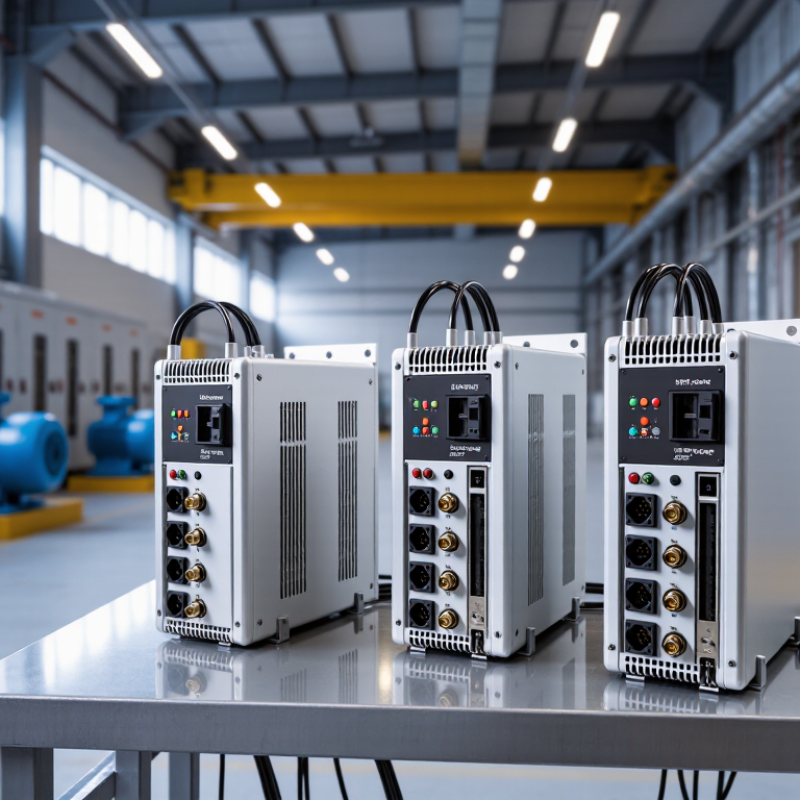
A three-phase four-wire power supply uses three live phase conductors and one neutral conductor. The phases are separated electrically by 120 degrees. This arrangement can feed both three-phase equipment and ordinary single-phase loads.
The neutral provides a return path for phase-to-neutral circuits. In many systems, the protective earth is separate, so “four-wire” does not automatically mean four conductors including earth. That detail matters. A measured 400 V phase-to-phase system may provide about 230 V phase-to-neutral, depending on the local standard. Always verify the nameplate and supply documentation before connection.
When choosing a unit, check three practical points: rated voltage, continuous current, and phase-load balance. A stable load may run quietly, while an uneven load can heat the neutral conductor and reduce efficiency. Measure each phase with a properly rated meter, not by assumption. Inspect terminal spacing, enclosure protection, cooling, and overload response. These details often reveal more than a large headline power rating.
Keep records.
A qualified electrician should confirm earthing, conductor size, isolation, and local code compliance. One easy mistake is treating the neutral as harmless because its voltage is usually low relative to earth. It can still carry current and become dangerous during faults. I would also leave operating headroom instead of selecting a supply at its exact maximum rating. That choice costs more initially, but real installations rarely remain perfectly balanced.
Selecting a three-phase, four-wire power supply starts with the load, not the catalog page.
A four-wire system usually means three phase conductors plus neutral; protective earth is separate. Confirm this distinction before ordering.
IEC 60038 lists 230/400 V as a common low-voltage system, but local networks may use 120/208 V or 277/480 V.
Measure the actual supply and check permitted tolerance under IEC 60364 or local electrical codes.
Current capacity needs more than adding nameplate amperes.
The U.S. Department of Energy reports that motor-driven systems consume about 68% of industrial electricity.
Motors can create high starting current, while variable-speed drives may introduce harmonics.
Size conductors and protection for continuous load, starting demand, ambient temperature, installation method, and neutral current. A neat spreadsheet can still mislead.
Frequency is equally important.
Equipment designed for 50 Hz may operate differently on a 60 Hz supply, especially motors, transformers, and timing circuits.
The International Energy Agency’s Electricity 2024 report expects global electricity demand to grow strongly through 2026, increasing pressure on distribution capacity and power quality.
Verify phase sequence, voltage balance, and neutral loading during commissioning. Small errors matter.
I would also recheck the neutral calculation when nonlinear loads are present; assuming balanced phases may be convenient, but it is not always correct.
When comparing 2026 three-phase, four-wire power supplies, start with electrical fit, not advertised wattage. Confirm line-to-line and line-to-neutral voltage ranges, frequency, and neutral-current limits. A supply may deliver full output while an unbalanced load overheats one phase. Check phase-balance tolerance and independent current readings. In field testing, I record terminal voltage after warm-up. Cable loss can hide a weak design.
Efficiency matters across the entire load range. Compare figures at 25%, 50%, and 100% load, because equipment rarely runs at one level. Strong models control ripple and recover quickly from sudden motor starts. Thermal design deserves close attention. Look for temperature sensors, adjustable fan control, and clear derating data. A quiet fan is useful, but a cool cabinet is more important. I would inspect airflow paths with a simple infrared thermometer.
Protection features should include overvoltage, overcurrent, short-circuit, and overheating response. Ask how the unit behaves after a fault. Does it restart automatically, or require inspection? Digital monitoring can show phase voltage, current, temperature, and alarm history. That record helps technicians find intermittent problems. Also verify enclosure protection, terminal quality, safety certifications, and service access. No checklist is perfect. I still leave room for installation conditions, especially dusty rooms, long cable runs, and uneven daily loads.
This reference waveform represents a balanced three-phase, four-wire low-voltage system at 230 V RMS line-to-neutral and 50 Hz. A complete cycle is 20 ms, and the three phases are separated by 120°. When comparing power supplies, check voltage regulation, phase balance, total harmonic distortion, neutral-current capacity, protection functions, and compatibility with the required 50 Hz or 60 Hz operating frequency. The corresponding line-to-line voltage is approximately 400 V RMS.
Choosing a three-phase, four-wire power supply requires more than comparing output ratings. The neutral conductor matters. It carries imbalance and triplen harmonics from single-phase loads. IEEE 519-2022 recommends keeping voltage total harmonic distortion near 5% at low-voltage connection points. That target exposes weak designs quickly.
The first option is a transformer-based online UPS. It offers strong isolation and tolerates harsh electrical environments, but its transformer adds weight, heat, and maintenance.
The second is a transformerless double-conversion UPS. Typical efficiency reaches 94% to 97% under suitable loading, while its smaller cabinet saves valuable floor space. Neutral compatibility must be verified, especially with high-density switching loads.
The third is a modular UPS system. It can improve redundancy and grow with demand, although lightly loaded modules may reduce real-world efficiency.
Load sharing changes the result.
The Uptime Institute Global Data Center Survey 2024 continues to identify power problems among leading outage causes. That finding supports careful neutral sizing, bypass testing, and thermal inspection. The IEA Electricity 2024 report also expects strong global electricity-demand growth through 2026, making efficiency more than a procurement slogan.
In field assessments, a 96% unit can perform worse than a 94% unit when operated far below capacity. This is where product sheets mislead. Check efficiency curves at your actual load, measure neutral current, and request harmonic data under nonlinear loading. A tidy comparison table cannot replace commissioning evidence.
2026 Top 3 Phase 4 Wire Power Supplies Buying Guide
How to Choose the Right Power Supply for Your Application
Choosing a three-phase, four-wire power supply starts with the load, not the product label. Check phase-to-phase and phase-to-neutral voltage requirements carefully. Confirm the system frequency, rated current, and expected starting surge. Motors, heaters, and control equipment can demand different power profiles. A supply with insufficient headroom may overheat during startup. That detail is easy to miss.
The second priority is load balance and protection. Distribute single-phase loads evenly across the three phases. An overloaded neutral can create heat and unstable performance. Look for overcurrent, short-circuit, overvoltage, and thermal protection. For outdoor or dusty locations, verify the enclosure rating and cooling method. Field installations also need enough space for wiring, airflow, and inspection. A compact unit is not always the practical choice. I would reconsider any selection based only on efficiency.
The third priority is verification. Review test reports, technical documentation, service conditions, and applicable electrical requirements. Ask whether the supply can handle voltage fluctuations and continuous operation. Measure the real load after installation, rather than trusting estimates alone. Small assumptions can become expensive problems.
Tips: Keep a 20–30% capacity margin where the application allows it. Label each phase clearly. Check neutral current during commissioning. Record temperature readings under normal and peak loads. If the load may expand, plan for it now. Yet avoid excessive oversizing, because efficiency and purchase cost may suffer.
| Selection | Typical System Voltage | Recommended Application | Typical Power Range | Typical Phase Current | Line-to-Neutral Loads | Key Advantages | Important Limitations |
|---|---|---|---|---|---|---|---|
| 1. 400/230 V, 3-Phase 4-Wire Supply | 400 V line-to-line; 230 V line-to-neutral; 50 Hz or 60 Hz | Industrial automation, motors, control panels, commercial buildings, and general three-phase equipment | Approximately 10–250 kVA, depending on the enclosure, transformer, converter, and cooling method | About 14–361 A at 400 V, assuming a balanced load and power factor near 0.90 | Up to 230 V for lighting, controls, instrumentation, and single-phase auxiliary equipment | Common international voltage; good balance between distribution efficiency and single-phase availability; suitable for long feeder runs | Requires careful neutral sizing when nonlinear single-phase loads generate third-harmonic current; local electrical codes must be followed |
| 2. 480/277 V, 3-Phase 4-Wire Supply | 480 V line-to-line; 277 V line-to-neutral; normally 60 Hz | Large commercial facilities, data centers, HVAC systems, pumps, industrial production lines, and high-bay lighting | Approximately 25–500 kVA, with higher ratings available in engineered systems | About 33–668 A at 480 V, assuming a balanced load and power factor near 0.90 | Up to 277 V for lighting, heating, ventilation controls, and selected single-phase equipment | Lower current for the same power than lower-voltage systems; reduced conductor losses and improved suitability for large facilities | Higher shock and arc-flash risk; requires correctly rated switchgear, insulation, clearances, grounding, and trained personnel |
| 3. 208/120 V, 3-Phase 4-Wire Supply | 208 V line-to-line; 120 V line-to-neutral; normally 60 Hz | Office buildings, laboratories, retail facilities, small workshops, IT equipment, receptacles, and light-duty machinery | Approximately 5–150 kVA, depending on the equipment rating and installation method | About 15–463 A at 208 V, assuming a balanced load and power factor near 0.90 | Up to 120 V for receptacles, office equipment, lighting, controls, and general-purpose loads | Convenient access to common 120 V loads; generally simpler for small and medium installations; widely used in North American facilities | Higher current for a given power rating than 400 V or 480 V systems; voltage drop and feeder conductor size require closer review |
| Evaluation Dimension | Recommended Check | Practical Selection Guidance |
|---|---|---|
| Rated Capacity | Calculate total real power, starting current, inrush current, and future expansion | Select a continuous rating with approximately 20–30% spare capacity where the load profile is uncertain or expansion is expected |
| Phase Balance | Compare the current on each phase and calculate the neutral current | Distribute single-phase loads evenly; do not assume the neutral current will cancel when electronic loads produce harmonic currents |
| Input and Output Voltage | Verify line-to-line voltage, line-to-neutral voltage, frequency, tolerance, and phase sequence | Match the supply to the facility service and the equipment nameplate; confirm whether a neutral conductor is required by the load |
| Efficiency and Heat | Review full-load efficiency, standby losses, ambient temperature, and cooling method | For continuously operated systems, higher efficiency reduces operating cost and enclosure heat; derate equipment at elevated ambient temperatures |
| Protection and Safety | Check overcurrent, short-circuit, surge, overvoltage, undervoltage, overtemperature, grounding, and arc-flash requirements | Confirm the available fault current and ensure the interrupting rating of protective devices is adequate for the installation |
| Power Quality | Review voltage regulation, total harmonic distortion, power factor, electromagnetic compatibility, and ride-through performance | Choose low-distortion or power-factor-corrected equipment for sensitive controls, communication systems, and high-density electronic loads |
| Installation Environment | Confirm enclosure rating, humidity, dust, vibration, altitude, ventilation, service clearance, and cable-entry requirements | Use an appropriately rated enclosure and apply manufacturer derating rules in hot, dusty, wet, or high-altitude locations |
| Maintenance and Monitoring | Check metering, alarms, remote communication, event logs, replaceable cooling components, and service access | Select monitoring functions that support preventive maintenance and make phase imbalance, overload, and temperature trends visible |
Check line-to-line voltage, line-to-neutral voltage, frequency, rated current, and starting-surge requirements. The label alone is insufficient.
Uneven single-phase loads can overheat one phase and increase neutral current. Distribute loads evenly across all three phases. Measure it carefully.
A 20–30% capacity margin can support startup surges and future expansion. Avoid excessive oversizing, which may reduce efficiency and increase cost.
Compare efficiency at 25%, 50%, and 100% load. Equipment rarely operates at one fixed level. Real operating conditions matter more.
Look for temperature sensors, adjustable fan control, airflow space, and clear derating data. Check terminal temperatures after warm-up with an infrared thermometer. A quiet fan is not enough.
Look for overvoltage, overcurrent, short-circuit, and overheating protection. Confirm whether the unit restarts automatically or requires inspection after a fault.
Monitoring can display phase voltage, current, temperature, and alarm history. These records help technicians investigate intermittent problems. Records reveal patterns.
Allow space for wiring, airflow, inspection, and maintenance. Check enclosure protection in dusty areas and consider long cable runs. Cable loss can hide weak performance.
Measure actual phase loads, neutral current, terminal voltage, and temperature under normal and peak conditions. Do not rely only on estimates. Small assumptions become expensive.
This 2026 buying guide explains the fundamentals of 3-Phase 4-Wire Power Supplies, including how three-phase voltage is distributed through three live conductors and one neutral wire. It outlines how to evaluate essential requirements such as rated voltage, current capacity, operating frequency, phase balance, neutral loading, and wiring configuration. Understanding these factors helps users select a power supply that matches their equipment, site conditions, and electrical installation.
The guide also compares the most important features among leading 2026 models, including output stability, protection functions, monitoring options, efficiency, cooling design, installation flexibility, and maintenance needs. Rather than focusing only on specifications, it provides a practical framework for comparing three top supply configurations and identifying the best fit for industrial equipment, commercial facilities, testing systems, or other demanding applications. By matching electrical requirements with safety, reliability, and future expansion plans, buyers can make a confident and cost-effective choice.